Last updated November 18, 2026


Free written scope consultation - allowances, timeline, and change-order rules on paper before a single trade is scheduled
Home Additions & ADU Maintenance Schedule: What to Do and When
The flashing joint where a new addition meets an existing roofline is the highest-maintenance point on most Orange County homes, and most homeowners never look at it. They clean the gutters twice a year and call the roof done. Meanwhile the seam where the addition ties into the original structure takes on wind-driven rain every winter and steady UV every summer, and it has no drainage path of its own if the metal lifts by a quarter inch. An ADU is worse in one specific way: it has its own utility connections, its own weatherproofing seams, and often a different exterior material than the main house. This guide lays out what to check and when, from year-one settle-in tasks through the ten-year milestones.
Quick Answer
Inspect the attachment seams (roof-to-wall, foundation-to-slab, and cladding transitions) once a year, clear the mini-split filters every 2 – 3 months, and test the AFCI and GFCI breakers at the ADU subpanel monthly. Reserve year one for re-torquing deck ledger bolts, checking door and window rough openings for settling, and verifying that spray foam at penetrations hasn’t shrunk. At five years, plan to repaint fiber cement; at ten, budget for a water heater replacement and concrete re-sealing.
Styles & brands we work with
- Kitchen remodeling
- Bathroom remodeling
- Home additions & ADU
- Roofing
- Windows & doors
- Driveway & pavers
- Fence
Table of Contents
- Year One: The Settle-In Checklist
- The Attachment Seam Inspection Protocol
- Mini-Split Maintenance for ADUs
- Separate Utility Meter and Subpanel Maintenance
- Exterior Material Maintenance by Type
- Five-Year and Ten-Year Milestones
- Common Mistakes to Avoid
- Frequently Asked Questions
Year One: The Settle-In Checklist
A new addition moves in its first twelve months. Wood framing dries and shrinks, fresh concrete cures, and the building finds its footing. That’s normal. What matters is catching the small adjustments before they turn into leaks or cracks, and the calendar below is the one we hand to homeowners in Orange after an addition or ADU is signed off.
- Month 1: Walk the deck ledger and confirm the lag bolts or structural screws are still torqued to spec. New wood compresses under load, so a bolt that was tight on day one can loosen by month three. Re-torque at the one-month and six-month marks, then annually.
- Month 3: Open and close every door and window in the addition. If a rough opening has settled, you’ll see daylight at a corner or feel a bind at the latch. Note any that stick so you can compare again at month six.
- Month 6: Inspect the spray foam at every pipe and wire penetration. Fresh foam can shrink slightly as it cures, leaving a hairline gap. A quarter-inch of exposed pipe sleeve is enough for warm air to reach the wall cavity. Top up with a can of closed-cell foam rated for the penetration type.
- Month 12: Do the first full attachment seam inspection (details in the next section) and photograph everything. Keep those photos next to the original build photos so you have a baseline.
Orange sits in a dry-summer, wet-winter climate, so most of this settling happens between October and April when humidity swings. Check in late fall and again in early spring if you only have two windows. If you’re still planning the build, our Home Additions & ADU in Orange page covers how the scope and written price are set before the first nail goes in.
The Attachment Seam Inspection Protocol
The seam where an addition meets the existing house is where water finds its way in. It has three zones, and each one has its own failure mode. Inspect all three once a year, ideally in October before the rain arrives.
Roof-to-Existing-Wall Joint
Look for lifted or curled flashing, rust streaks running down the wall below, and any gap wider than the width of a nickel between the counter-flashing and the siding. Run a hose on the roof at low pressure for five minutes and check for dampness inside at the same spot. If the flashing is nailed rather than screwed with a sealant washer, note it. That’s a repair item.
Foundation-to-Slab Joint
Where the addition’s slab meets the existing foundation, look for separation wider than an eighth of an inch, spalling concrete at the edge, and seepage stains. A crack that’s stable from year to year is cosmetic. A crack that widens between inspections means the soil under the addition is moving and deserves a closer look.
Exterior Cladding Transition
This is where materials meet and where installers either did it right or didn’t.
- Stucco: Check the caulk joint where new stucco meets old. Cracked caulk gets cut out and replaced with a paintable elastomeric sealant, not smeared over.
- Fiber cement: Check that the new panels have a proper 1/8-inch gap from the old wall and that the backer rod and sealant are intact. Lap siding should step behind the flashing, not in front of it.
- Wood: Look for end-grain checking, paint failure at the joint, and any softness at the bottom two courses. Wood is the material most likely to wick water at a seam.
We’ve seen Orange additions that were watertight for six years and then leaked at the seam in year seven because the original sealant was a 5-year caulk. The sealant is the wear item here, not the flashing.
Mini-Split Maintenance for ADUs
Most Orange ADUs heat and cool with a ductless mini-split, and in our experience that’s the right call for a small footprint. It’s also the piece of equipment that gets ignored the longest. The manufacturer maintenance specs are consistent across the major brands, and Mitsubishi and Daikin both call for filter cleaning every two weeks during heavy use and at minimum every 2 – 3 months. In a rental ADU, assume monthly.
Filter Cleaning
Slide the filter out of the indoor head, vacuum it, and rinse it under warm water. Let it dry fully before putting it back. Don’t run the unit with a damp filter. A clogged filter cuts airflow, the coil ices up, and the compressor works harder. That’s a $600 repair caused by a five-minute task.
Annual Refrigerant Line and Coil Inspection
Once a year, have a licensed HVAC technician check the flare connections at the outdoor unit for oil residue (a sign of a slow leak), verify the line set insulation hasn’t UV-cracked, and clean the outdoor condenser coil. Rinse the coil from the inside out with a garden hose on low pressure. A dirty condenser in an Orange summer can drop efficiency by 20% or more.
Condensate Drain Clearing
Every three months, pour a cup of white vinegar down the condensate drain line. Every six months, check the drain pan for standing water and confirm the float switch trips when you lift it. A clogged condensate line on a ceiling-mounted indoor head will drip into the wall before anyone notices. If the ADU head is high on a wall, that’s the repair you don’t want to miss.
Separate Utility Meter and Subpanel Maintenance
An ADU with its own subpanel has different maintenance tasks than the main house panel. The subpanel serves a smaller load, feeds different circuits, and the AFCI and GFCI breakers inside it protect bedrooms, kitchens, and bath receptacles. Test them on a schedule.
- Monthly: Press the TEST button on every GFCI receptacle in the ADU kitchen and bath. It should trip instantly and reset with the RESET button. If it doesn’t trip, replace the receptacle.
- Monthly: Press the TEST button on every AFCI breaker in the subpanel. The breaker handle should move to the middle position; reset it fully. If it won’t reset, it’s failed.
- Quarterly: Look at the subpanel with the cover on. Any scorch marks, warmth at the breaker faces, or buzzing means stop using the circuit and call an electrician.
- Annually: Have a licensed electrician torque the main lugs to the panel’s label spec and visually inspect for corrosion. Subpanels that share a wall with an exterior seam can pick up moisture.
- Annually: Confirm the grounding electrode conductor is still bonded to the ADU’s grounding rod and hasn’t been disturbed by landscape work.
Electrical work at a panel is not a homeowner task. The voltage at the main lugs will kill you, and even with the main breaker off, the feed from the meter is still live. Test the breakers, watch for warning signs, and leave the rest to a licensed electrician. When your addition is going in, that note goes in writing along with the rest of the scope; if there’s any question about what’s included, we offer a free second opinion on any written estimate.
Exterior Material Maintenance by Type
ADUs and additions often get a different exterior material than the main house because of budget, style, or the year they were built. That creates two maintenance calendars on one property, and the ADU’s calendar moves faster because the material is thinner or the sun exposure is different. Here’s the practical schedule.
- Stucco: Wash annually with a garden hose and a soft brush. Inspect for hairline cracks every spring and seal anything wider than a credit card with an elastomeric patching compound. Repaint every 8 – 10 years in Orange; the inland heat pushes it toward the shorter end.
- Fiber cement: Wash annually. Inspect caulk joints at seams and penetrations every year; re-caulk as needed with a paint-compatible sealant. Repaint every 7 – 10 years if factory-primed only, 10 – 15 if factory-finished. Never pressure-wash above 1,500 psi; it damages the surface.
- Wood siding: Inspect every spring for paint failure and end-grain checking. Touch up bare spots annually and repaint every 5 – 7 years. Wood moves, so watch the caulk joints at the attachment seam twice a year.
- Pavers and hardscape at the ADU entry: If the ADU path or patio uses pavers, they’re a wear item too. Our Driveway & Pavers in Orange page covers the resealing interval for Belgard and Unilock products, which is worth checking before you assume a paver surface is maintenance-free.
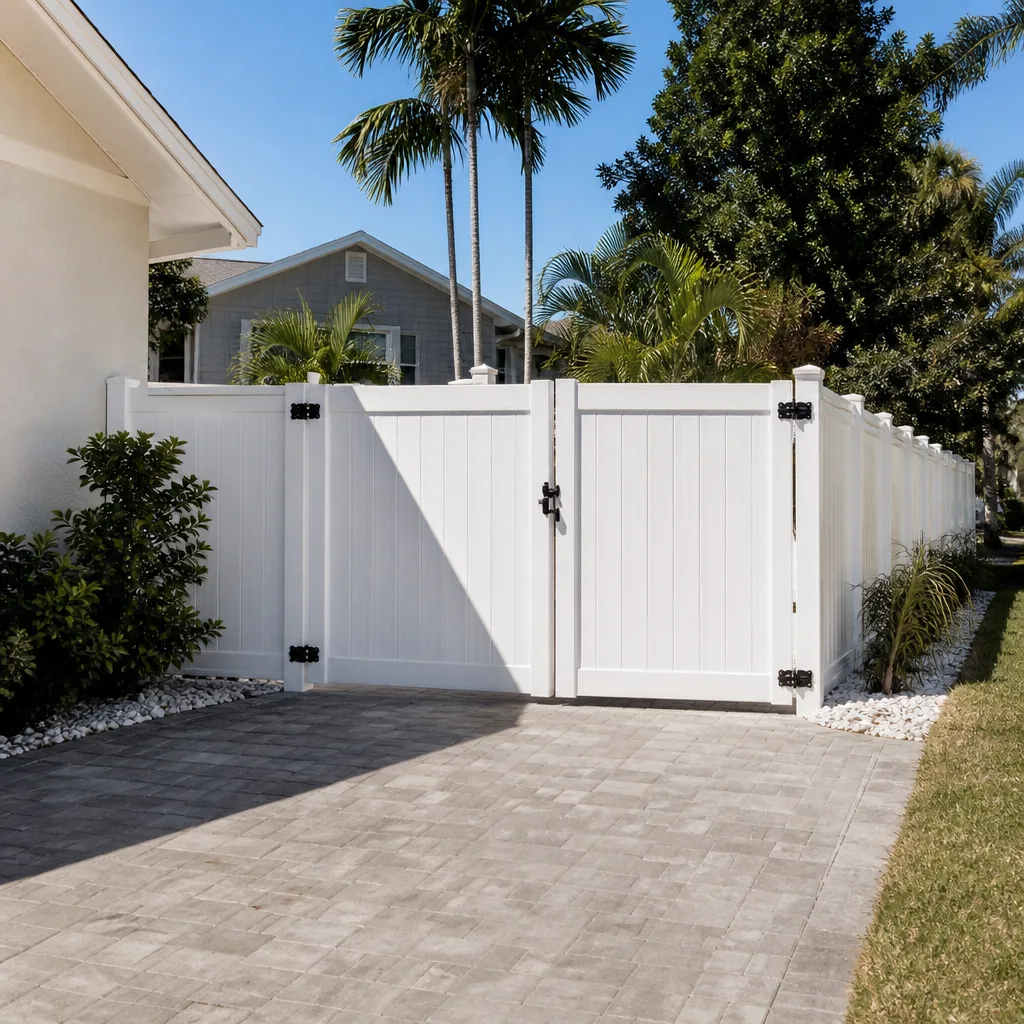
- Fencing around the ADU: A fence that separates an ADU from the main yard sees more traffic than it looks like it does. ActiveYards vinyl needs an annual wash; wood fencing needs a stain refresh every 2 – 3 years. Our Fence Installation in Orange page has the material comparison.
One extra note for Orange properties: fence and landscape walls often sit within a few feet of the ADU seam. Keep irrigation heads aimed away from the cladding. Constant moisture at the transition is the fastest way to fail a joint you paid good money to seal.
Five-Year and Ten-Year Milestones
Additions and ADUs hit predictable milestones. Plan for them so they don’t arrive as surprises.
At Five Years
- Siding repaint window opens. If the addition went in with fiber cement primed but not factory-finished, this is the year to repaint. Waiting until year eight in Orange means paint failure at the south and west faces first.
- Water heater service. Flush the tank, replace the anode rod if it’s more than 50% consumed, and check the T&P valve. A tank that was installed at build time has roughly half its expected service life left at year five.
- Deck ledger re-check if the addition has an attached deck. Re-torque and re-inspect the flashing at the ledger board. Attached decks are where the attachment seam has the least margin for error.
- Re-seal exterior caulk at all seams. The 5-year sealant life is real in Orange’s climate. Plan for it.
At Ten Years
- Water heater replacement. A standard tank installed at build time is statistically due for replacement around year ten to twelve. Budget for it, and if the ADU gets heavy rental use, assume the shorter end.
- Concrete foundation re-seal. If the addition’s slab or stem wall was finished with a sealer, reapply. Bare concrete at the foundation line is vulnerable to freeze-thaw only in cold climates, but in Orange it’s vulnerable to UV and to the salts in landscape soil that accumulates against it.
- Full mini-split replacement evaluation. A properly maintained Mitsubishi or Daikin mini-split will run 15 – 20 years. At ten, have the technician measure the refrigerant charge and check compressor draw. If neither is falling, keep it. If both are drifting, plan the replacement.
- Roof flashing inspection with a moisture meter. A visual check is the default, but at ten years it’s worth having someone with a moisture meter confirm the flashing joint hasn’t allowed hidden moisture into the wall assembly.
If you’re still in the planning phase, the crew’s maintenance schedule starts the day the build does. Our home page at Rowan Construction Group Orange home describes how the written price, scope, and warranty are set before work begins. Our technicians have up to 19 years of experience across the trades involved.
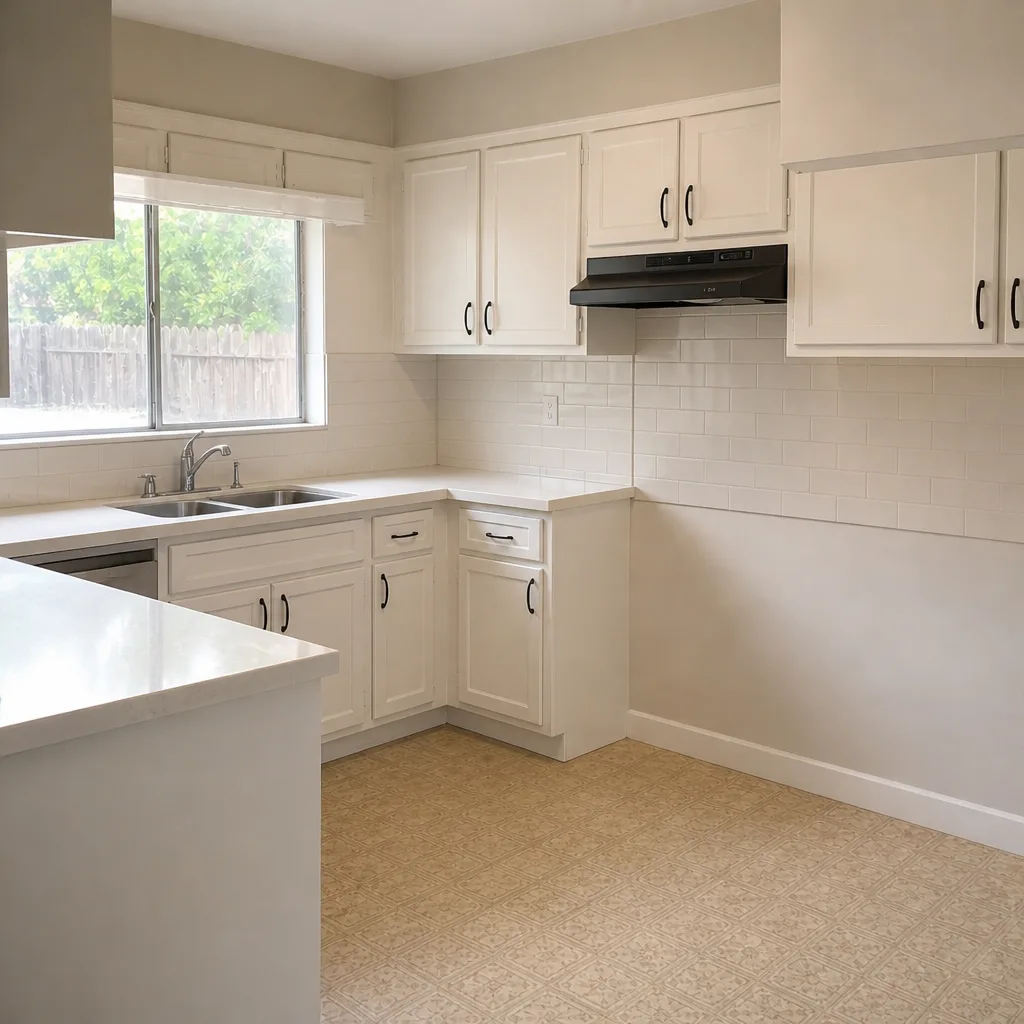
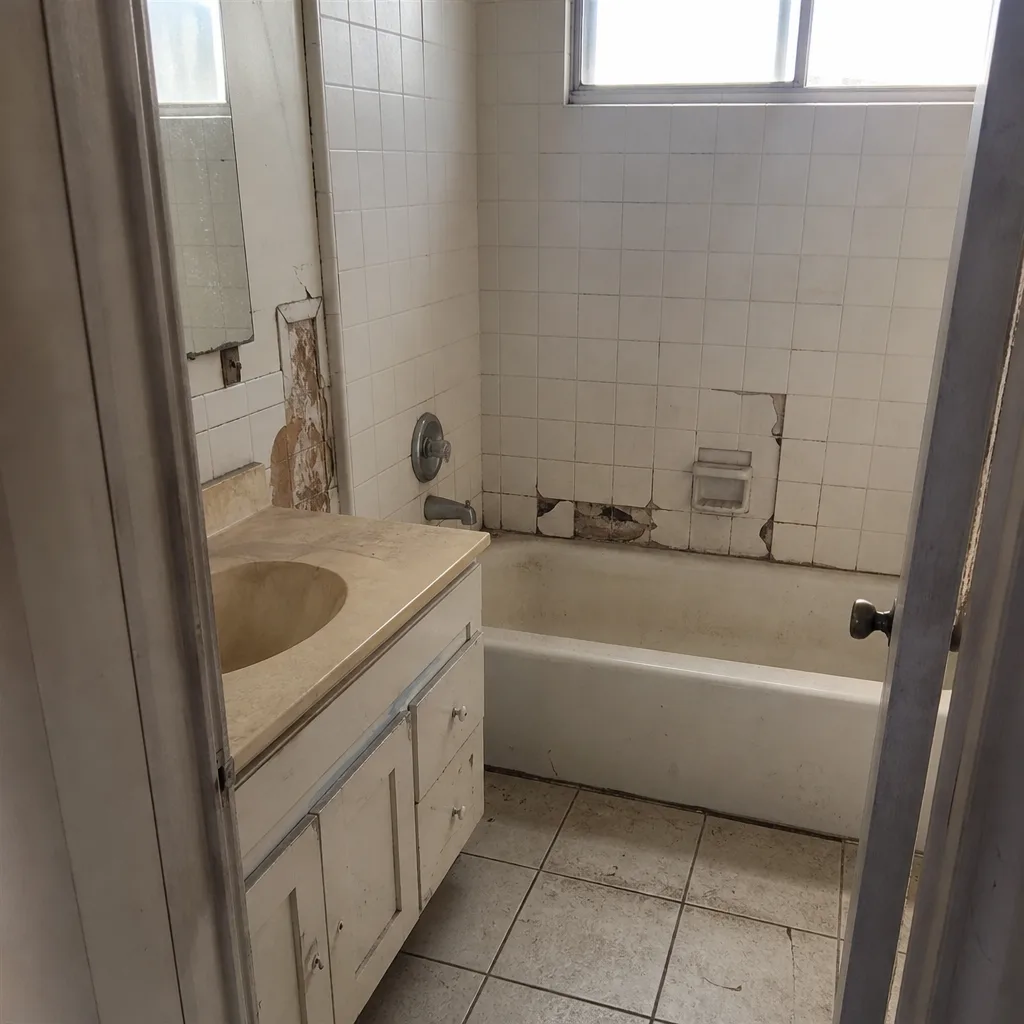
See the difference
 Before
 After
 Before
 After
 Before
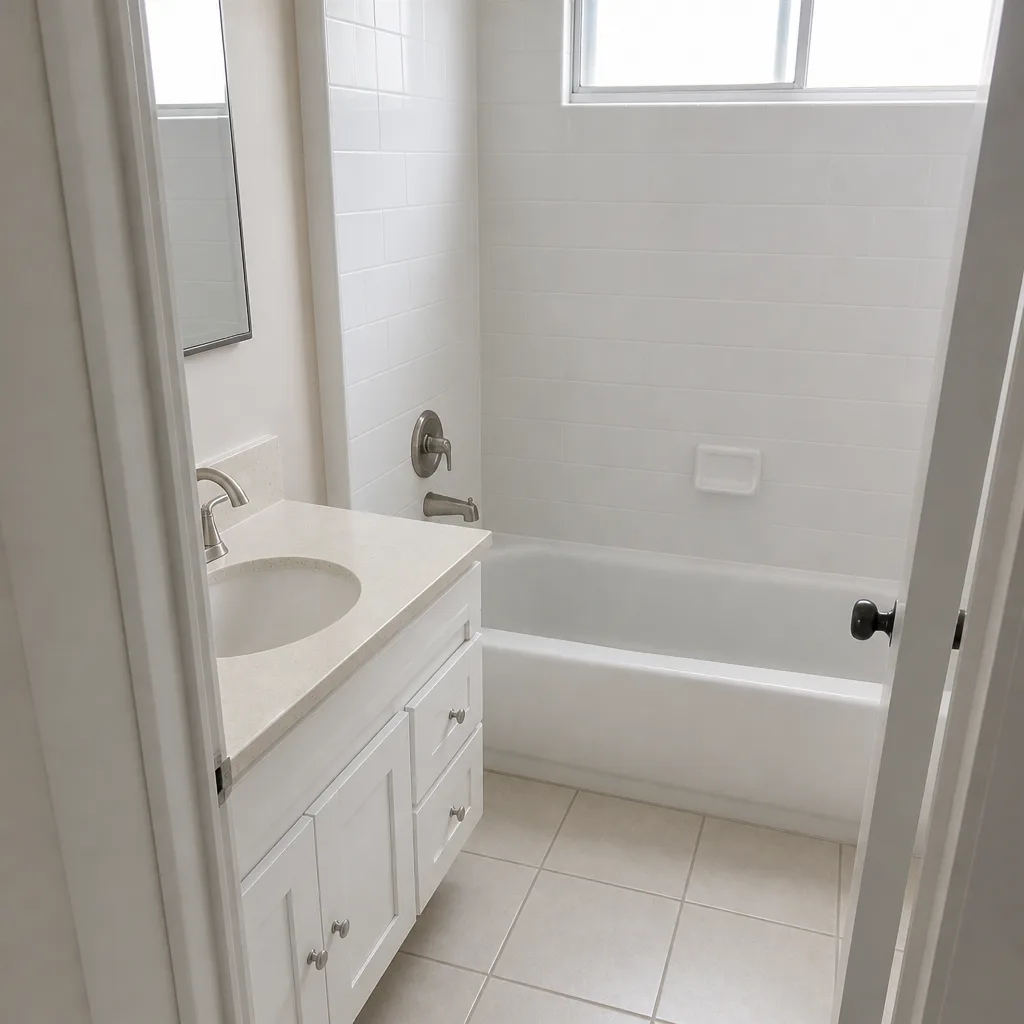 After
Common Mistakes to Avoid
- Treating the attachment seam as a five-year task. It’s an annual task, full stop. In Orange, the wet-winter season puts more load on that joint in a single January than the rest of the year combined. Missing it in year three is how a $400 sealant job becomes a $4,000 stucco and framing repair.
- Cleaning the mini-split filter “when it looks dirty.” Look at it monthly instead. Dust loading isn’t visible from across the room, and the coil doesn’t care whether you can see the filter.
- Testing AFCI and GFCI breakers once and assuming they still work. These are wear items. Test monthly. A failed GFCI in an ADU bath is a code violation and a genuine safety issue.
- Power-washing fiber cement. A 3,000 psi pressure washer will scar the surface and void the factory finish. A garden hose and a soft brush do the job.
- Skipping the year-one re-torque on deck ledger bolts. Fresh wood compresses. A lag bolt tight in month one is a loose bolt by month six. Re-torque on schedule.
- Assuming spray foam at penetrations is still sealing. Foam shrinks as it cures. Check every penetration at the six-month mark and top up where you see a gap.
- Letting irrigation overspray hit the ADU cladding. A sprinkler head 18 inches from a stucco wall will soak the seam every cycle. Aim the heads in and check the sealant every spring.
When to Call a Professional
Some of these tasks are homeowner work; some are not. Call a professional if you find: a widening crack at the foundation-to-slab joint, water staining inside the addition that appears after a rain, a mini-split that’s icing on the coil or dripping from a ceiling head, an AFCI or GFCI breaker that trips and won’t reset, or a deck ledger that’s pulling away from the wall. Electrical panel work and roof flashing repairs always go to a licensed pro. A flashing repair done wrong is worse than the seam you started with. Rowan Construction Group Orange offers free estimates in Orange – call (844) 320-7508 to schedule yours.
Frequently Asked Questions
Once a year, ideally in October before the rain season. That joint carries the most weather risk of any point on the property, and it needs annual inspection, not every five years. Add a mid-spring check on the exterior cladding transition if your addition has wood siding.
Every two weeks during heavy use, and at minimum every 2 – 3 months. Mitsubishi and Daikin both specify this interval. If the ADU is a rental, assume monthly. Call (844) 320-7508 for an HVAC referral if you don’t yet have a service relationship.
Yes. Test the button monthly and reset the handle. What you should not do is open the panel cover or torque lugs yourself. Panel work is for a licensed electrician; a free estimate from us will tell you whether your panel needs service.
Every 7 – 10 years if it was factory-primed only, and 10 – 15 if it was factory-finished. In Orange, the south and west faces will show paint failure first. Call (844) 320-7508 for a written estimate before your repaint window closes.
Look at the stem wall at ten years. If the surface chalks when you rub it, or shows efflorescence (white salt staining), it’s due. Re-sealing is a half-day job and one of the cheapest preventatives on the calendar.
Only if the issue was caused by skipped maintenance on the wear items named in the warranty. We put the maintenance schedule in writing with the warranty so there’s no ambiguity. Call (844) 320-7508 for a copy or a second opinion on any written estimate.
The Bottom Line

Additions and ADUs carry maintenance obligations the main house doesn’t, mostly because of the attachment seams, the separate utilities, and the different exterior materials. The core schedule is simple: annual seam inspection, monthly mini-split filter check and breaker test, quarterly condensate clearing, and milestone work at year one, five, and ten. Do those and the addition stays an asset. Skip them and a seven-year-old seam looks like a liability. We’re building these in Orange every month, and the ones that hold up are the ones whose owners kept a calendar. Call (844) 320-7508 for a free estimate on any maintenance, repair, or new build work.
Written by the team at Rowan Construction Group Orange.