Last updated November 18, 2026





Free written scope consultation - allowances, timeline, and change-order rules on paper before a single trade is scheduled
Bathroom Remodeling Warning Signs Every Homeowner Should Know
A soft spot in the subfloor under a toilet is not a flooring problem. It is a framing problem. By the time the floor gives enough to feel underfoot, the joists beneath have typically been taking on water for 12 to 18 months. That is the counterintuitive part of bathroom damage: the cheap-looking symptoms are usually late-stage. This guide catalogs the specific visual, structural, and mechanical signals we look for, ranked by how fast each one escalates, with cost ranges for each severity level. Some of what follows is specific to Orange, where the housing stock carries its own history of plumbing and subfloor materials.
Quick Answer
The warning signs that matter most are structural, not cosmetic: a soft or bouncy subfloor, wall flex near the shower, a toilet that rocks, and grout that keeps cracking after re-grouting. Surface signs like discolored grout or cracked caulk are worth watching but rarely urgent on their own. If you can feel movement underfoot or see water staining on the ceiling below, act within the week.
Styles & brands we work with
- Kitchen remodeling
- Bathroom remodeling
- Home additions & ADU
- Roofing
- Windows & doors
- Driveway & pavers
- Fence
Table of Contents
- Surface Signs vs. Structural Signs: Why the Distinction Saves You Thousands
- How to Test for Moisture Behind Tile Without Demolition
- What Orange’s Older Housing Stock Does to a Bathroom
- The Exhaust Fan Test: What CFM and Sone Ratings Tell You
- The Urgency Scale: What Can Wait and What Can’t
- What Bathroom Repairs Actually Cost at Each Severity Level
- Why Documentation Matters When a Remodel Starts
Surface Signs vs. Structural Signs: Why the Distinction Saves You Thousands
Every bathroom shows wear. The question is whether that wear is sitting on the surface or running underneath it. We separate symptoms into two buckets because the repair cost between them is not a small gap. It’s the difference between a weekend project and a framing job.
Surface-level signs live in the finish layer: grout lines that turn gray or pink, caulk that pulls away at the tub edge, a glaze that has worn through on a ceramic tile. These are cosmetic failures. They matter because they let water past, but the substrate is usually intact.
Structural signs live in the framing and subfloor: a floor that flexes near the toilet flange, a wall that gives when you press on it beside the shower, a ceiling stain in the room below, a door that no longer closes squarely because the floor has shifted. These signals mean load-bearing material has been compromised.
- Surface sign cost: Re-grouting runs $300 to $800 for a standard tub surround. Recaulking is $150 to $350.
- Structural sign cost: Subfloor replacement with joist repair runs $2,200 to $6,500 depending on the extent and whether the toilet flange must be relocated.
The trap is that surface signs are visible and structural signs are quiet. Grout discoloration gets tackled every couple of years. A soft subfloor gets walked over and rationalized until it fails outright. When we open a bathroom in Orange and find the substrate soft under the tile, the finish layer was usually the last thing to show it. Surface symptoms deserve attention, but structural movement deserves a call. If you’re planning a larger scope once repairs finish, our Bathroom Remodeling in Orange page walks through how we sequence a full job.
How to Test for Moisture Behind Tile Without Demolition
You can gather real evidence about what’s happening behind a tile wall before anyone swings a hammer. These are not invasive procedures. Use them to build a case, not to replace a contractor’s assessment.
- Press-test the wall and floor first. Push firmly on the drywall or tile beside the shower controls and below the tub deck. Flex, give, or a spongy feel are structural flags. Run your hand along the baseboard in the room below the bathroom and check for bubbling paint or soft trim.
- Use a pin-type moisture meter on grout lines and caulk joints. These run $30 to $80 at any hardware store. Readings above 15 to 18 percent wood moisture equivalent suggest active saturation. Probe the baseboard and the drywall opposite the shower, not the tile itself, which will read high regardless.
- Run the shower for 15 minutes, then look below. Go into the room under the bathroom and check the ceiling for any new discoloration within an hour. A drip or a damp patch confirms water is escaping the shower assembly.
- Check the toilet seal for rocking. A toilet that shifts when you lean on it has a failed wax ring or a broken flange, and it is dumping water into the subfloor with every flush. Lift the decorative caps and confirm the closet bolts are tight before assuming the flange is broken.
- Do a thermal check if you want more certainty. A basic infrared thermometer pointed across a tile wall after a shower will show cool patches where moisture sits behind the surface. It’s not a diagnosis, but it tells you where to look.
None of this replaces opening the wall. But when we walk into an Orange bathroom and hear that the homeowner already documented rising moisture readings over several weeks, the conversation moves faster and the written price shows up sooner. Moisture behind tile is the root of most of the damage we see, so we treat these readings as serious until an inspection says otherwise.
What Orange’s Older Housing Stock Does to a Bathroom
Orange has a lot of homes built between the late 1950s and the late 1970s, and those bathrooms carry materials that fail in predictable patterns. Knowing what you have tells you what to watch.
Galvanized steel supply lines. Many of these homes still have original galvanized pipe hidden in walls. It corrodes from the inside out, which means pressure drops and rusty water at the tap, but the failure you actually see is a pinhole leak inside a wall cavity. If the water runs brown after a weekend away, the pipes are past their service life and a bathroom wall is the first place a leak tends to surface.
Cast-iron drain stacks. Cast iron is durable but it scales and eventually cracks. Watch for a slow drain that a plunger won’t clear, a sewer smell that lingers in the room, or a rust-colored ring at the base of the toilet.
Original subfloor materials. In 1960s and 1970s construction, particle board and early plywood subfloors were common. Particle board swells and crumbles when wet, and it loses structural strength well before it looks damaged. If a home has been re-tiled over old particle board, the tile will eventually crack in lines that follow the joists below.
None of this means every older Orange bathroom needs to come out. But a bathroom in a house from that era deserves a closer look at the plumbing and the subfloor than a newer build would. For homeowners weighing a full rethink of the space, our Rowan Construction Group Orange home page lays out how our trades fit together on a single project.
The Exhaust Fan Test: What CFM and Sone Ratings Tell You
A bathroom exhaust fan is not a luxury; it’s the primary defense against moisture damage. If it’s undersized or loud, homeowners stop using it, and the moisture load on the tile and framing compounds over years.
The benchmark: A bathroom fan should move at least 1 CFM for every square foot of bathroom floor area. A 50-square-foot bathroom needs a 50 CFM fan. A fan below that number is undersized for the room. Separately, the fan’s sone rating measures loudness on a 1 to 10 scale, where 1 sone is nearly silent. A fan above 3 sones is one homeowners stop switching on.
Two checks a homeowner can run in five minutes:
- The tissue test. Hold a single-ply tissue against the fan grille while the fan runs. If the tissue drops or flutters, the fan is underperforming. This is not a CFM measurement, but it reveals a failing motor, a blocked duct, or a fan sized for a smaller room.
- The spec check. Look at the fan’s label or the inside of the cover for the CFM and sone ratings. If you can’t find them, check the model number online. A 50 CFM fan in a 75-square-foot bathroom is a moisture problem waiting to finish.
Replacing an undersized fan runs $150 to $400 for a bath fan with a 90 to 110 CFM rating at under 2 sones, plus labor if the ductwork needs work. That’s a low cost against a timeline that otherwise leads to tile popping or a soft drywall corner behind the toilet after a few years. Fans near the end of their life also get louder before they fail, so a fan you can hear through a closed door is a fan worth checking. Fan installation and replacement falls within our bathroom trade scope, which we detail on the Bathroom Remodeling in Orange page.
The Urgency Scale: What Can Wait and What Can’t
Not every sign needs a call this week, and treating all of them that way is its own mistake. Here is how we rank the signals we see in Orange, from most to least time-critical.
Call within the week
- A toilet that rocks or shows water at the base
- Visible water staining on the ceiling below the bathroom
- Wall flex or a soft, spongy patch under the toilet or beside the tub
- Active leak behind a wall, or water running when no fixture is on
- Rusty water from the hot side only, which points to a failing water heater line rather than the supply pipes
Act within 30 to 90 days
- Recurring grout cracks that return after re-grouting
- Caulk pulling away at the tub or shower edge, even after recaulking
- An undersized or loud exhaust fan
- A slow drain that returns after clearing
- Discolored grout lines with no moisture readings behind them
Monitor for three to six months
- Worn tile glaze with no other symptoms
- A single hairline crack in a floor tile that hasn’t spread
- Minor caulk discoloration with no separation
The pattern that matters: a symptom that returns after repair is a signal that the fix was cosmetic and the source is still active. If re-grouting fails twice, the problem is under the tile. If a fan swap doesn’t clear the mirror fog, the ducting is the next thing to inspect.
What Bathroom Repairs Actually Cost at Each Severity Level
These are the ranges we see for the work a warning sign typically triggers, once the cause is confirmed. Numbers are for the repair only, not for a full remodel.
- Surface fixes (cosmetic): $150 to $800. Recaulking, re-grouting, or replacing a worn shower valve trim.
- Component replacement: $350 to $1,200. Toilet flange and wax ring repair with a replacement toilet, or an exhaust fan upgrade with new ducting.
- Subfloor and joist repair: $2,200 to $6,500. Removing tile, cutting out compromised subfloor, sistering or replacing joists, and re-tiling.
- Plumbing replacement in a wall: $1,800 to $5,500. Replacing galvanized supply lines or a section of cast-iron drain, which typically means opening and closing one or two walls.
- Full remediation after a long-undetected leak: $7,000 to $15,000. This is what a one-week warning sign becomes when it’s left a year, and it’s why the urgency scale above matters more than the symptom list.
What makes the numbers real is getting them in writing before work starts. Under Clause 1 of the Haven Standard, no work begins until the price is written, and no change proceeds without a signed change order. That is the discipline that has kept Rowan projects within a few percent of the agreed cost across 4,000-plus jobs, and it is the reason a foundation repair quote in Orange has boundaries that hold. If you have a competitor’s estimate for a repair, our Free Second Opinion offer reviews it line by line at no charge, which often surfaces scope a written price should have included.
Why Documentation Matters When a Remodel Starts
A warning sign becomes a remodel when the repair and the update start overlapping. The moment a wall opens is when hidden conditions surface: a cracked drain, a rotted joist, a supply line that was one winter from failing. How a contractor handles that moment is more predictive of a good outcome than the finish choices.
Before any work begins, a contractor should be able to tell you what they will document. Our answer is specific: a background-checked, uniformed crew, a written scope and flat price before tools come out, a photo record of what was found and what was done on every visit, and a written warranty with the 365-Day Done Right Promise behind it. Live calls are answered around the clock. Those are not slogans; they are the terms the job runs on, and they are the terms that let a homeowner plan around a repair instead of bracing for surprises.
For a bathroom on one of Orange’s older homes, that means the scope includes material selection and what happens if the subfloor turns out to be particle board. Tile and fixtures fall into the same material plan: KraftMaid vanities and Kohler or Toto fixtures are specified by product number before the quote is finalized, so the written price has real numbers behind it. Whether the project grows into an addition is a separate conversation, but the Home Additions & ADU in Orange page explains how a bathroom scope can be planned as part of a larger footprint.
Common Mistakes to Avoid
- Re-grouting a floor that has a structural problem under it. If the grout cracks come back within a few months, the subfloor is moving and new grout won’t stop it. Repeated cosmetic fixes are the most common way a repair that cost $3,000 becomes an $8,000 remediation.
- Ignoring the exhaust fan because “it’s just a fan.” A fan under 50 CFM in a typical Orange bathroom is a moisture problem that shows up years later behind the tile. The $200 to $400 to replace it is the cheapest intervention on this list.
- Assuming your 1960s Orange home doesn’t have galvanized pipe. Many do, and the fix usually gets priced in when the wall is already open rather than after a pinhole leak. Ask the question before demolition.
- Treating a rocking toilet as a caulk job. The wax ring and flange are the problem, and every flush sends water into the subfloor until it’s repaired.
- Hiring a contractor with no written scope or change-order process. Without that, a hidden condition found mid-job becomes a verbal add-on and a moving target. A written price on the front end makes a repair budget a number you can plan for.
- Skipping the moisture reading because the surface looks fine. Tile hides the substrate. A 15-minute check with a $40 meter tells you more than a visual inspection ever will.
See the difference
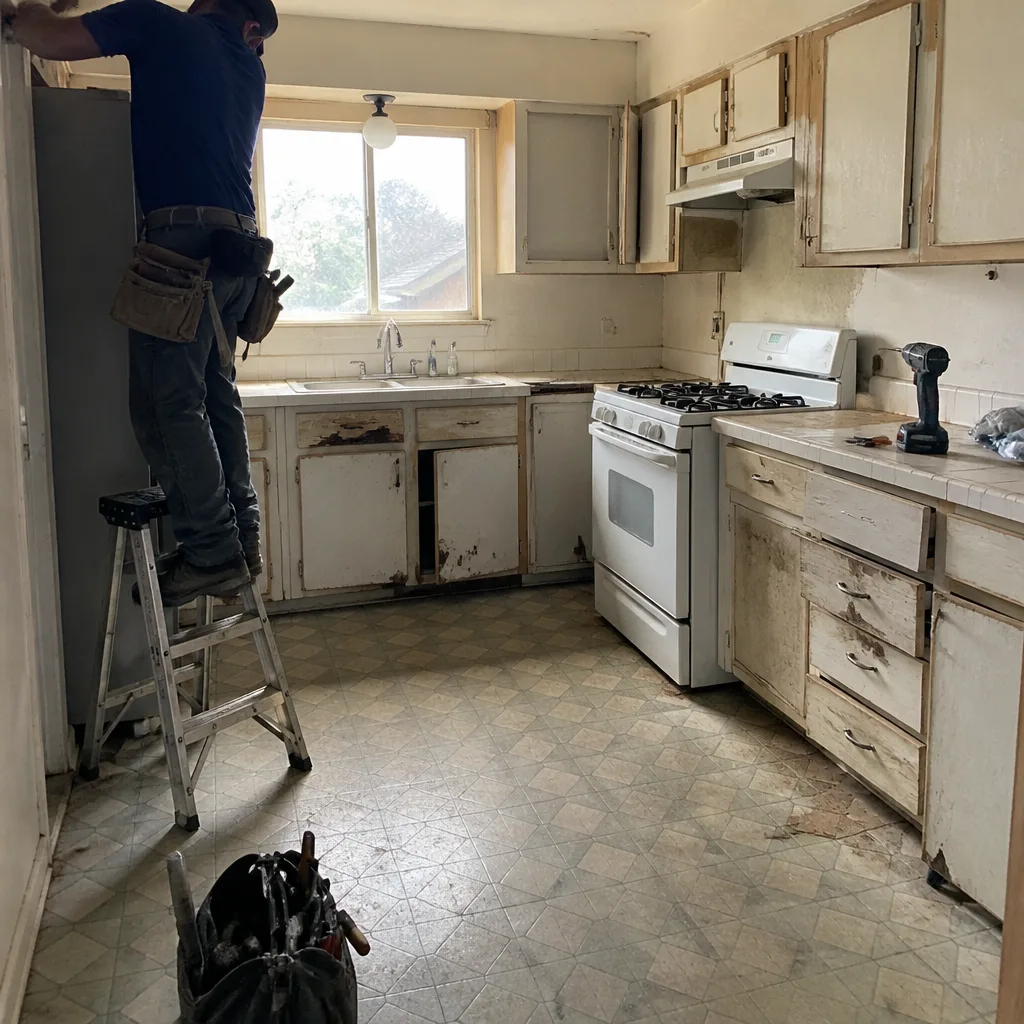 Before
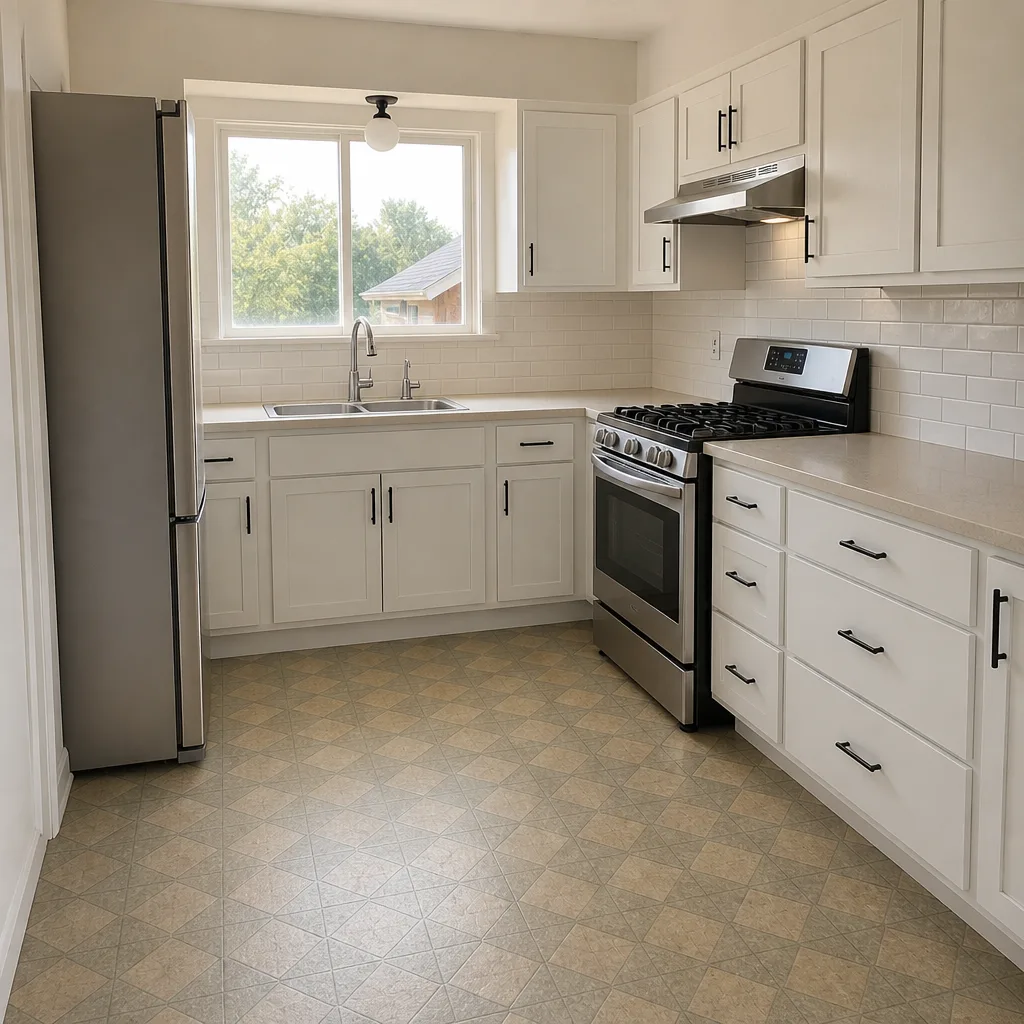 After
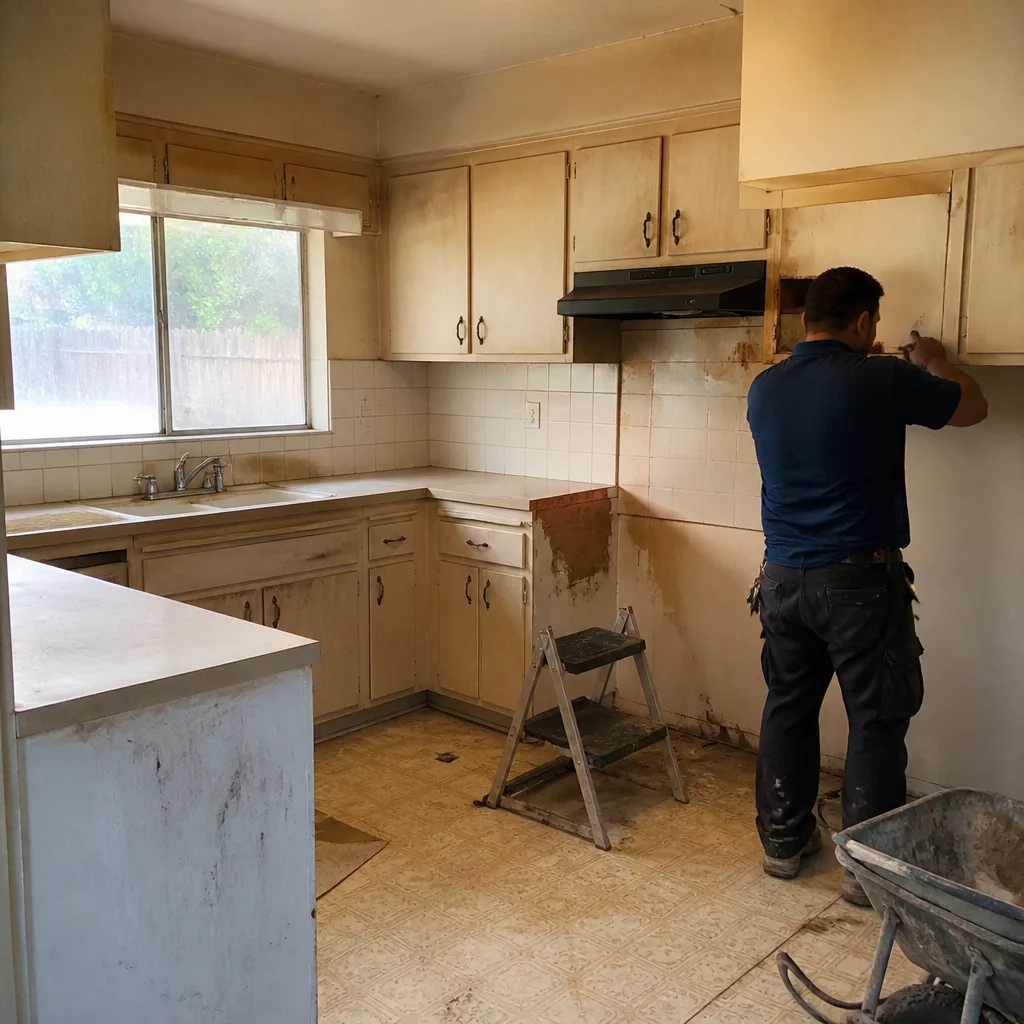 Before
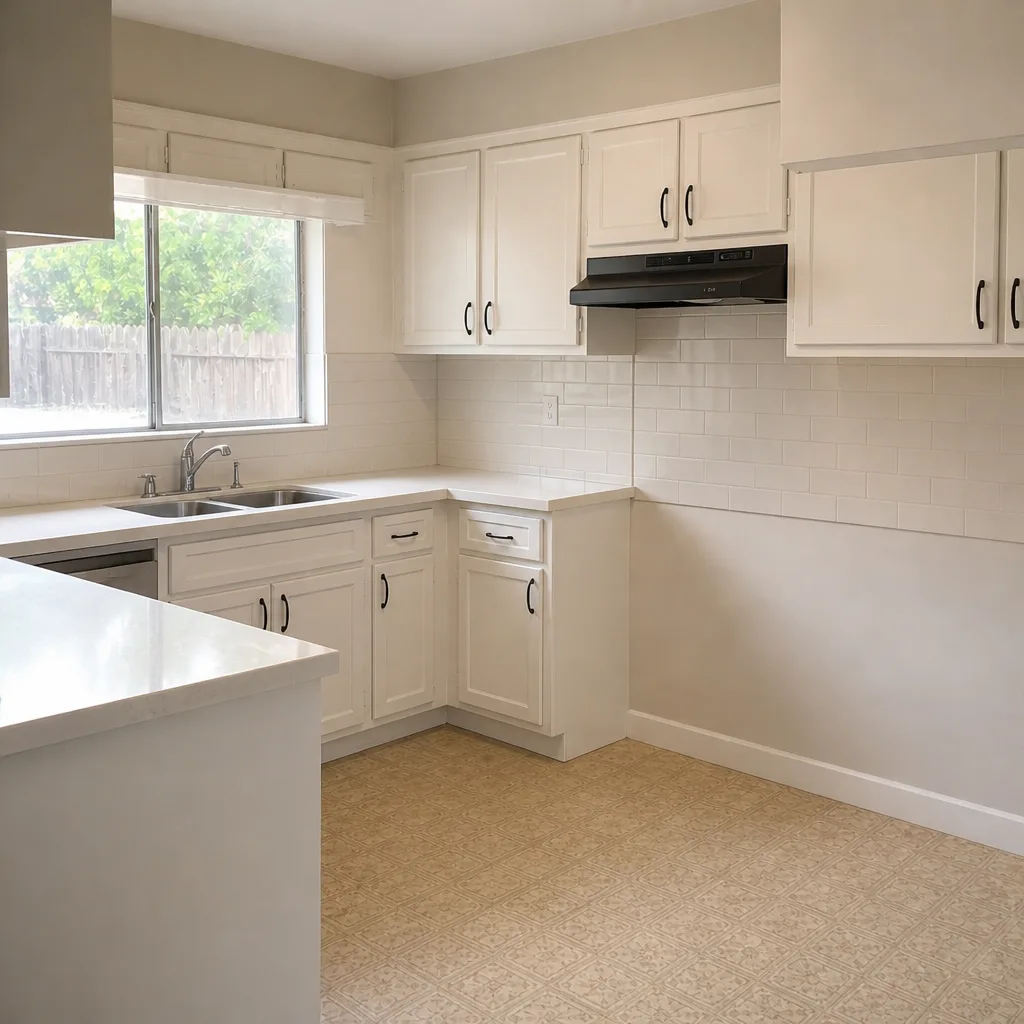 After
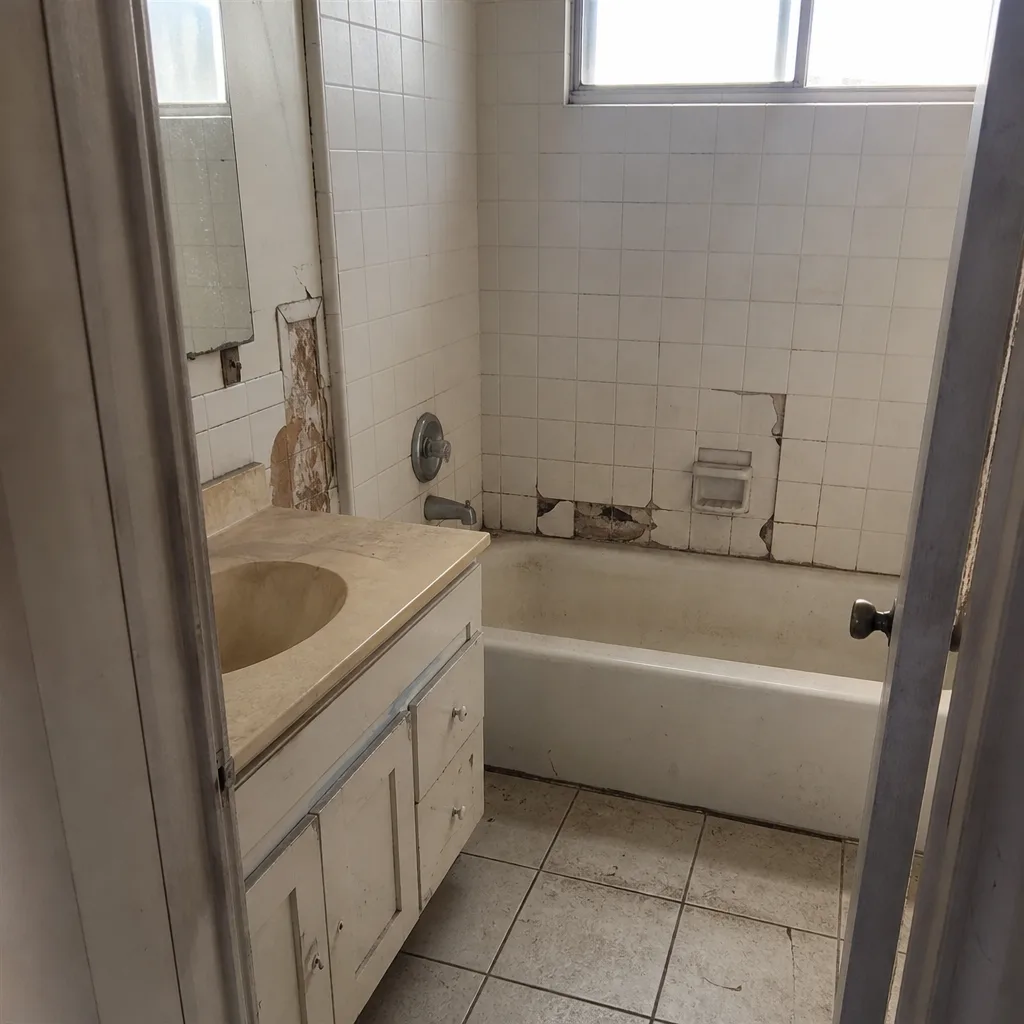 Before
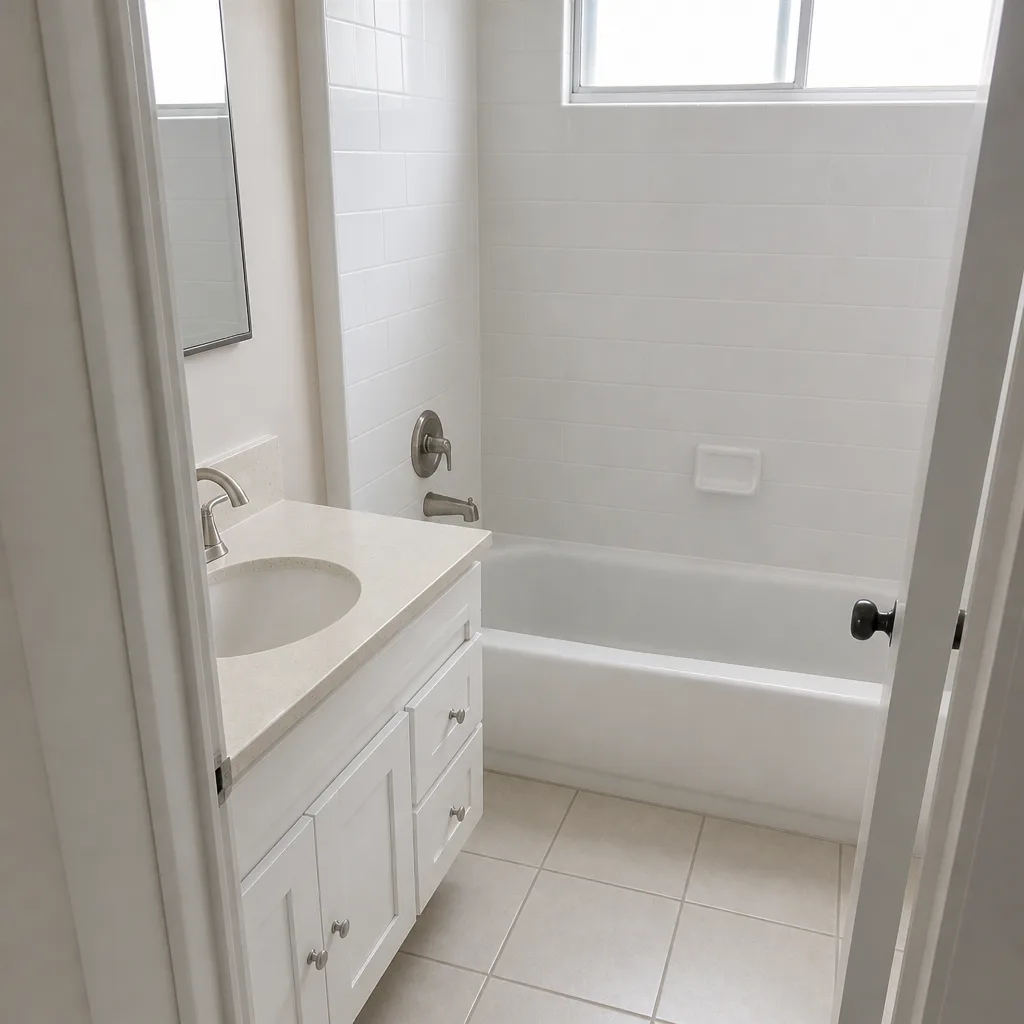 After
When to Call a Professional
Call a professional when the symptom is structural, when it returns after a repair, or when it is moving. Specifically: a soft or spongy subfloor, a toilet that rocks, water staining on the ceiling or floor below the bathroom, a wall that flexes beside the shower, or a bathroom in an older Orange home with galvanized supply lines or cast-iron drains that shows any sign of leaking. Cosmetic issues can wait; these cannot. If you’re unsure, our free estimate in Orange includes an inspection with a moisture check and a written price before anything is torn out. Rowan Construction Group Orange offers free estimates in Orange. Call (844) 320-7508 to schedule yours.
Frequently Asked Questions
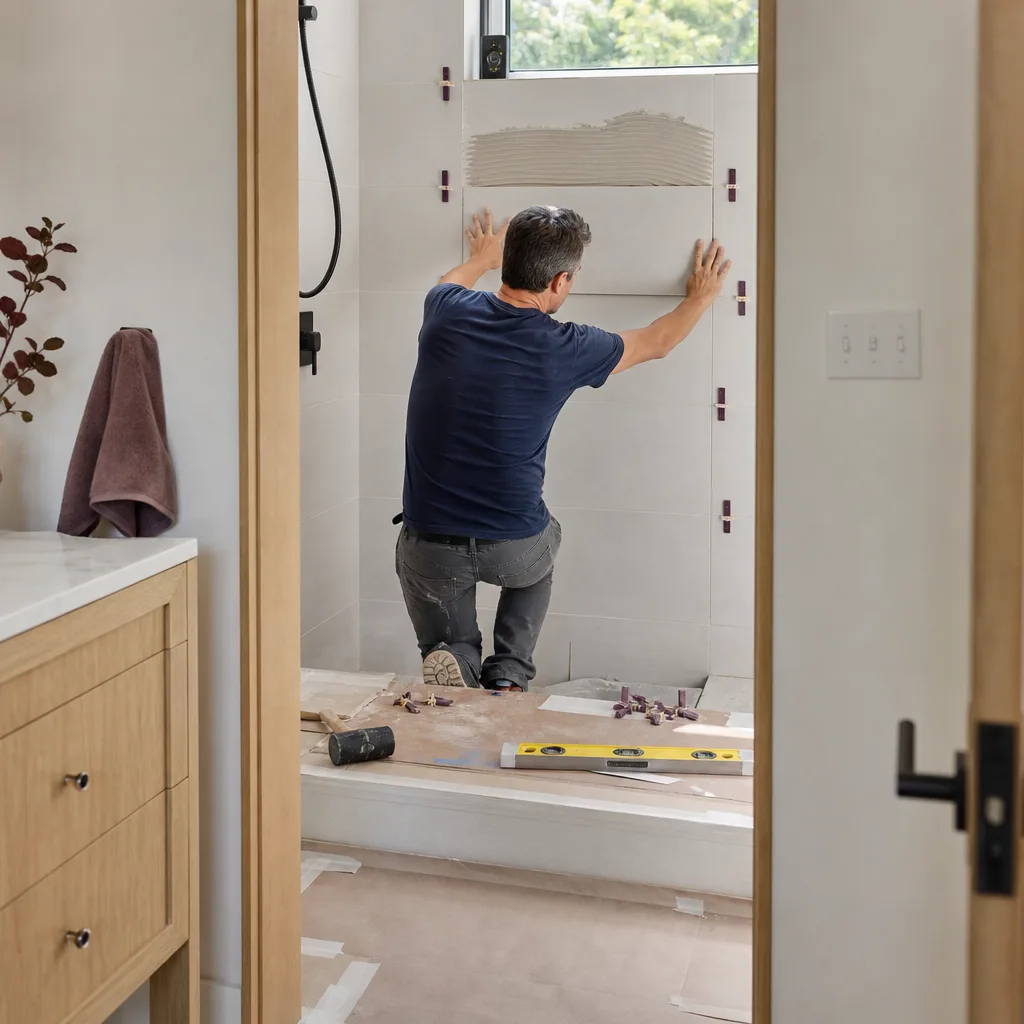
A soft, spongy spot under the toilet is usually the first structural warning sign. It means water has been reaching the subfloor for months, typically from a failed wax ring or a broken flange. If you can feel it, get it inspected within the week.
Water damage repair in Orange runs from about $150 for recaulking a failed joint to $6,500 or more for subfloor and joist replacement once the damage has spread. The lower number applies when you catch it early; the higher number applies to a leak that has been running for a year. Call (844) 320-7508 for an exact quote, which comes as a written price before any work starts.
A pin-type moisture meter reading above 15 to 18 percent on the drywall or baseboard opposite the shower is a strong indicator of active moisture. You can also run the shower for 15 minutes and check the ceiling below for new staining. Neither test replaces opening the wall, but both give a contractor a starting point.
A fan needs at least 1 CFM per square foot of floor area, and a sone rating of 3 or lower so it’s quiet enough to actually use. A 50-square-foot bathroom needs a 50 CFM fan; a 75-square-foot bathroom needs 75 CFM. A fan that’s too small or too loud is a long-term moisture problem in disguise.
Grout that keeps cracking after re-grouting points to movement in the subfloor below the tile, not a grout problem. In older Orange homes, particle board subfloors are a common culprit because they swell and lose strength under moisture. The solution is a subfloor repair, not another re-grout.
You often can fix a single warning sign alone if it’s caught early and the cause is isolated. The decision point is whether the underlying plumbing, subfloor, or framing is sound. An inspection with moisture readings and, if needed, a limited wall opening answers that question before any remodel scope is priced. Call (844) 320-7508 and we’ll review it with you at no charge.
The Bottom Line
Most bathroom damage announces itself long before the price tag. A rocking toilet, a soft floor, a fan that’s too small to do its job: each one is a clock running, and the earlier it’s caught the lower the cost. Surface signs are worth watching. Structural signs are worth a call. If your Orange bathroom is showing any of the signals on this list, the cheapest move is an inspection with a written price attached, before anyone tears out tile. Free estimates are free for a reason: they turn a guess into a number you can budget around.
Written by the team at Rowan Construction Group Orange.
Ready to put a written number next to the warning signs in your bathroom? Call Rowan Construction Group Orange at (844) 320-7508 to schedule your free estimate and get a flat written price before any work starts.