Last updated November 18, 2026
Free written scope consultation - allowances, timeline, and change-order rules on paper before a single trade is scheduled
The Complete Bathroom Remodeling Guide for Orange Homeowners
Orange County has a quiet problem with unpermitted bathroom work, and the California Department of Real Estate flags it in disclosure guidance for a reason. When a bathroom gets remodeled without permits, the documentation gap doesn’t surface while you’re living in the house. It surfaces at resale, when a buyer’s inspector asks where the plumbing rough-in was moved, or at an insurance claim, when the adjuster asks who signed off on the electrical. In our experience, that gap costs Orange homeowners $5,000 to $20,000 in buyer credits when they sell. This guide covers the full permitted scope for a bathroom remodel in Orange, with material choices and cost ranges that reflect what Orange County suppliers actually stock.
Quick Answer
A bathroom remodel in Orange, CA costs $8,000 to $15,000 for a cosmetic refresh, $18,000 to $35,000 for a mid-range remodel with layout changes, and $35,000 to $65,000 or more for a full gut with plumbing relocation. Any relocation of plumbing rough-in, new electrical panel circuits, or removal of a load-bearing wall triggers a permit; replacing tile, fixtures, and a vanity in the existing location generally does not. The permit decision is the one most Orange homeowners get wrong, and it’s the decision that matters most at resale.
Styles & brands we work with
- Kitchen remodeling
- Bathroom remodeling
- Home additions & ADU
- Roofing
- Windows & doors
- Driveway & pavers
- Fence
Table of Contents
- What Triggers a Permit in Orange, CA for Bathroom Work
- Cost Ranges by Scope in Orange County
- Materials Available Through Orange County Distributors
- Waterproofing Standards That Go Beyond Code Minimum
- Ventilation Requirements for Orange’s Climate
- The Permit Process Step by Step
- How Long Does a Bathroom Remodel Take?
- The Resale and Insurance Documentation Gap
What Triggers a Permit in Orange, CA for Bathroom Work
Orange follows the California Building Code with local amendments, and the dividing line for bathroom work is straightforward once you know where it sits: anything that touches the structure or the systems needs a permit, and anything cosmetic in the same footprint does not. Homeowners who replace like-for-like often skip the permit office entirely and are correct to. Homeowners who move the shower valve, add a circuit, or knock out a wall to gain square footage from a closet are not.
Here’s the breakdown we’ve seen hold up across Orange projects, from the older bungalows near the Plaza to the newer construction around Santiago Hills:
- Permit required: relocating any plumbing rough-in (drain or supply lines), adding or relocating electrical circuits or outlets, removing or altering a load-bearing wall, changing the location of a window or exterior door, replacing a water heater, installing a new exhaust fan ducted through the roof.
- Permit typically not required: replacing tile on existing substrate, swapping a vanity in the same location, replacing fixtures (toilet, sink, faucet, bathtub) without moving the rough-in, repainting, re-glazing a tub.
- Grey zone: moving a toilet a few inches, converting a tub to a shower with the same drain, replacing drywall with cement board. Ask the Orange building department before you assume.
The grey zone is where most of the trouble lives. A tub-to-shower conversion often counts as a change in fixture type, which pulls in waterproofing inspection. We’ve seen Orange inspectors require a permit for a shower-to-shower replacement when the pan was rebuilt. The cost of pulling a permit is small compared to the cost of finding out at resale that you should have.
Cost Ranges by Scope in Orange County
Pricing a bathroom in Orange County means pricing tile, fixtures, and labor separately, because those three move independently and the supplier counter is where the number lives. Here’s the range we publish on written quotes, broken out so you can compare a competitor’s line items against it. Note that these are 2026 Orange County numbers; a bathroom in Irvine or Newport Beach will run slightly higher on labor, and a bathroom in Anaheim or Santa Ana will run slightly lower.
- Cosmetic refresh ($8,000 to $15,000): paint, new tile on existing substrate, vanity replacement in place, new fixtures, no plumbing or electrical relocation. Labor is 45 to 55% of the total.
- Mid-range remodel with layout changes ($18,000 to $35,000): new shower or tub, relocated plumbing within the room, one new circuit, tile on new cement board, new vanity and fixtures. Labor is 50 to 60% of the total.
- Full gut with plumbing relocation ($35,000 to $65,000+): full demolition to studs, relocated drain lines, new supply lines, electrical panel work, new subfloor, waterproofing system, tile, fixtures. Labor is 55 to 65% of the total.
Line-item breakdown you should see on any written quote from a competent Orange contractor:
- Tile (Daltile, MSI, or similar): $4 to $12 per square foot for material, $12 to $22 per square foot for installation. A standard 40-square-foot shower runs $640 to $1,360 in labor alone.
- Fixtures (Kohler, Toto, American Standard): $400 to $900 for a toilet, $200 to $600 for a sink faucet, $300 to $1,200 for a shower valve and trim.
- Vanity and countertop: $600 to $2,500 for a stock vanity, $1,200 to $4,000 for a custom unit with a Cambria or Caesarstone top.
- Waterproofing (Schluter Kerdi or Wedi): $400 to $1,200 for materials, plus $600 to $1,500 in labor for a standard shower.
- Permit fees: $300 to $800 for a bathroom permit in Orange, depending on scope.
Under Clause 1 of the Haven Standard, we put a flat written price and written scope in front of the customer before any work starts, and no change proceeds without a signed change order. That discipline is why the number on the quote is usually within a few percent of the number on the final invoice.
Materials Available Through Orange County Distributors
What’s actually on the shelf at Orange County suppliers matters more than what’s in a manufacturer’s catalog, because a special-order lead time can add two weeks to a project that was otherwise on schedule. Here’s what we’ve seen move at standard lead times versus what you should plan around.
- Standard lead time (days, not weeks): Kohler and American Standard toilets and sinks, Moen and Delta faucets, Daltile and MSI tile at local counters, Schluter Kerdi and Wedi board systems at plumbing suppliers in Anaheim and Santa Ana.
- Special order (two to six weeks): custom vanity cabinetry, Cambria and Caesarstone slabs (slab selection and fabrication add time), niche tile in discontinued or imported patterns, some Toto dual-flush models.
- Best stocked brand for reliability: Daltile’s basic porcelain lines and MSI’s large-format tiles are available at multiple Orange County counters, so a broken tile mid-install doesn’t stop the job for a week.
We source across fifty-plus vetted brands, which gives a written quote honest numbers rather than inflated ones. When a builder tells you Kohler and Toto fixtures are “six weeks out,” that’s true for some models and not for others. A contractor with real supplier relationships can tell you which is which before you commit to a tile.
Waterproofing Standards That Go Beyond Code Minimum
California’s Title 24 requires a moisture barrier behind tile in wet areas, and that’s the floor, not the ceiling. A traditional cement board with a vapor barrier stapled behind it meets code and fails in practice more often than most homeowners realize, particularly in high-humidity bathrooms with a shower that runs hot daily. The failure mode is slow: moisture wicks through grout and thinset, hits the barrier, and sits there, feeding mold in the wall cavity for years before the tile shows it.
Schluter Kerdi and Wedi board installations perform measurably better because they move the waterproofing to the surface rather than the substrate. Both systems bond a waterproof membrane directly to the wall and floor, so water never reaches the cement board at all. The installation difference is real and visible at inspection:
- Traditional (code minimum): vapor barrier behind cement board, thinset over board, tile over thinset. Water penetrates grout, contacts cement board, and evaporates or drains slowly.
- Schluter Kerdi: membrane bonded to the wall and floor with unmodified thinset, seams overlapped with Kerdi-Band, shower pan and drain integrated into the same membrane. Water never contacts the substrate.
- Wedi board: extruded polystyrene panel with a cement coating, seams sealed with Wedi sealant, joints taped and mortared. Waterproof before tile goes up.
The cost difference between code-minimum waterproofing and a Kerdi or Wedi system runs $1,000 to $2,500 on a standard shower in Orange. That’s the cheapest insurance in a bathroom remodel, and it’s the line item most likely to be missing from a low bid. If a contractor’s quote doesn’t name the waterproofing system, ask which one they’re using and why.
Ventilation Requirements for Orange’s Climate
Orange’s climate is mild enough that homeowners sometimes assume ventilation doesn’t matter the way it does in a humid climate. That’s backwards. A mild climate means windows stay closed for parts of the year, the air conditioner runs, and moisture from a daily shower has nowhere to go. Title 24 requires mechanical exhaust in any bathroom without an operable window, and the fan sizing is calculated by room volume, not by guesswork.
The formula: multiply length by width by height to get cubic feet, then divide by the air changes per hour the code requires (typically eight for bathrooms), then divide by 60 to convert to cubic feet per minute, or CFM. A bathroom that’s 8 feet by 10 feet by 8 feet tall is 640 cubic feet; at eight air changes per hour, that’s 85 CFM. The most common mistake we see on a written quote is a 50-CFM builder-grade fan installed in a bathroom that needs 80 or more. The second most common is a fan ducted into the attic rather than through the roof, which dumps moisture into the attic and creates a mold problem in a place nobody checks.
In Orange, we spec fans at 80 to 110 CFM for standard bathrooms, and 110 to 150 CFM for bathrooms with a large walk-in shower or a jetted tub. Panasonic and Broan-NuTone both make quiet models under one sone, which matters more than the homeowner expects. A loud fan doesn’t get used, and an unused fan doesn’t move moisture. The fan and duct run adds $250 to $700 to a bathroom budget; the damage from skipping it runs into the thousands.
The Permit Process Step by Step
Here’s how a permitted bathroom remodel in Orange actually runs, from application to final inspection. This is the sequence a contractor should be able to walk you through before you sign anything, and if they can’t, that’s your answer about whether they pull permits.
- Scope and drawings. A licensed contractor prepares a scope of work and, for structural or layout changes, a simple drawing showing the new layout, plumbing rough-in, and electrical plan.
- Permit application at the City of Orange. Submit the application with the drawings, pay the fee ($300 to $800 depending on scope), and receive the permit card. The city typically issues over-the-counter permits for straightforward bathroom work within a few business days.
- Demolition and rough-in inspection. Once the walls are open, the plumbing and electrical rough-in is inspected before anything gets covered. This is the inspection that catches a moved drain that wasn’t vented correctly.
- Waterproofing inspection. For showers, the waterproofing membrane is inspected before tile goes up. This is the step that separates a Kerdi or Wedi installation from one that’s waterproof only in theory.
- Tile and finish. Tile, fixtures, and finish work proceed after the waterproofing passes.
- Final inspection. The city signs off on the completed work. You receive a signed-off permit card and, in Orange, a record of the inspection in the city’s files.
That signed-off permit is the document a buyer’s inspector will ask for at resale. Keep it with your home records alongside the warranty paperwork.
How Long Does a Bathroom Remodel Take?
A cosmetic refresh in Orange runs two to three weeks. A mid-range remodel with layout changes runs four to six weeks. A full gut with plumbing relocation runs six to ten weeks, and material lead times on special-order items can push the outer edge. The schedule is driven less by labor than by inspection timing and material availability, which is why a contractor who can tell you the lead time on your specific tile and fixture is more useful than one who promises a fast finish.
Two things slow a project in practice. First, a change order that isn’t signed and documented can stall the job while the scope is sorted out. Under the Haven Standard, no work proceeds on a change until the change order is signed, which is the discipline that keeps projects within a few percent of the agreed cost. Second, a permit that wasn’t pulled upfront means the inspection has to happen after the walls are closed, which means opening them again. Pulling the permit on day one is the schedule saver, not a delay.
The Resale and Insurance Documentation Gap
Here’s where the permit decision comes back around. When you sell an Orange home, the buyer’s inspector looks at the bathroom and asks a specific question: was the plumbing relocation permitted? If the answer is “we think so,” the buyer’s agent asks for a credit. If the answer is “no,” the credit grows. The California Department of Real Estate flags unpermitted work in disclosure guidance because it’s a title and financing problem, not just a code problem.
Insurance works the same way. If a supply line fails behind a wall that was moved without a permit, the adjuster’s first question is who did the work and was it inspected. A documented record shortens that conversation. A missing permit turns a covered repair into a disputed claim.
The fix is simple: pull the permit, keep the signed-off card, and keep the photo record of the rough-in and waterproofing. A contractor who provides a documented photo record on every visit, as a standard deliverable rather than an add-on, gives you that record without you having to ask. When work is done right and documented, the resale conversation is short.
Common Mistakes to Avoid
- Skipping the permit to save $500. The permit fee is $300 to $800 in Orange; the resale credit for unpermitted plumbing or electrical work runs $5,000 to $20,000. The math isn’t close.
- Accepting code-minimum waterproofing on a low bid. A quote that names “cement board with vapor barrier” but not Kerdi or Wedi will cost $1,000 to $2,500 more later to redo, and the mold problem it creates is invisible until it’s expensive.
- Installing a builder-grade 50-CFM fan in a bathroom that needs 80. It’s the most common ventilation mistake we see, and the moisture goes into the attic where nobody is looking.
- Ordering special-order tile and vanity without checking lead time. A two-to-six-week lead on a slab or a custom vanity can stall a project that was otherwise on schedule. Confirm the lead time before you commit to a tile.
- Not naming the waterproofing system or the fixture brand on the quote. If a written quote doesn’t name Kohler, American Standard, Schluter, or Daltile specifically, ask which ones are being used and priced. Vague quotes hide the cheap substitutions.
- Paying a deposit without a written scope. A flat written price with a written scope before any work starts is the baseline. If the contractor won’t put the price in writing upfront, that’s the signal to walk.
- Forgetting the photo record. The rough-in and waterproofing happen behind the wall. If nobody photographed them before the tile went up, you have no evidence of what was done.
If your project also touches the exterior, the same documentation discipline applies to the fence and driveway. Our guide to Fence Installation in Orange covers the warranty and permit details that come up on a resale inspection, and the Driveway & Pavers in Orange guide explains why pavers and concrete fail differently in Orange’s clay soil.
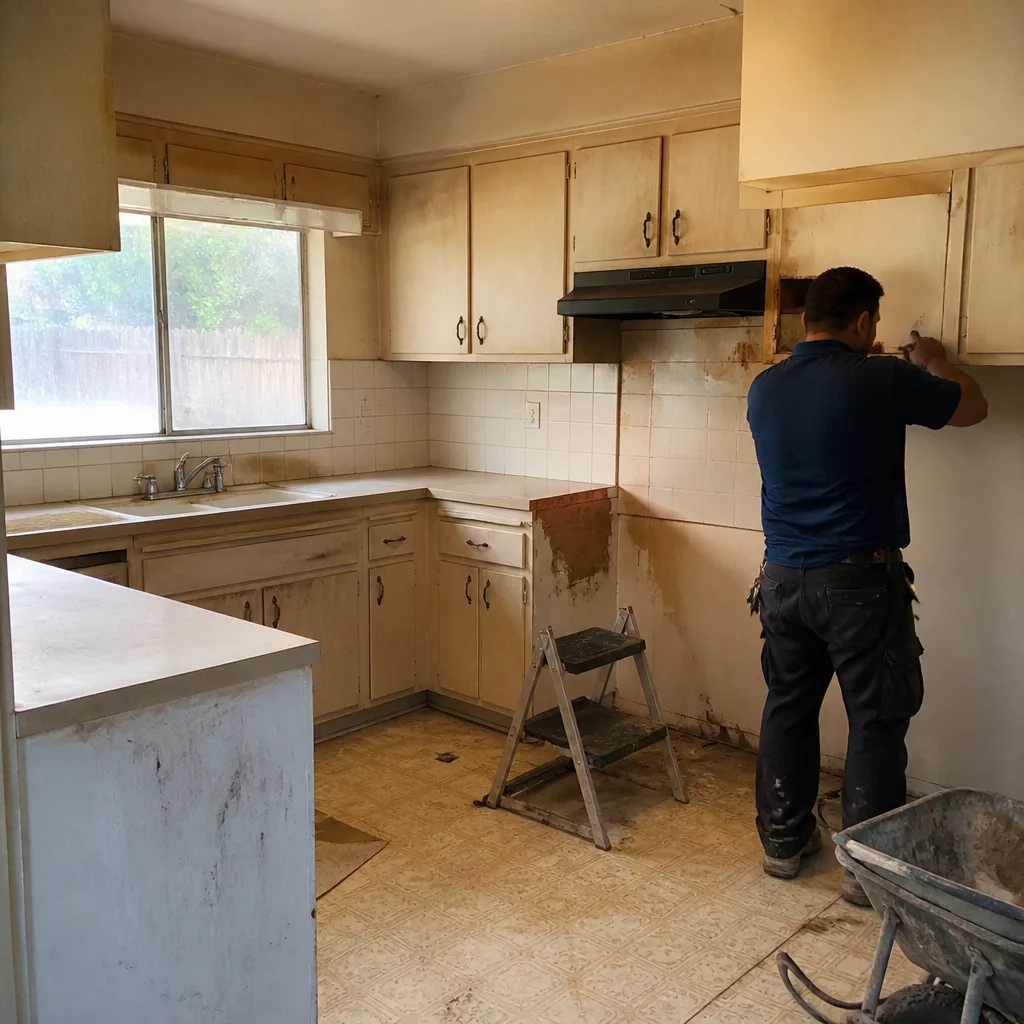
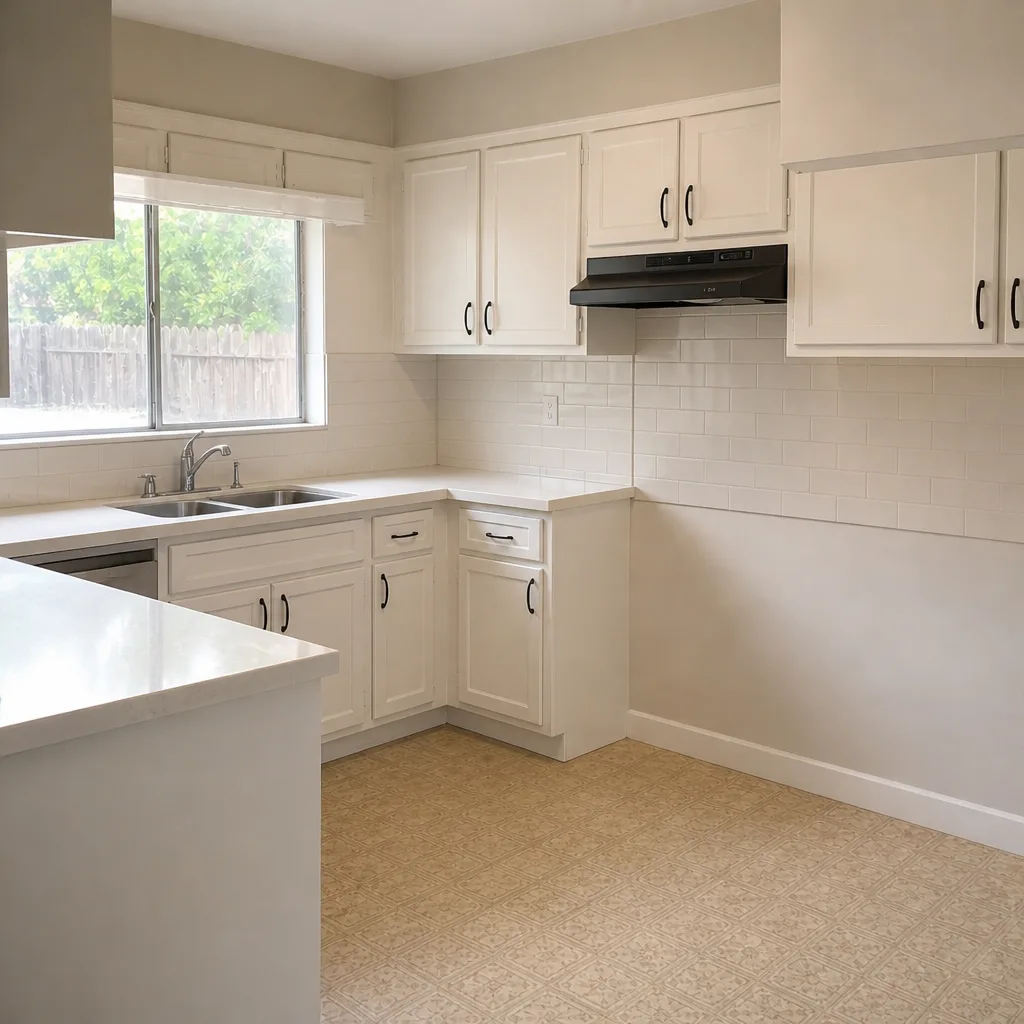
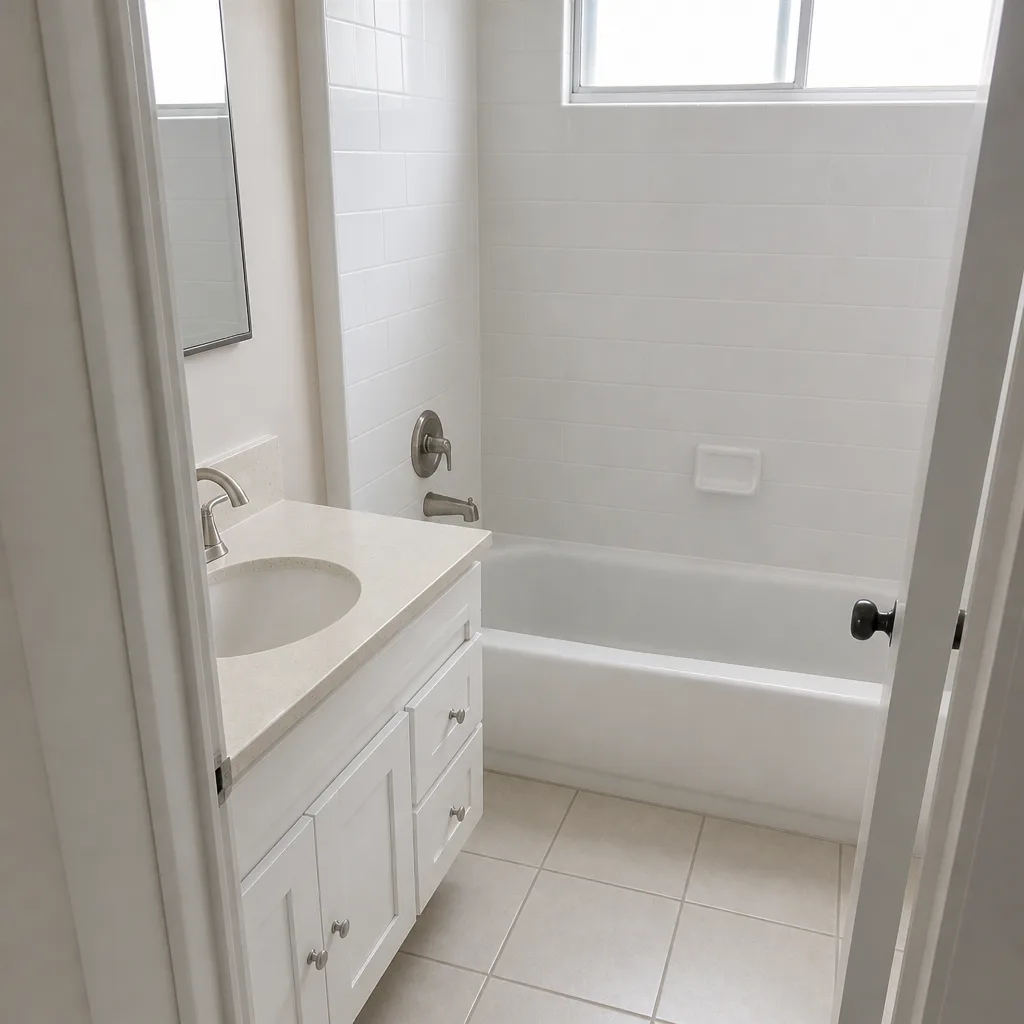
See the difference
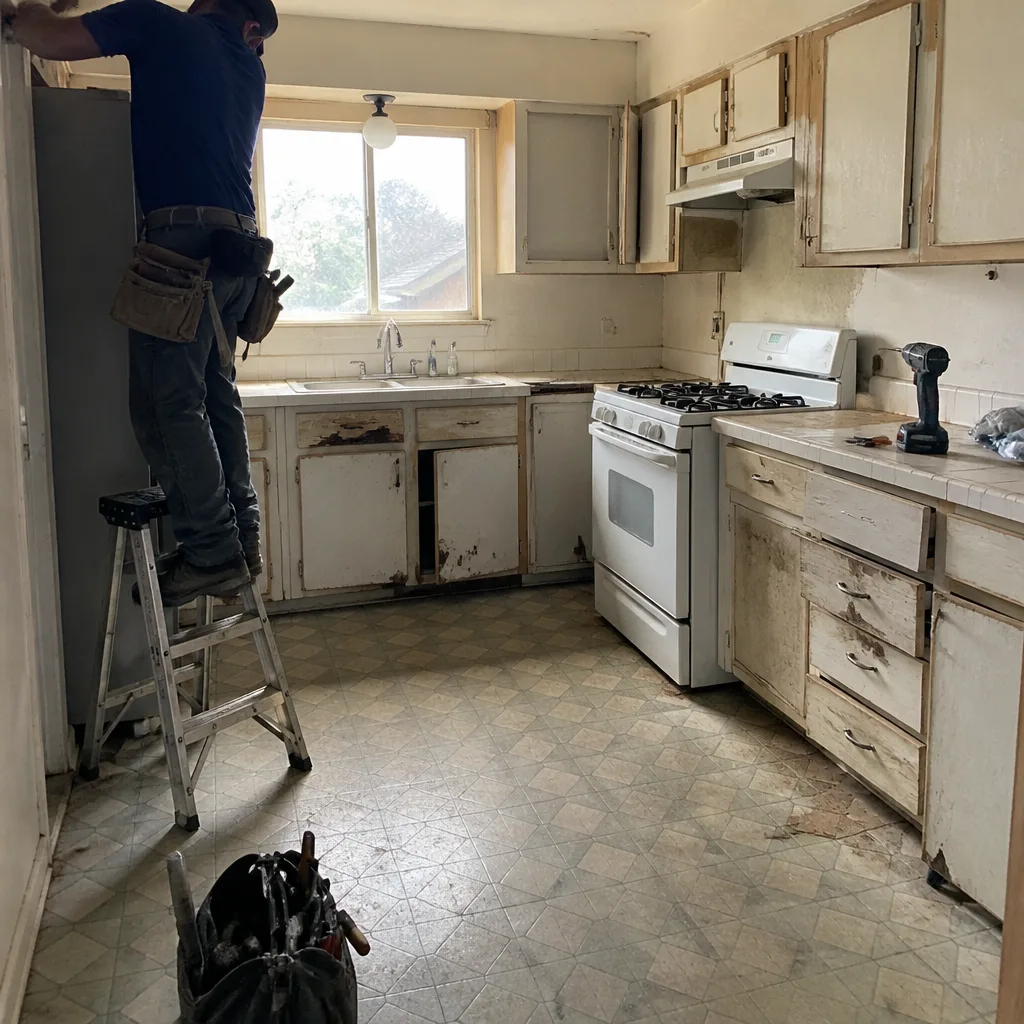 Before
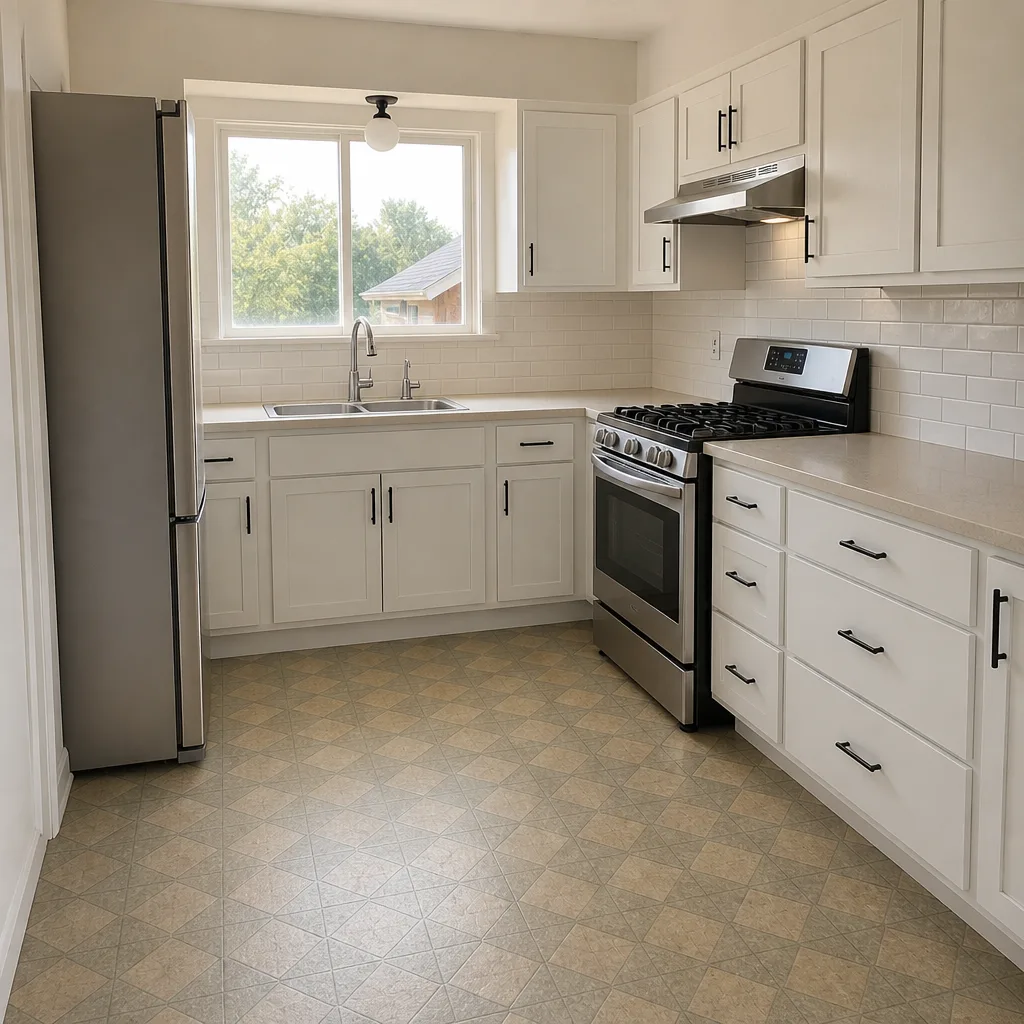 After
 Before
 After
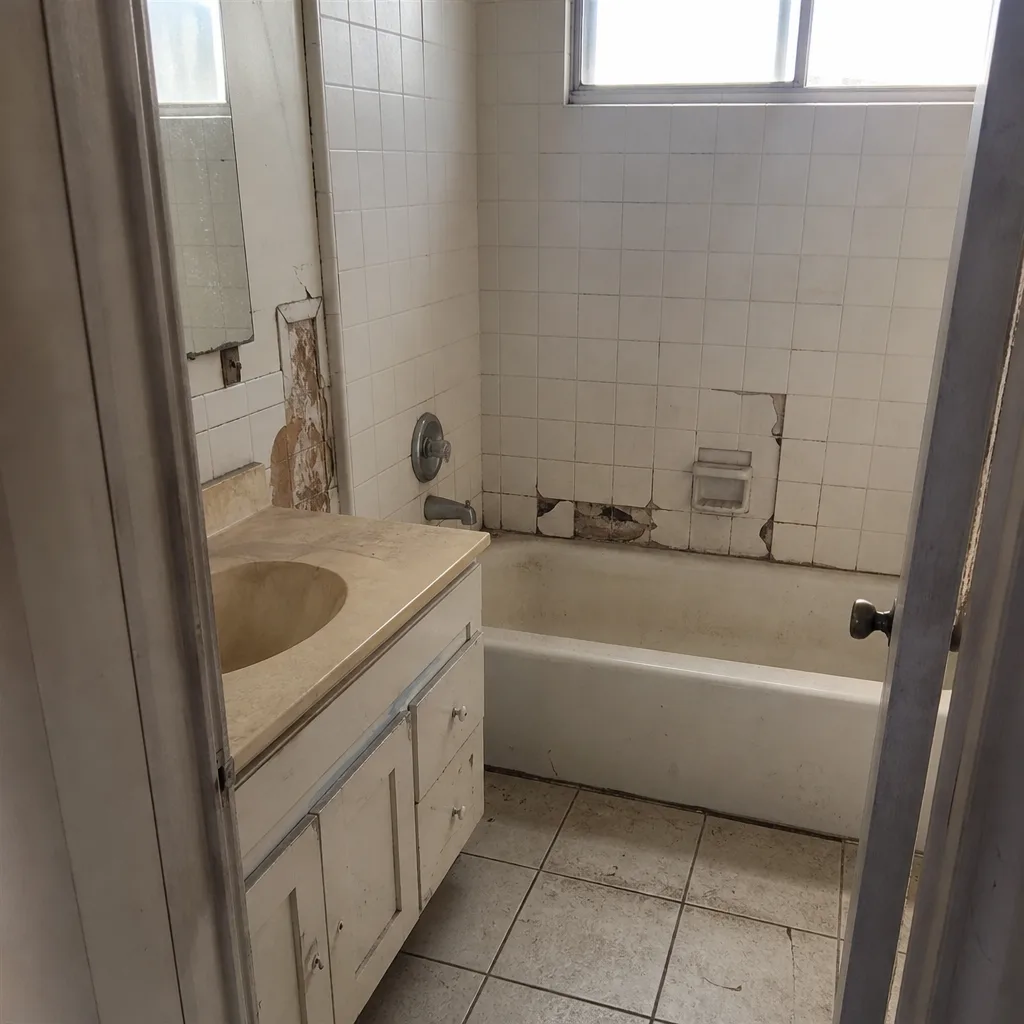 Before
 After
When to Call a Professional
Some bathroom work is safe to handle yourself: painting, replacing a faucet, swapping a vanity in the same location, re-grouting. Anything that touches plumbing rough-in, electrical circuits, load-bearing walls, or a shower pan rebuild is a different category. A moved drain that isn’t vented correctly doesn’t fail immediately; it gurgles, then backs up, then the toilet starts bubbling, and by then the tile is down. Electrical work in a wet area is a shock hazard, not a weekend project. And a shower pan that leaks through a code-minimum waterproofing system can run undetected for years.
If you’re planning a mid-range remodel or a full gut in Orange, the free estimate is the right first step, not the last one. Rowan Construction Group Orange offers free estimates in Orange, with a written price and a written scope before any work starts. Call (844) 320-7508 to schedule yours. If you’re also considering adding square footage rather than reconfiguring the existing bath, the Home Additions & ADU in Orange guide covers what changes when the project crosses into structural work.
Frequently Asked Questions
A bathroom remodel in Orange costs $8,000 to $15,000 for a cosmetic refresh, $18,000 to $35,000 for a mid-range remodel with layout changes, and $35,000 to $65,000 or more for a full gut with plumbing relocation. Call (844) 320-7508 for an exact quote on your bathroom; estimates are free and the written price comes before any work starts.
Any relocation of plumbing rough-in, new electrical panel circuits, or removal of a load-bearing wall requires a permit in Orange. Cosmetic replacements like tile, fixtures, and a vanity in the existing location generally do not. If you’re unsure about your specific scope, call the City of Orange building department before you start, and call (844) 320-7508 if you want a licensed contractor to review the scope with you.
No, not without a signed change order. Under Clause 1 of the Haven Standard, the price is written before anyone starts, and no work proceeds on a change until the change order is signed. That’s the discipline that has kept projects within a few percent of the agreed cost. Call (844) 320-7508 to schedule a free estimate.
Schluter Kerdi or Wedi board moves the waterproofing to the surface and performs measurably better than code-minimum cement board with a vapor barrier in a high-humidity bathroom. The cost difference runs $1,000 to $2,500 on a standard shower. Call (844) 320-7508 if you want a written quote that names the waterproofing system before you compare it to another bid.
Straightforward bathroom permits are typically issued over-the-counter within a few business days at the City of Orange. Projects with structural changes may take longer. The permit timeline runs alongside the project, not on top of it, if it’s pulled on day one. Call (844) 320-7508 for a written scope that includes permit handling.
You can, but you’ll likely pay for it at resale. The California Department of Real Estate flags unpermitted work in disclosure guidance, and buyer credits in Orange typically run $5,000 to $20,000. Insurance claims on unpermitted plumbing or electrical work can be disputed too. Call (844) 320-7508 to get a permitted scope from the start.
The Bottom Line
The bathroom remodel decision that matters most in Orange isn’t tile color or vanity style. It’s whether the work is permitted, documented, and waterproofed beyond the code minimum. Pull the permit when the scope calls for it, keep the signed-off card and the photo record of the rough-in, and name the waterproofing system on the written quote before you sign. A cosmetic refresh runs $8,000 to $15,000; a full gut with plumbing relocation runs $35,000 to $65,000 or more, and the documentation is what protects that investment at resale. Call Rowan Construction Group Orange at (844) 320-7508 for a free estimate with a written price and a written scope before any work starts. If you’re building a new build instead of remodeling, our team sources from vetted manufacturers including Boxabl, Plant Prefab, and James Hardie components, but that’s a different conversation and starts with the same free estimate.
Written by the team at Rowan Construction Group Orange.