Last updated November 18, 2026
Free written scope consultation - allowances, timeline, and change-order rules on paper before a single trade is scheduled
DIY vs Professional Fence Installation: What’s Safe to Do Yourself
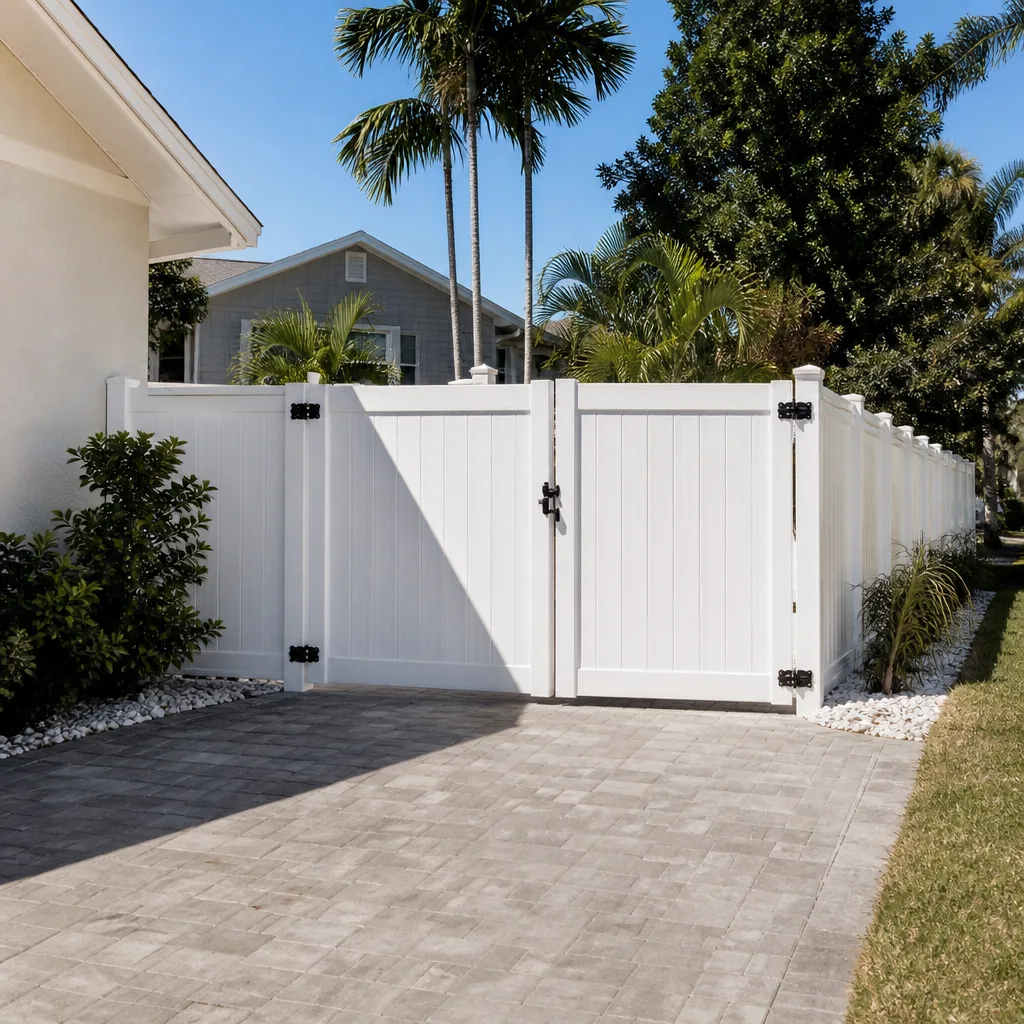
The most expensive DIY fence mistake in Orange isn’t a crooked panel. It’s a gate post set at the right height but three degrees out of plumb. That small lean produces a gate that clears the latch in month one, drags against it by year two, and can’t be fixed with hinge adjustment – the post has to come out of the ground and be re-set in fresh concrete. We’ve watched homeowners spend $1,500 to $3,000 redoing a fence that looked finished. This guide separates the fence work you can genuinely do well from the work where one error compounds, and it draws the line at the footing, not the fence.
Quick Answer
Panel hanging, staining, and hardware replacement are safe DIY tasks for a physically capable homeowner with basic tools. Post layout, footing depth, and gate post plumb are not – errors there compound past 50 linear feet and cost $1,500 to $3,000 to correct. The smartest middle path on many Orange fences is hiring a contractor for post-setting and footing only, then completing panels yourself.
Styles & brands we work with
- Kitchen remodeling
- Bathroom remodeling
- Home additions & ADU
- Roofing
- Windows & doors
- Driveway & pavers
- Fence
Table of Contents
- Post Layout and Footing Work: Where DIY Goes Wrong
- Panel Installation: A Legitimate DIY Task
- Gate Posts: The Highest-Risk Element
- Permits and Property Lines: Required Either Way
- The Partial DIY Model: Post-Setting Only
- What Each Approach Costs
- Common Mistakes to Avoid
- Frequently Asked Questions
Post Layout and Footing Work: Where DIY Goes Wrong
Layout is the part of fence building that looks easy and isn’t. The tools are specific: a string line, batter boards at each corner to hold that line while you adjust it, a transit or laser level to keep posts on a consistent grade, and a power auger to dig the holes. In Orange County, a power auger rental runs $120 to $200 per day. Most homeowners budget for the auger and skip the transit level – and that’s the first crack in the job.
Here’s the compounding problem. Eye-and-string layout works fine over 20 or 30 linear feet. Past 50 linear feet, small angular errors multiply. A string pulled a quarter-inch off square at the first corner can leave the last post three or four inches outside the property line, or short of it, on a 120-foot run. You don’t notice until the last hole is dug and the run doesn’t close.
- Establish the true boundary first. String layout presumes you know where the line actually is. Confirm it before the first stake goes in.
- Set batter boards at every corner. They hold the string while you square it, so you aren’t re-pulling the line every time you bump a stake.
- Square the corners with the 3-4-5 method. Measure 3 feet down one line, 4 feet down the other, and confirm the diagonal is 5 feet. This is the cheapest accuracy check on the job.
- Use a transit or laser level to hold grade. A string alone sags. The level keeps every post top at the same height across the run.
- Dig to local frost and wind depth. In Orange, footings typically run 24 to 30 inches deep with an 8 to 10 inch diameter for line posts – deeper and wider for gate posts, which we’ll cover below.
The auger rental is cheap. The transit level is the tool that separates a fence that closes cleanly from one that doesn’t. Our Fence Installation in Orange crews run this layout on every job because it’s the one stage that can’t be corrected after the concrete sets.
Panel Installation: A Legitimate DIY Task
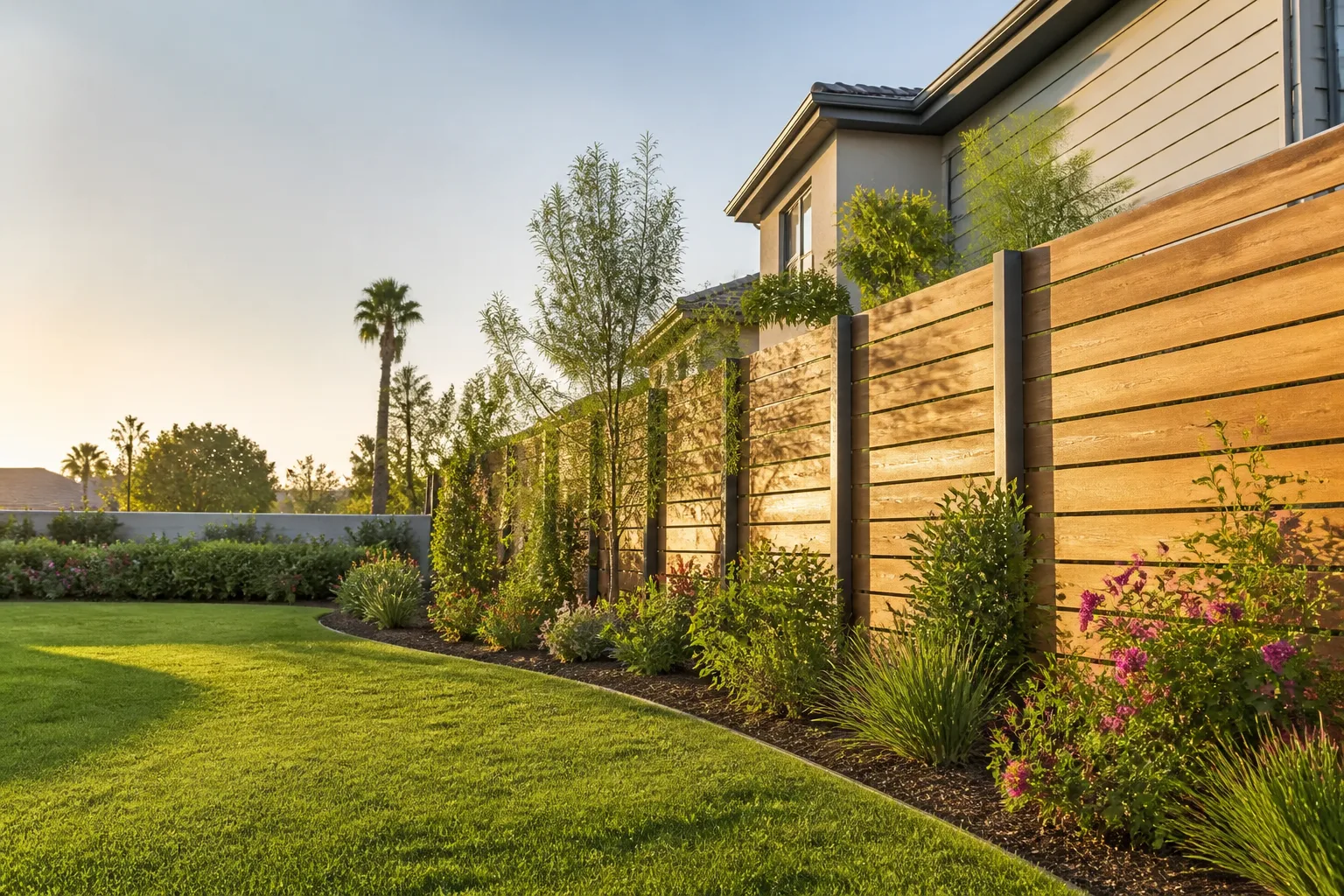
Once the posts are set, plumb, and cured, hanging panels is work a careful homeowner can do well. This is the part of the project where DIY genuinely pays off. The sequence matters more than the strength.
The correct order is: set the first panel against the first post, check it for level and square, fasten, then work panel by panel down the run. Don’t nail everything loosely and try to true it up at the end – by then the fasteners have locked in the error. Fasten one panel fully before moving to the next.
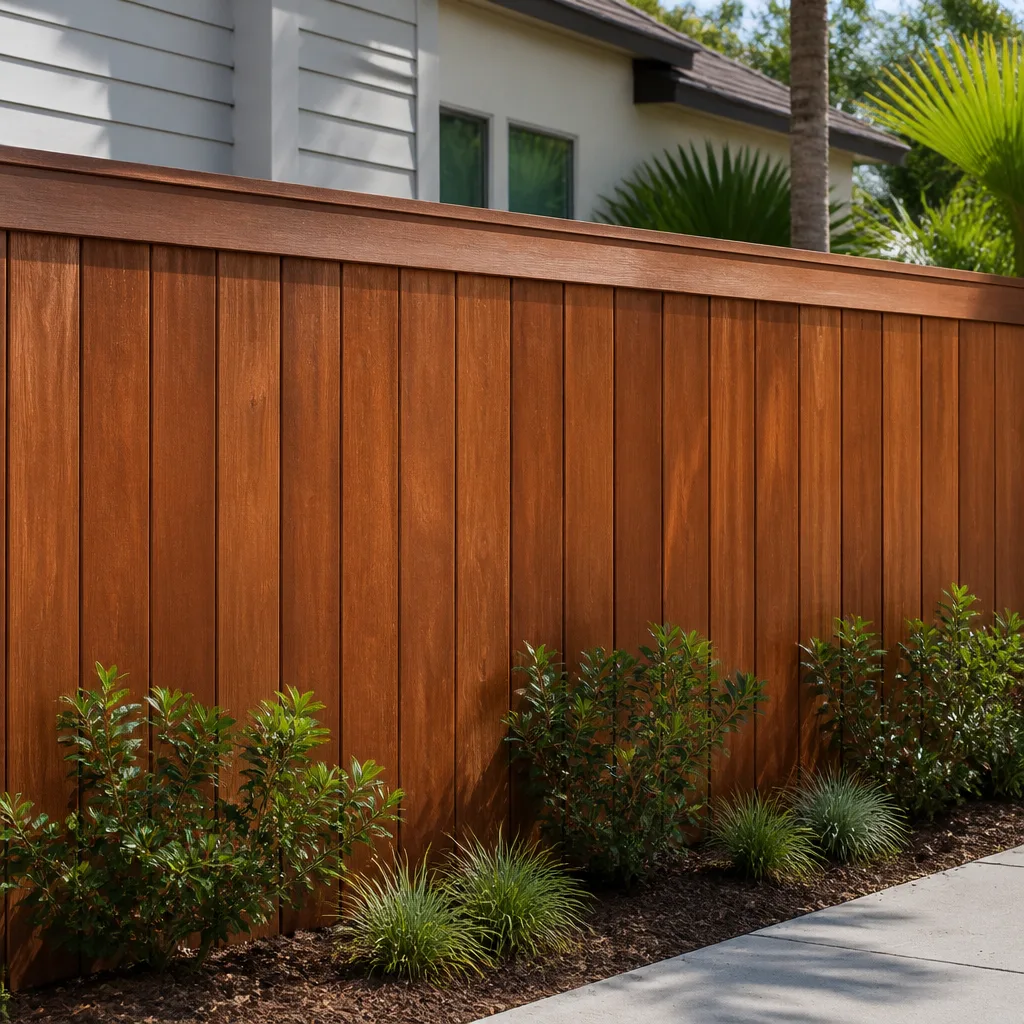
The fastener schedule is where most DIY fences fail inspection with a building inspector or a wind event. Galvanized ring-shank nails or structural screws, two per rail per post, driven into the rail’s centerline rather than the edge. Edge-nailing splits cedar and gives the panel room to work loose. For a cedar privacy fence in Orange’s dry summers and occasional Santa Ana wind gusts, that schedule isn’t optional.
Cutting panels to width without a table saw is easier than it sounds. Score the board with a utility knife along a straight edge, then work the cut – or use a circular saw with a clamped straight edge as a guide. A handsaw finishes the cut clean. Cedar cuts fast; a sharp blade and steady hand do the job, and the finished edge gets capped or faced with a trim board anyway.
Brands matter at the material stage. We source cedar and composite panels from vetted suppliers and use IKO and Atlas products where a fence ties into a shed or outbuilding. If your fence project overlaps a hardscape or shed build, the sequencing runs through our Driveway & Pavers in Orange work, since footings and drainage are shared ground.
Gate Posts: The Highest-Risk Element
A gate post carries load a line post never sees. The gate hangs off it, swings against it, and the whole assembly transfers that force into the footing. That’s why gate posts need a larger footing diameter than line posts – typically 10 to 12 inches versus 8 to 10 – and a deeper set. It’s also why the plumb tolerance is tighter than most people realize.
The tolerance is 1/8 inch per 4 feet. That’s the number. A gate post more than 1/8 inch out of plumb over 4 vertical feet will produce a gate that binds at the latch within two years, as the gate’s weight pulls the hinge side downward and the post gives slightly with each swing. At three degrees out of plumb on a 6-foot post, the top is roughly 3.8 inches off center – well past tolerance, and the gate is already fighting you.
Here’s why this is the highest-risk DIY element: you can’t see the error at install. The post looks straight against a string. The gate hangs, swings, and clears the latch. The failure is slow – a drag in year two, a latch that needs a shim in year three, a hinge that pulls in year four. By the time it’s obvious, the only fix is pulling the post out of cured concrete and re-setting it. That’s a $1,500 to $3,000 redo, and it’s not a hinge adjustment.
If you’re doing the rest of the fence yourself, this is the one stage to bring in a pro for. Call (844) 320-7508 for a free estimate on gate post setting alone – we’ll set it to tolerance, document the plumb reading in the photo record, and you hang the gate.
Permits and Property Lines: Required Either Way
Permit and property line rules apply whether you swing the hammer or hire the crew. Orange fences typically fall under a permit threshold: fences under 6 feet in height usually don’t require a permit, while anything 6 feet or taller, or within a required setback, may. Check with the City of Orange building department before you dig – the rules can shift by zone and by lot.
Property lines are the harder issue. A fence built two inches onto a neighbor’s lot is a boundary dispute waiting to happen, and it’s the kind of thing that surfaces years later when the neighbor sells. The safe move in Orange is a survey verification before layout. Options:
- Lot corner survey: a licensed surveyor locates and marks the four corners of your lot, typically $400 to $800 in Orange County. This gives you a documented boundary to build to.
- Existing recorded survey: if the title company has one on file, it may show enough to verify. Not always current enough for a build.
- Neighbor agreement: a written, signed acknowledgment of the shared line before construction. Useful when the survey shows ambiguity.
Mark the boundary yourself with stakes and a string before the auger comes out. If you’re building to a corner that’s questionable, the survey cost pays for itself against a redo. This is the same discipline we apply on Home Additions & ADU in Orange work, where setbacks are set by survey, not by eye.
The Partial DIY Model: Post-Setting Only
The cleanest split on a fence project is hiring a contractor for post-setting and footing only, then completing the panel work yourself. This captures the accuracy-critical work with a trained crew and keeps the visually satisfying, low-risk work in your hands. It’s also the model that keeps the project on a written price for the hardest-to-get-right portion.
Here’s how the split breaks down on a 100-linear-foot cedar privacy fence in Orange. Numbers are typical ranges and will vary with height, terrain, and gate count.
- Post layout, footing, and post-setting (hired): roughly $50 to $75 per post, 12 to 14 posts on a 100-foot run with one gate, or $600 to $1,050 for the setting work. Includes digging, concrete, and plumb verification.
- Gate post setting (hired): a larger footing and tighter tolerance, typically $150 to $250 for the gate assembly.
- Panels, fasteners, and finish (DIY): material cost for cedar panels, rails, and galvanized fasteners, roughly $35 to $55 per linear foot in Orange, or $3,500 to $5,500 for the 100-foot run.
- Total split: roughly $4,250 to $6,800 for the hybrid approach vs. $7,000 to $11,000 for a full contractor install of the same fence.
The post-setting portion is where the written price matters. Under Clause 1 of The Haven Standard, the price for that portion is written before anyone picks up a shovel, and no work proceeds on a change until the change order is signed. You know exactly what the setting stage costs before you decide the split. A Rowan Construction Group Orange home visit for a post-setting quote is a free estimate, and we’ll review any competitor quote line by line at no charge.
What Each Approach Costs
Comparing the three approaches on a 100-linear-foot cedar privacy fence, the numbers tell the story. Full DIY is cheapest upfront but carries the highest risk of a redo on the footing work. Full contractor install is the most expensive but carries a written price and a workmanship warranty. The hybrid sits between and gets the risky work done right.
- Full DIY: $3,500 to $5,500 in materials plus $120 to $200 for an auger rental and $400 to $800 for a survey. Risk: gate post re-set at $1,500 to $3,000 if plumb fails.
- Hybrid (post-setting hired, panels DIY): $4,250 to $6,800 total. Risk: minimal – the footing work carries the contractor’s written warranty.
- Full contractor install: $7,000 to $11,000, with written scope, written warranty, and documented photo record.
The DIY math only works if the feet hold. If the gate post fails, the DIY savings disappear. That’s the argument for the hybrid: it captures most of the savings and removes the one stage that can’t be fixed cheaply.
Common Mistakes to Avoid
- Setting a gate post three degrees out of plumb. It looks fine at install and drags at the latch by year two. The fix is a full re-set, not an adjustment.
- Layout by eye-and-string past 50 linear feet. Angular error compounds. A quarter-inch at the first corner turns into four inches at the last post on a 120-foot run.
- Edge-nailing panels. Fasteners driven into the edge of the rail split cedar and work loose under wind. Nail into the rail centerline, two per rail per post.
- Skipping the survey on a shared-property-line fence. A fence two inches onto a neighbor’s lot in Orange turns into a dispute that surfaces at resale. A $400 to $800 corner survey settles it before you dig.
- Under-sizing gate footings. Gate posts need a wider diameter than line posts – 10 to 12 inches vs. 8 to 10 – because the gate load transfers into the footing on every swing.
- Digging before checking the permit threshold. Fences at 6 feet or taller in Orange may need a permit. Confirm with the city building department before the auger comes out.
- Setting the string and never checking grade. A sagging string produces post tops at uneven heights. A transit level holds grade across the whole run.
See the difference
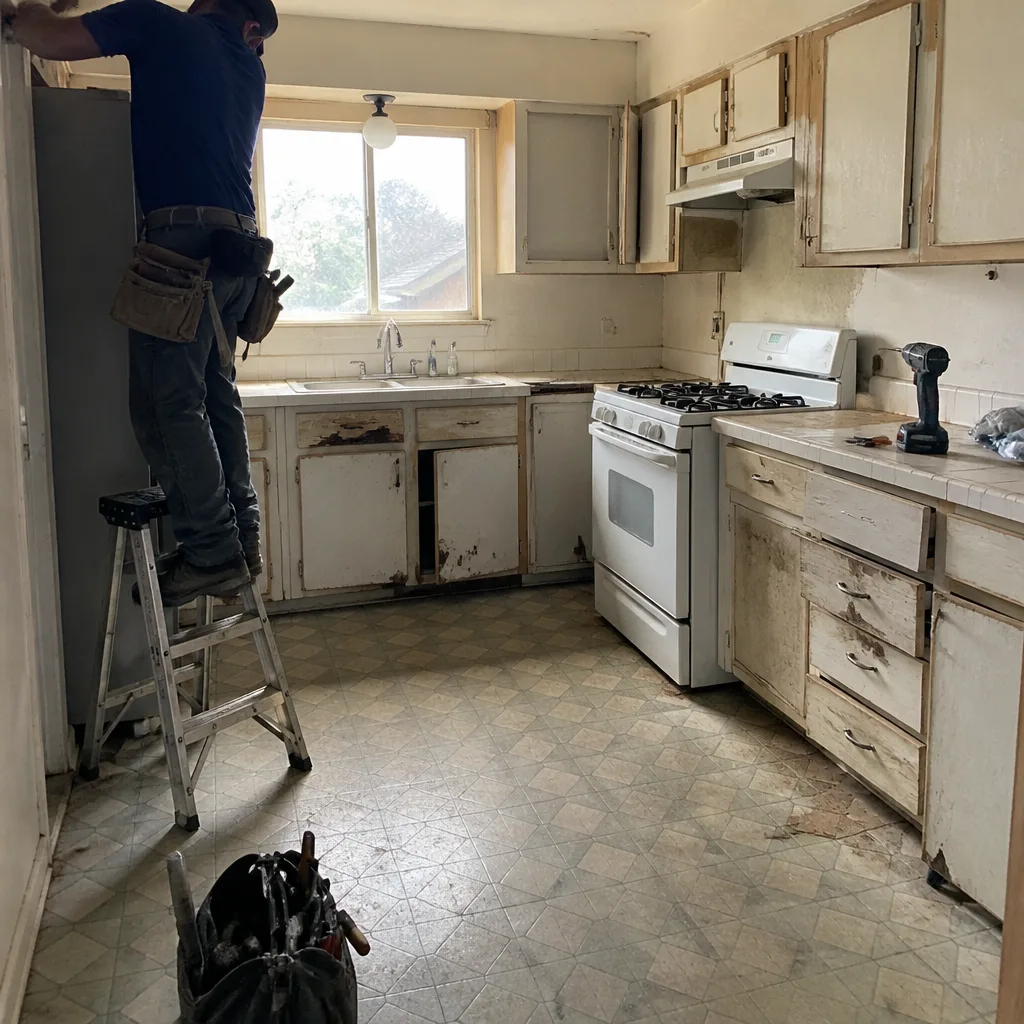 Before
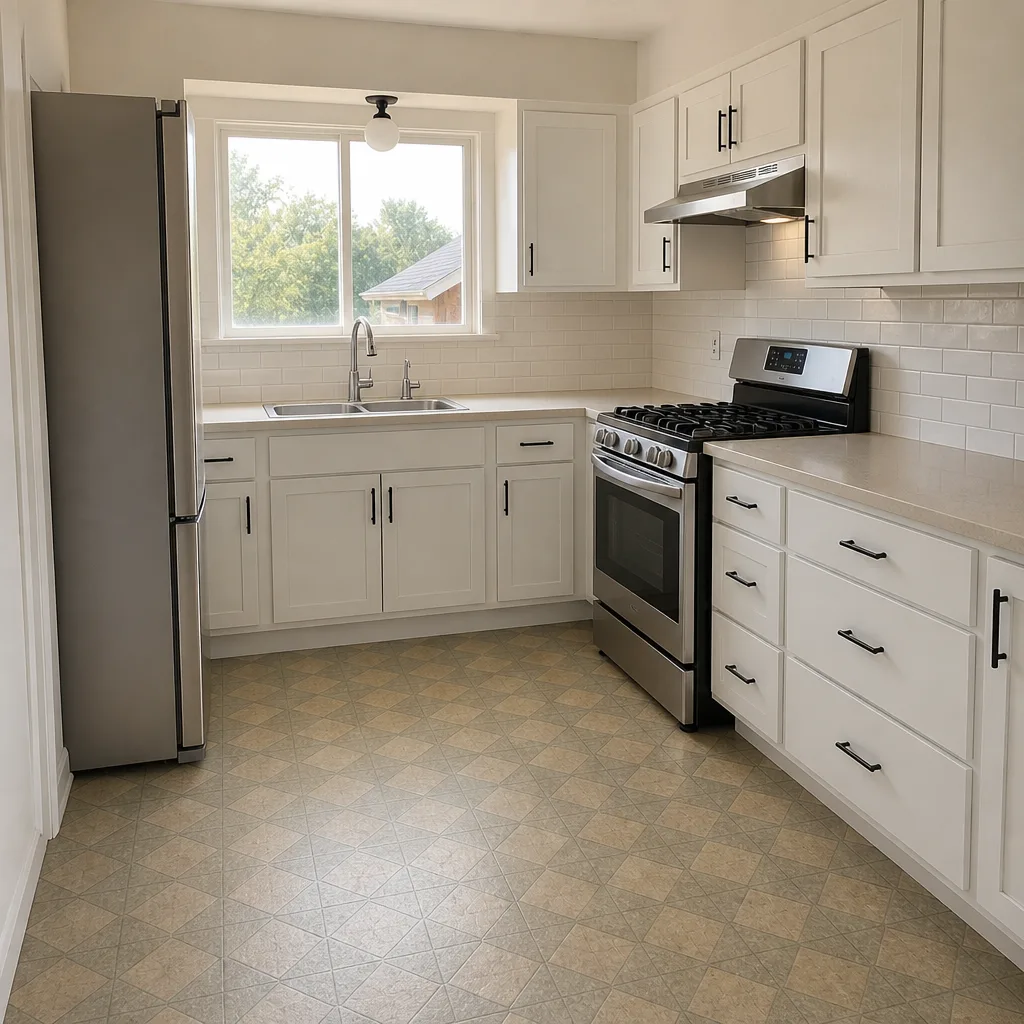 After
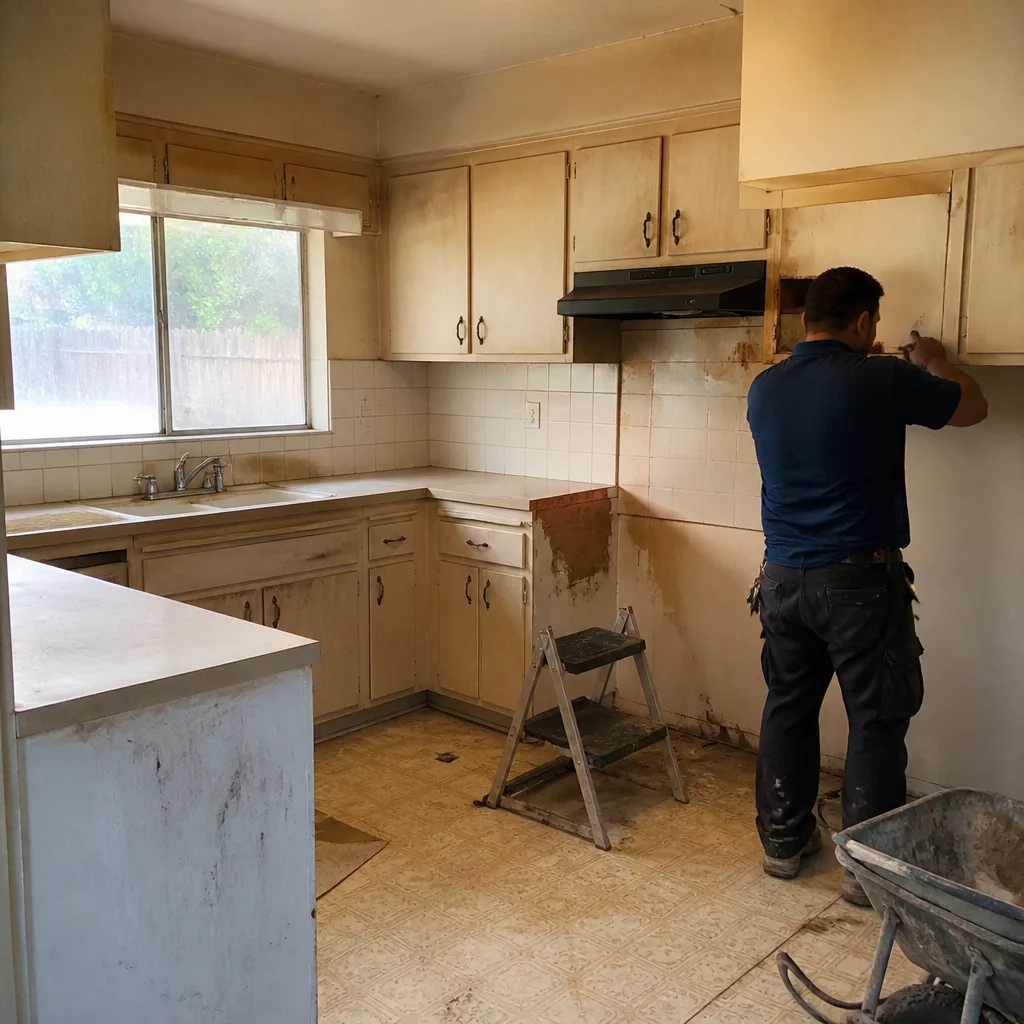 Before
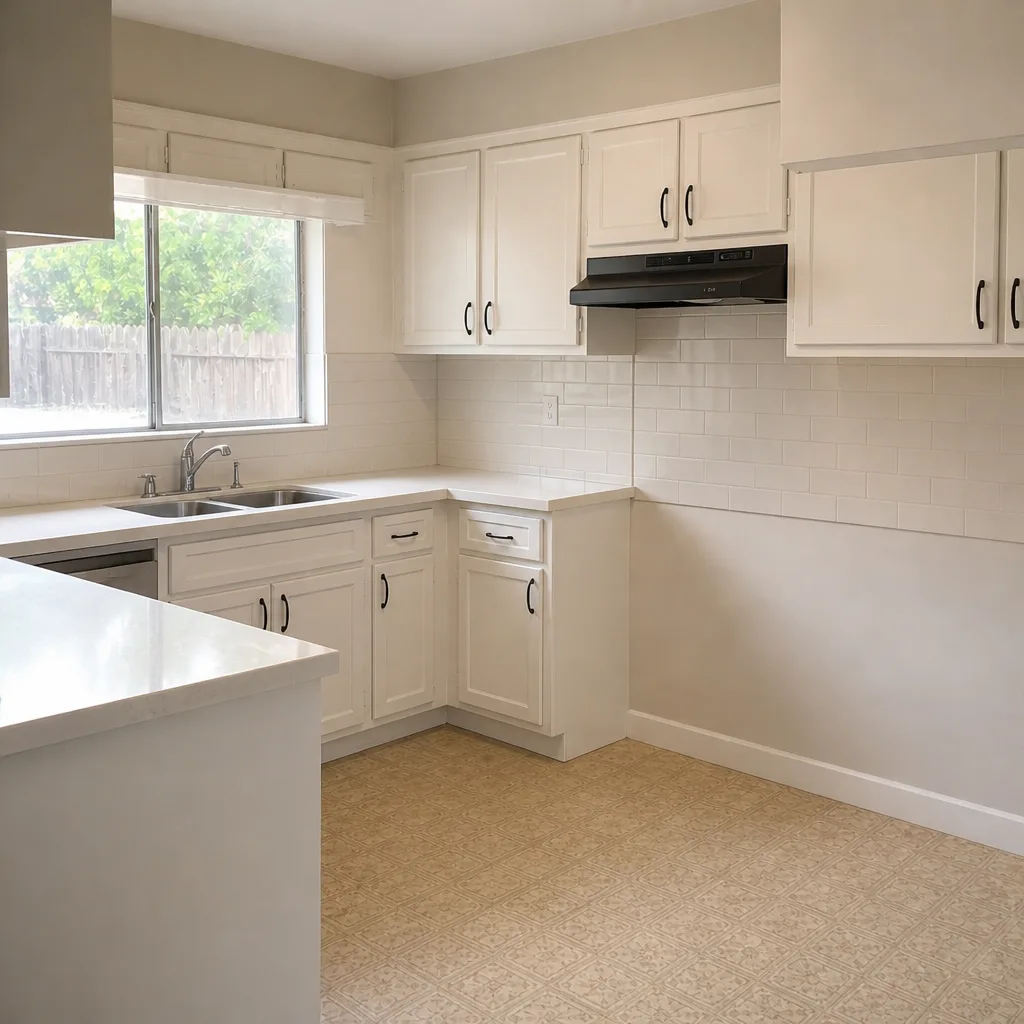 After
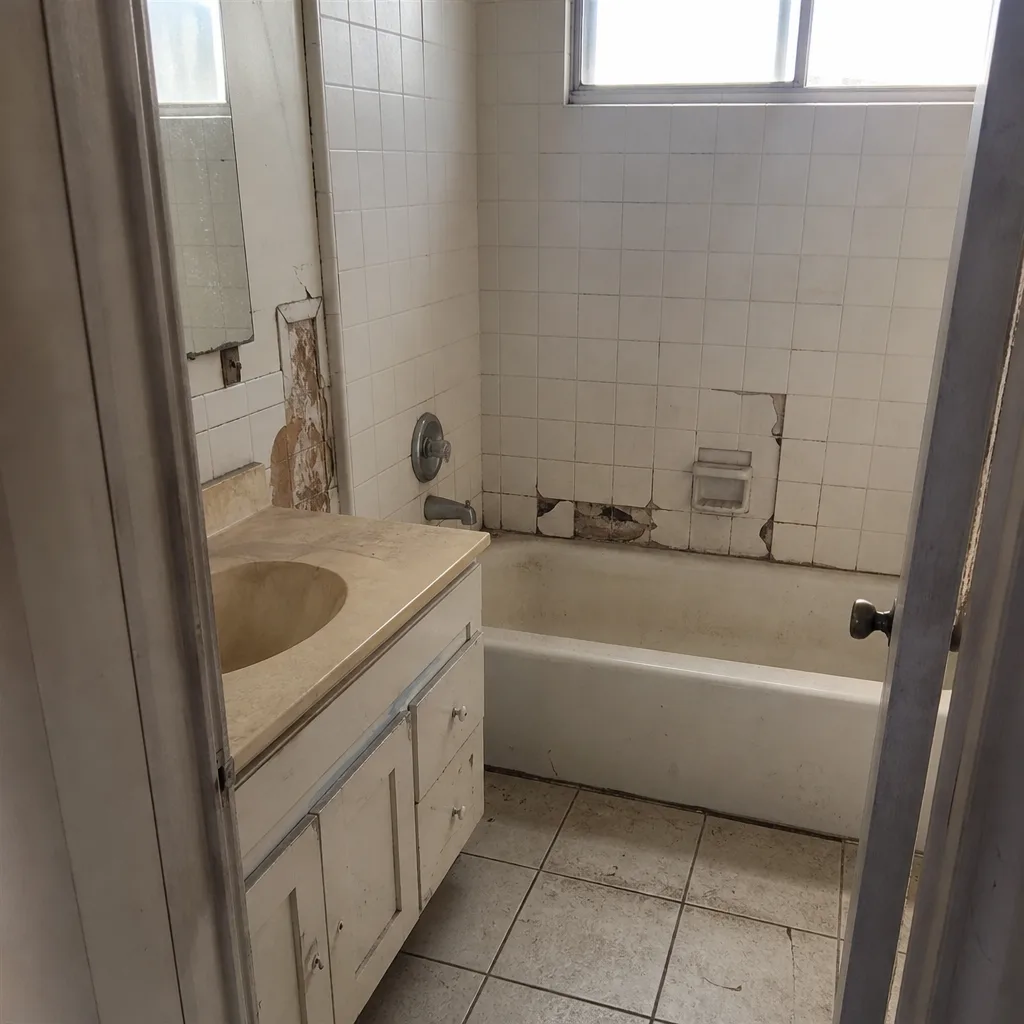 Before
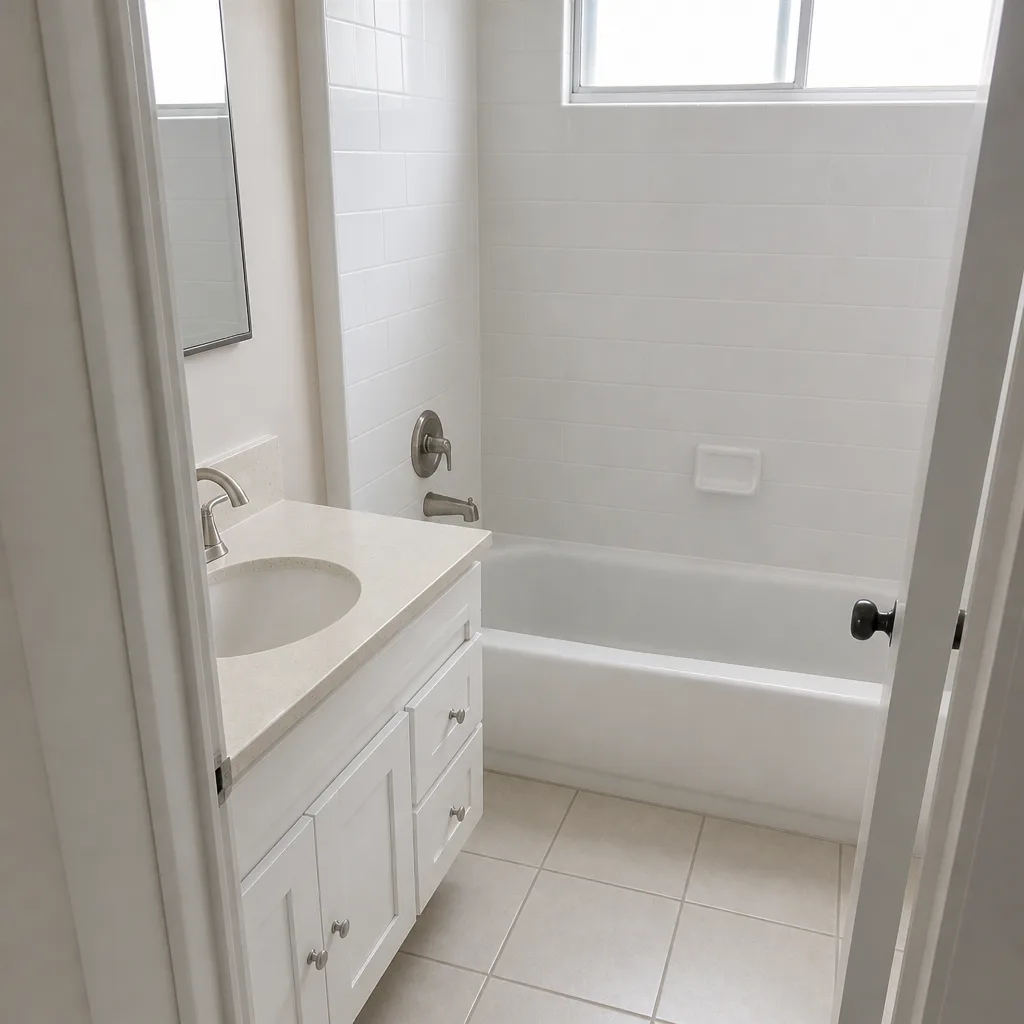 After
When to Call a Professional
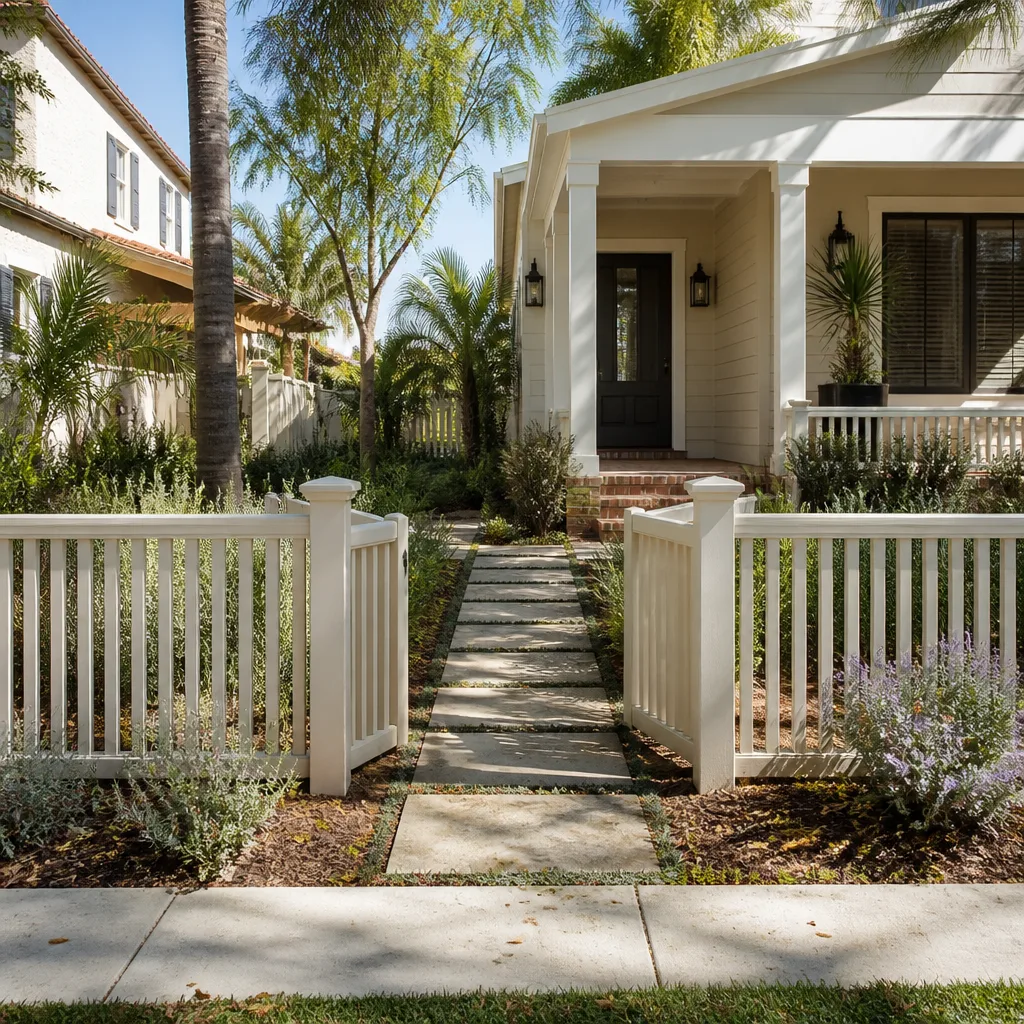
Call a professional for the footing work – post layout, footing depth, and gate post plumb – and for any fence over 6 feet, on uneven terrain, or on a property line you haven’t surveyed. Also call when a gate is involved, because the gate post tolerance is the tightest spec on the job and the failure is the most expensive to correct. Panel hanging, staining, and hardware are yours to do well. Rowan Construction Group Orange offers free estimates in Orange – call (844) 320-7508. Our technicians have up to 19 years of experience, and every visit includes a documented photo record as a standard deliverable. We’ll quote the post-setting portion in writing before any work starts.
Frequently Asked Questions
Yes – panel hanging, staining, and hardware replacement are safe DIY tasks for a physically capable homeowner with basic tools. The work to hand off is post layout, footing work, and gate post setting, because errors there compound past 50 linear feet and cost $1,500 to $3,000 to correct. Call (844) 320-7508 for a free estimate on the footing portion alone.
1/8 inch per 4 feet. A gate post more than that out of plumb will produce a gate that binds at the latch within two years, and the fix is a full post re-set, not a hinge adjustment. Three degrees out of plumb on a 6-foot post is roughly 3.8 inches off center.
$120 to $200 per day, depending on the auger size and the rental shop. You’ll also want a transit or laser level, which most homeowners don’t own – it’s the tool that holds grade across the run. Call (844) 320-7508 for a free quote on the post-setting stage if you’d rather hand off the digging and pour.
A lot corner survey is strongly recommended, and often required if the fence sits on a shared property line. In Orange County, a licensed surveyor locating and marking the four lot corners typically runs $400 to $800. It settles the boundary before you dig and prevents a dispute at resale.
Roughly $4,250 to $6,800 for a 100-foot cedar privacy fence with one gate, with post-setting hired and panels installed yourself. That’s about $50 to $75 per post for the setting work plus $35 to $55 per linear foot for panels and fasteners. Call (844) 320-7508 for an exact quote – estimates are free.
No. Under Clause 1 of The Haven Standard, the price is written before anyone picks up a tool, and no work proceeds on a change until the change order is signed. That’s the discipline that has kept our projects within a few percent of the agreed cost across 4,000-plus jobs since 2007. Call (844) 320-7508 to schedule your free estimate.
The Bottom Line
Fence installation divides cleanly at the footing. Panel hanging, staining, and hardware are yours to do well – the sequence and fastener schedule are learnable in an afternoon. Post layout, footing depth, and gate post plumb are the work to hand off, because a three-degree error at the gate post costs $1,500 to $3,000 to redo and can’t be corrected with an adjustment. The hybrid model – contractor for post-setting, DIY for panels – captures most of the savings and removes the one stage that fails expensively. The 365-Day Done Right Promise backs the footing work; the written price is on the table before anyone starts. That’s the line worth drawing in Orange.
Written by the team at Rowan Construction Group Orange.