Last updated November 18, 2026

Free written scope consultation - allowances, timeline, and change-order rules on paper before a single trade is scheduled
How Long Does Fence Installation Take? Timelines and What to Expect
A 150-linear-foot wood fence takes roughly two to three days of actual labor in Orange, CA. The full project, permit to final inspection, regularly runs four to eight weeks. The gap between those two numbers is where most schedule surprises live, and it’s almost never about how fast a crew can swing a hammer. It’s permits, material lead times, utility marking, and soil that behaves differently than the last job. This guide breaks the whole timeline into day counts you can hold a contractor accountable to, from the day you sign to the day the last post is inspected.
Quick Answer
Fence installation in Orange typically takes 2 to 4 days of on-site labor for a standard residential fence, but the complete project from signed contract to final inspection usually runs 4 to 8 weeks. Most of that calendar time is permit review at the City of Orange, material lead time, and required waiting periods like utility marking and concrete cure. Plan for weeks, not days, and you’ll avoid the schedule whiplash that catches most homeowners off guard.
Styles & brands we work with
- Kitchen remodeling
- Bathroom remodeling
- Home additions & ADU
- Roofing
- Windows & doors
- Driveway & pavers
- Fence
Table of Contents
- Phase-by-Phase Timeline: Where the Weeks Actually Go
- Permits and the City of Orange Approval Window
- Material Lead Times by Fence Type
- What “Ready to Install” Actually Requires
- How Orange Soil Affects Cure Time and One-Day Installs
- Weather Windows: Santa Ana Winds and Rain Holds
- How to Read a Contractor’s Project Schedule
- Common Mistakes to Avoid
Phase-by-Phase Timeline: Where the Weeks Actually Go
Here’s the honest breakdown of a typical residential fence project in Orange, day count by day count. We’ve watched these phases compress and stretch across hundreds of installs, and the pattern holds.
- Contract and deposit (Day 0 – 2): You sign a written scope and price. Under our standards, the price is delivered in writing before any work starts, not negotiated over the phone.
- HOA and property line confirmation (Day 1 – 10): If you’re in an HOA, you need an approval letter before the city will look at your permit. Property line staking or a survey may add days. Do not skip this – building a foot over the line means tearing it out.
- Permit application and review (Day 3 – 21): The City of Orange reviews fence permits on a turnaround that regularly lands in the two-to-three-week range for standard plans, longer if the fence is over six feet or on a slope. See the permits section below.
- Utility marking (Day 7 – 12): Dig Alert 811 requires advance notice – typically two working days minimum – before any digging. Schedule it early, and never let a crew dig without a marked ticket in hand.
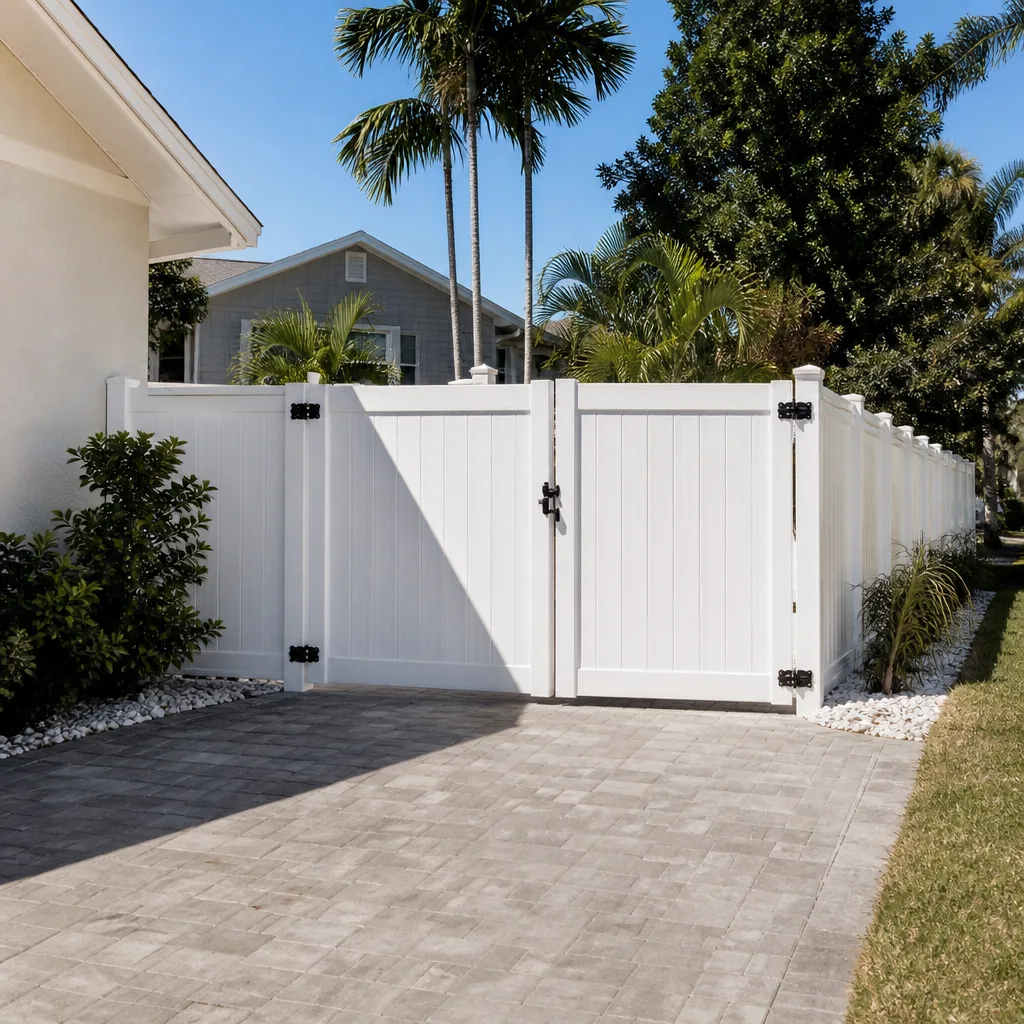
- Material order and delivery (Day 7 – 35): The wildcard. Vinyl panels can be in stock while a custom wrought-iron or specialty wood profile runs weeks. Order the moment the permit is filed.
- On-site install (Day 1 – 4 of actual labor): Dig-and-set footings, cure, then posts, rails, and infill. This is the part everyone thinks about, and it’s the shortest phase of the project.
- Inspection and punch list (Day 1 – 5 after install): Final inspection, then any corrections. A clean install passes first time; a rushed one tends to come back.
Add it up and the phase overlap is real – good contractors file permits and order materials in parallel. Bad ones run these in sequence, and that’s where the eight-week version of the schedule comes from. If you’re bundling the fence with other exterior work, our Driveway & Pavers in Orange team regularly coordinates concrete and fence schedules so a single permit window covers both.
Permits and the City of Orange Approval Window
Permits are the single most common cause of a project that “was supposed to start last month.” Fence permits in Orange aren’t complicated, but the review queue is what it is, and no contractor can move your file to the front by promising harder.
- Standard residential fence under six feet: Usually the fastest review, often in the two-to-three-week range once a complete application is filed.
- Fences over six feet or on a slope: Engineering review adds time. Budget an extra week or two.
- Corner lots and vision triangles: Height limits near intersections may require a different plan. Check before you order materials.
- HOA approval: Not a city permit, but the city won’t finalize a permit if an HOA letter is required. Get it in parallel, not after.
The mistake homeowners make is assuming a contractor who “knows the city” can shortcut the queue. They can’t. What a good contractor does is file a complete, correct application on day one, which is the only real way to avoid a rejection that sends you back to the end of the line. When we quote a Fence Installation in Orange project, the written scope names who pulls the permit and who pays for it, because a scope that’s vague on this is a scope that costs you a week.
Material Lead Times by Fence Type
Here’s a number most contractors never put on the page: material delivery windows can swing from days to a month depending on what you pick. That single variable moves the finish date more than any labor decision.
- Wood (cedar, redwood, pressure-treated): Often stockable in days, but premium or odd-length profiles can run 1 to 3 weeks. Wood is the easiest to source and the easiest to reorder if a board comes up short.
- Vinyl: Typically the fastest – common panels and posts are frequently in stock or within a week. Custom colors and heights stretch to 2 to 3 weeks.
- Wrought iron and aluminum: Fabricated to order, so plan on 2 to 5 weeks for custom runs. This is where a project timeline silently doubles if you order late.
- Composite: Similar to vinyl for stock profiles, longer for special-order colors.
The practical rule: order materials the day the permit is filed, not the day it’s approved. If the fence runs alongside new exterior work – a door or window replacement, for instance – coordinate the order with your other trades. We specify materials from vetted brands like Therma-Tru and ECO Window Systems on adjacent scopes so one delivery window covers several items instead of three. A written quote names the material, the brand, and the expected delivery window, which is the difference between a schedule and a guess.
What “Ready to Install” Actually Requires
Before a single post hole is dug, four things have to be done. Skip any one of them and the install date slips. Here’s the checklist that separates a ready job from one that stalls on the morning of.
- Utility marking (Dig Alert 811): Call 811 at least two working days before digging. You are legally responsible for what gets hit if you skip this, and the ticket is your record. Gas, electric, water, and irrigation lines run deeper than most people expect.
- HOA approval letter in hand: Some neighborhoods in Orange require a letter before the city finalizes the permit. Get it early.
- Property line confirmed: If there’s any question about where the line sits, get a survey or have the line staked. A fence built six inches over a neighbor’s line is a legal problem, not a finishing detail.
- Permit approved and posted: The posted permit is proof the city reviewed the plan. Inspectors look for it.
Each of these has its own calendar time. Utility marking takes a couple of days. An HOA letter can take a week. A survey can take longer if the lot lines are unclear. The companies that look “fast” are simply the ones that start all four on day one. A written schedule names each item, who owns it, and the date it must be done by – and if the work is part of a larger project, a documented photo record of each site visit shows exactly what was found and what changed.
How Orange Soil Affects Cure Time and One-Day Installs
Soil is the factor nobody puts on a brochure, but it’s a real one in Orange. Older neighborhoods here sit on expansive clay – the kind that swells when wet and shrinks when dry, and that will lift and shift a poorly set post within a season. That soil behavior is why the concrete cure phase is the part of a fence install that should never be rushed.
Concrete footings need time to reach working strength before the posts take the load of panels and wind. Just-set concrete is fragile, and a crew that hangs full panels on green footings is betting your fence against the weather. In expansive clay, a wider, deeper footing with proper drainage is the fix, and it adds a day to the dig-and-set phase. A one-day install of a full wood fence is not a schedule worth trusting unless the footings are pre-cast or the crew is setting posts into a system designed for it.
Our guidance is simple: a dig-and-set install with proper cure time is two to four days of real work, not one. If a bid promises a full fence in a single day with concrete footings on clay, ask how the concrete cures. The answer tells you what kind of contractor you’re talking to.
Weather Windows: Santa Ana Winds and Rain Holds
Orange County weather is gentle compared to most of the country, but it still moves schedules. Two patterns matter most for fences.
- Rain holds: Concrete footings don’t set properly in standing water and wet clay. A rain event can cost a day or more – and in an El Niño winter, several. A good contractor builds a weather buffer into the schedule rather than cramming the install into a wet week.
- Santa Ana wind events: High winds during panel installation are a safety issue with large panels acting like sails. Installers may pause on a windy day rather than risk a panel catching and causing injury. Plan for small delays during windy periods.
- Summer heat: Less of a hold, more of a cure consideration – concrete sets faster in heat, and crews pace themselves. Not a reason for delay, but a reason a rushed schedule in July is still a rushed schedule.
Fence work is exterior work, so the calendar has real weather built in. A schedule that promises a summer install with no weather buffer is a schedule setting you up for a surprise. When we quote a fence, the written timeline names the season and the expected weather risk, which lets you plan the finish date honestly. The standard for the whole crew, from fence to Home Additions & ADU in Orange, is to finish within a few percent of the number we agreed to – and weather is part of the number.
How to Read a Contractor’s Project Schedule
A verbal promise of “a few days” tells you nothing. A real schedule tells you everything. Here’s what a legitimate project schedule contains, and how to tell it apart from a handshake.
- Phase names and day counts: Separate lines for permits, utility marking, material delivery, dig-and-set, cure, install, and inspection – each with a start and end date, not a single “install” line.
- Who owns each step: Permit filed by whom. 811 called by whom. HOA letter by whom. If the schedule doesn’t assign ownership, every gap becomes “we’re waiting on you.”
- Buffer days: A real schedule has slack for rain, wind, and inspection queues. A schedule with zero buffer is a schedule that will run over.
- Written scope and warranty: The schedule should reference the written scope and the written warranty so the finish line is defined. Our 365-Day Done Right Promise is printed on every project, not tucked in an asterisk.
The best defense against schedule slippage is documentation – a written schedule, a signed change order for any scope change, and a photo record on every visit. If a contractor can’t hand you a schedule with these parts, you’re looking at a verbal promise, and the best you can do is take it on faith. For a broader look at how the whole process fits together, our Rowan Construction Group Orange home page lays out the trades and the standards we apply across all of them.
Common Mistakes to Avoid
- Ordering materials before the permit is filed. A pallet of panels sitting in your yard while the city reviews is money sitting idle – and if the plan changes, it’s wrong material to return.
- Skipping the 811 call to “save a couple days.” It takes two working days, and the alternative is a hit gas line, a dangerous and expensive repair, and a delayed project.
- Trusting a one-day install with wet concrete. Panels hung on green footings in clay soil can lean within a season. Ask how the concrete cures before you sign.
- Assuming an HOA letter is a formality. In neighborhoods that require one, the city won’t finalize without it, and it can take a week to get. Start it on day one.
- Building without confirming the property line. A fence built over the line is a legal problem that can mean dismantling and redoing it, regardless of how good the workmanship is.
- Accepting a verbal schedule. “A few days” is not a schedule. Demand phase names, day counts, ownership, and buffer.
- Scheduling installation in the middle of a rain forecast. Concrete and wet clay don’t mix well. A good contractor builds a weather buffer, and you should expect to see one.
See the difference
 Before
 After
 Before
 After
 Before
 After
When to Call a Professional
Call a professional when the work involves a permit, an HOA approval, or footings on clay soil – which in Orange is most fences. Call a professional the moment the job is over six feet tall or on a slope, when it runs along a property line that isn’t clearly staked, when the fence shares a boundary with a neighbor and you need it done right the first time, or when the fence is part of a larger exterior project and needs to coordinate with doors, windows, or pavers. A crew working without utility marking, a permit, or a written schedule is a risk to your wallet and your safety. The safe move is always to have a licensed, insured local professional confirm the line, pull the permit, and handle the footings.
Rowan Construction Group Orange offers free estimates in Orange. Call (844) 320-7508 to schedule yours, and you’ll get a written price and a phase-by-phase schedule before anyone picks up a tool.
Frequently Asked Questions
Fence installation in Orange takes 2 to 4 days of on-site labor for a standard residential fence, but the full project from signed contract to final inspection typically runs 4 to 8 weeks because of permit review, material lead time, utility marking, and concrete cure. Call (844) 320-7508 for an exact quote and schedule – estimates are free.
Most residential fences in Orange require a permit, especially fences over six feet tall or on a slope. The City of Orange reviews permit applications on a turnaround that often runs two to three weeks once a complete application is filed. A licensed contractor files the permit and builds the review window into the schedule. Call (844) 320-7508 to ask what your specific fence needs.
A full wood fence with concrete footings can’t be installed safely in one day on the expansive clay common in older Orange neighborhoods, because the concrete needs time to cure before panels load the posts. The dig-and-set phase alone is typically two to four days with proper cure time. Ask any contractor how they handle cure time before you sign.
Vinyl is usually the fastest, with common panels and posts in stock or within a week. Wood runs days to three weeks for premium profiles. Custom wrought iron and aluminum fabricated to order can take two to five weeks. Order the moment the permit is filed so the delivery window overlaps the permit review. Call (844) 320-7508 for a quote with a named delivery window.
Under our standard, no work proceeds on a change until a signed change order exists – a written price is delivered before work starts, and the change order discipline is what keeps projects within a few percent of the agreed number. If the scope changes, you see the number before anyone lifts a tool. Call (844) 320-7508 for a written quote.
Rain and Santa Ana wind events are the main schedule movers in Orange County. Wet clay holds up concrete cure, and high winds can pause panel installation for safety. A well-built schedule includes buffer days for weather. Call (844) 320-7508 to plan your install around the right season.
The Bottom Line
The timeline for a fence in Orange is set mostly by permits, material delivery, and soil – not labor. Two to four days of install work sits inside a four-to-eight-week calendar that includes City of Orange permit review, Dig Alert 811 marking, HOA letters, property line confirmation, and concrete cure time on expansive clay. Any contractor who quotes “a few days” without a phase-by-phase schedule, day counts, and weather buffer is giving you a guess, not a plan. Get the number in writing before anyone starts, and hold the schedule to it. That’s the difference between a fence that lasts and a fence that leans.
To schedule a free estimate, call (844) 320-7508.
Written by the team at Rowan Construction Group Orange.