
Last updated November 18, 2026





Free written scope consultation - allowances, timeline, and change-order rules on paper before a single trade is scheduled
How to Hire a Construction Contractor in Orange: A Step-by-Step Guide
California’s CSLB license lookup will tell you a contractor’s license is active. It will not tell you that the workers’ compensation policy lapsed six weeks ago, that two civil judgments are attached to that license number, or that the person signing your contract isn’t the person whose name is on the bond. Most homeowner guides stop at “get three bids and check reviews,” which is why so many people in Orange pass the license check and still end up with a half-finished kitchen and a lien on the house. This guide walks through the five document-level checks that actually separate a stable contractor from a risky one, in the order you should run them. It’s written for Orange homeowners who research the way they buy a car: they want the number on the page before they pick up the phone.
Quick Answer
To hire a construction contractor in Orange, verify four things in this order before signing anything: the CSLB license record (including bond and disciplinary history, not just active status), a certificate of insurance naming you as additional insured, a contract that meets California Business & Professions Code §7159 line by line, and a payment schedule that never exceeds 10% or $1,000 down, whichever is less. If any one of those four fails, walk away regardless of how good the bid looks. The right contractor will hand you every document without being asked twice.
Styles & brands we work with
- Kitchen remodeling
- Bathroom remodeling
- Home additions & ADU
- Roofing
- Windows & doors
- Driveway & pavers
- Fence
Table of Contents
- Step 1: Run the CSLB Lookup the Right Way
- Step 2: Read the Certificate of Insurance Correctly
- Step 3: Compare the Contract Against §7159
- Step 4: Test the Change Order Process Before You Sign
- Step 5: Audit the Payment Schedule
- How to Compare Three Bids Without Getting Fooled
- What’s Different About Hiring in Orange
- Common Mistakes to Avoid
- Frequently Asked Questions
Step 1: Run the CSLB Lookup the Right Way
The Contractors State License Board database at cslb.ca.gov is the single most important tool you have, and almost nobody uses it beyond the first screen. The summary view shows license status, classification (B for general building, C-39 for roofing, C-27 for landscaping, and so on), and expiration. That’s the easy part. The fields that matter live one or two clicks deeper.
Here’s the sequence we walk homeowners through when they ask what to check:
- Confirm the classification matches the work. A B general building license covers most residential remodeling. Roofing, fencing, and paving each have their own C-classification. A contractor holding only a C-39 shouldn’t be quoting your kitchen.
- Open the “License History” tab. This shows when the license was issued and any suspensions or reinstatements. A license that goes inactive and active repeatedly is a warning sign.
- Check the bond amount. California requires a $25,000 contractor’s bond for a licensed contractor. The lookup screen shows the bond carrier and the effective date. If the bond shows “cancelled” or “expired,” the license is technically active but the consumer protection is gone.
- Open the “Complaints / Disciplinary Actions” tab. This is the screen most homeowners never find. It lists formal complaints, citations, and any arbitration awards. Disciplinary actions that resulted in a stayed or revoked license appear here, not on the summary page.
- Search for civil judgments separately. The CSLB screen won’t show you these. You find them through the county recorder or a paid background service. Two judgments attached to the same license number is a pattern, not bad luck.
We’ve seen Orange contractors with spotless summary screens and a disciplinary tab listing three separate citations. The information is there. You just have to open the door.
Step 2: Read the Certificate of Insurance Correctly
When you ask a contractor for a certificate of insurance, you’ll get a one-page PDF from their insurance agent. It looks official. Most homeowners glance at it, see words like “General Liability” and “Workers’ Compensation,” and file it away. The problem is that the certificate tells you what’s covered, not who’s protected.
Here’s the distinction that matters:
- Certificate holder means you’ll be notified if the policy is cancelled. That’s it. You have no rights under the policy.
- Additional insured means you are covered under the contractor’s liability policy while they’re working on your property. If a worker damages your neighbor’s car with a falling shingle, you’re protected. If your house catches fire because of a bad weld, you’re covered.
Only “additional insured” protects you. A certificate listing you as certificate holder does nothing to shield you from liability for an injury on your property. Ask for a certificate that names you as an additional insured, and confirm the coverage dates span the full duration of the project, not just the start date. For a long remodel on a house in Old Towne Orange, the policy needs to be active through the final inspection, not just the first nail.
Workers’ comp is the second half of this check. A general liability policy won’t pay for a worker who falls off your roof. In California, any contractor with employees is required to carry workers’ compensation. Ask for the workers’ comp certificate separately, and if the contractor is a sole proprietor with no employees, ask how they intend to handle injury on your job site. The answer should be specific.
Step 3: Compare the Contract Against §7159
California’s Business & Professions Code §7159 lays out exactly what a home improvement contract must contain. A compliant contract is not just a scope of work with a signature line. It has roughly a dozen required elements, and any one missing gives you legal grounds to void the contract, which is not a position you want to discover after work has started.
Print this list. Sit down with any contract you’re handed and check each item off:
- Contractor’s name, address, and CSLB license number
- Date of the contract and a description of the work
- A detailed description of materials and equipment to be used
- The total price, or a clear formula for calculating it
- A payment schedule tied to milestones, not dates
- A notice of the right to cancel within three business days (for contracts signed at home)
- A statement of the contractor’s bond and insurance
- A notice of any mechanic’s lien rights
- The approximate start and completion dates
- A description of any warranties offered
- A statement that the contractor is licensed by the CSLB, with the license number printed on the contract itself
- Signature lines for both parties and the date signed
The contract should be in writing, in English (or in the language used in the sales presentation), and signed before any work begins. If the contractor hands you a one-page proposal and says “this is standard,” it isn’t. Every written price should come with a written scope and a written warranty, and if the scope isn’t detailed enough to compare against a second bid, it isn’t a contract yet.
Under Clause 1 of the Haven Standard, the number is written before anyone picks up a tool. That standard exists because “we’ll work it out as we go” is how a $30,000 kitchen in a 1950s Eichler-style home in Orange turns into a $58,000 one.
Step 4: Test the Change Order Process Before You Sign
Change orders are where most remodel budgets die. A change order is a written amendment to the original contract covering added or modified work, with the new price and any schedule impact spelled out. The change order process is the single most revealing thing you can evaluate during the bid meeting, because it tells you how the contractor handles the moment when reality diverges from the plan.
Ask these questions before signing anything:
- “If we open the wall and find knob-and-tube wiring, what happens?” The answer should be: work stops, you receive a written change order with a line-item price, you sign it, work resumes. If the answer is “we’ll take care of it,” ask for that commitment in writing.
- “Can a change order be approved by text or email?” If yes, ask how the price is documented. Text approval without a written price is a blank check.
- “What happens if the change order isn’t signed?” The correct answer is nothing proceeds until the change is signed. No verbal go-ahead, no “just start on it.”
- “Who signs on your side?” The owner or the foreman? A change order signed by anyone other than a licensed signatory is procedurally weak.
We’ve seen Orange remodels where the contractor started a $4,000 framing change on a handshake and invoiced it three weeks later, after the wall was closed up. The homeowner had no leverage. A written change order signed before the work begins is not red tape. It’s the difference between a project finishing within a few percent of the agreed price and one that blows the budget by 20%.
Step 5: Audit the Payment Schedule
California law limits the down payment on a home improvement contract to 10% of the total price or $1,000, whichever is less. This is not a suggestion. A contractor who asks for 30% up front on a $40,000 remodel is in violation of the Business & Professions Code, and the deposit cap exists because a large early payment is what leaves homeowners stranded when a contractor stops showing up.
Here’s what a compliant payment schedule looks like on a $45,000 project:
- Deposit at signing: $1,000 (10% would be $4,500, so the $1,000 cap applies)
- Milestone 1 (demo complete, rough-in inspected): 25% of the balance
- Milestone 2 (drywall and cabinets installed): 30% of the balance
- Milestone 3 (final finishes): 25% of the balance
- Final payment (after inspection and walkthrough): 20% of the balance
The ratio matters less than the milestone structure. Every payment should be tied to a completed, inspectable stage of the project, not to a calendar date. If the schedule says “payment due on the 15th,” ask which milestone the 15th represents. If the contractor can’t answer, ask for a revised schedule before you sign.
The final payment should always be held until the job is done and inspected. A contractor who asks for 100% before the punch list is closed has no incentive to come back and fix the things you flagged.
How to Compare Three Bids Without Getting Fooled
Three bids is standard advice, but three bids for the same scope is what actually gives you useful information. If one contractor quotes a full tear-out and rebuild and the other two quote a reface, the numbers aren’t comparable. Before you collect bids, put together a simple written scope: dimensions, materials you want quoted (name brands like KraftMaid or Wellborn cabinets, Cambria or Caesarstone counters, James Hardie siding), and any required permits.
Send the same scope to all three. Then compare the following:
- Line-item breakdowns. A bid that says “Kitchen remodel: $38,000” is not a bid. It’s a guess. The good ones list demo, rough-in, drywall, cabinets, counters, tile, paint, and permits separately.
- Exclusions. What’s not in the bid is as important as what’s in it. Ask each contractor to list exclusions in writing.
- Permit handling. In Orange, kitchen and bath remodels, additions, ADUs, and most structural work require permits pulled through the city’s building division. Ask who pulls them and what the fee is. A contractor who says “we don’t need a permit for that” is either wrong or planning to skip it.
- Change order policy. The written policy, not the verbal one.
- Warranty. Get it in writing. A 365-day workmanship warranty on a written page is a promise. A verbal one is nothing.
A free second opinion on any written estimate you’re holding is also worth asking for. Bring a competitor’s quote to a contractor you’re considering and ask them to review it line by line. A confident contractor can point out where the competitor’s number is honest and where it’s a placeholder for future change orders. A defensive contractor will tell you not to bother.
What’s Different About Hiring in Orange
Orange has a building stock that shapes what contractors should be quoting you. The city has thousands of homes built between 1900 and 1970, particularly in the Plaza Historic District, Old Towne, and along the streets around Chapman University. That age shows up in the work.
Knob-and-tube wiring, galvanized plumbing, and clay sewer lines are common in homes older than 1950. The Mills Act designation in the historic districts imposes restrictions on exterior alterations, which affects window replacements, roofing materials, and paint colors. A contractor familiar with the Orange building division will know to check for historic status before quoting anything visible from the street.
ADU construction has also accelerated across Orange in the last several years, driven by state law that overrode local objections and the city’s own updates to its ADU ordinance. A garage conversion is a different scope of work than a kitchen remodel, with its own permit process, its own setbacks, and its own utility connections. If you’re considering one, our Home Additions & ADU in Orange page walks through the process in detail.
Exterior projects like fences and driveways hit specific conditions here. The clay soil and the seasonal dry-wet cycle mean fence posts set in concrete need to go deep enough to resist heave, and paver bases need proper compaction or they’ll shift within two seasons. Our Fence Installation in Orange and Driveway & Pavers in Orange pages cover those in depth. For a fuller look at the trades we work across in the city, the Rowan Construction Group Orange home page is a good starting point.
Common Mistakes to Avoid
- Trusting the CSLB summary screen alone. An active license doesn’t mean the bond is current, the workers’ comp is intact, or the disciplinary history is clean. Open every tab.
- Accepting a certificate of insurance without reading it. “Certificate holder” is not “additional insured.” Make sure the wording names you directly.
- Signing a contract without the §7159 checklist beside you. Missing elements void the contract in your favor, but only if you catch them before work begins.
- Starting work on a verbal change order. If a foreman tells you “the price is $3,800, I’ll get you paperwork later,” work stops until the paperwork exists.
- Paying more than 10% or $1,000 down. This is a legal violation on the contractor’s part and a serious risk for you. No exceptions, including “materials deposit.”
- Assuming the permit will happen. Ask for the permit number in writing before the first day of work. If the contractor can’t produce it, they didn’t pull it.
- Choosing the lowest bid without comparing scope. In Orange’s older housing stock, a low bid often means the contractor is assuming conditions that trigger a change order in week two.
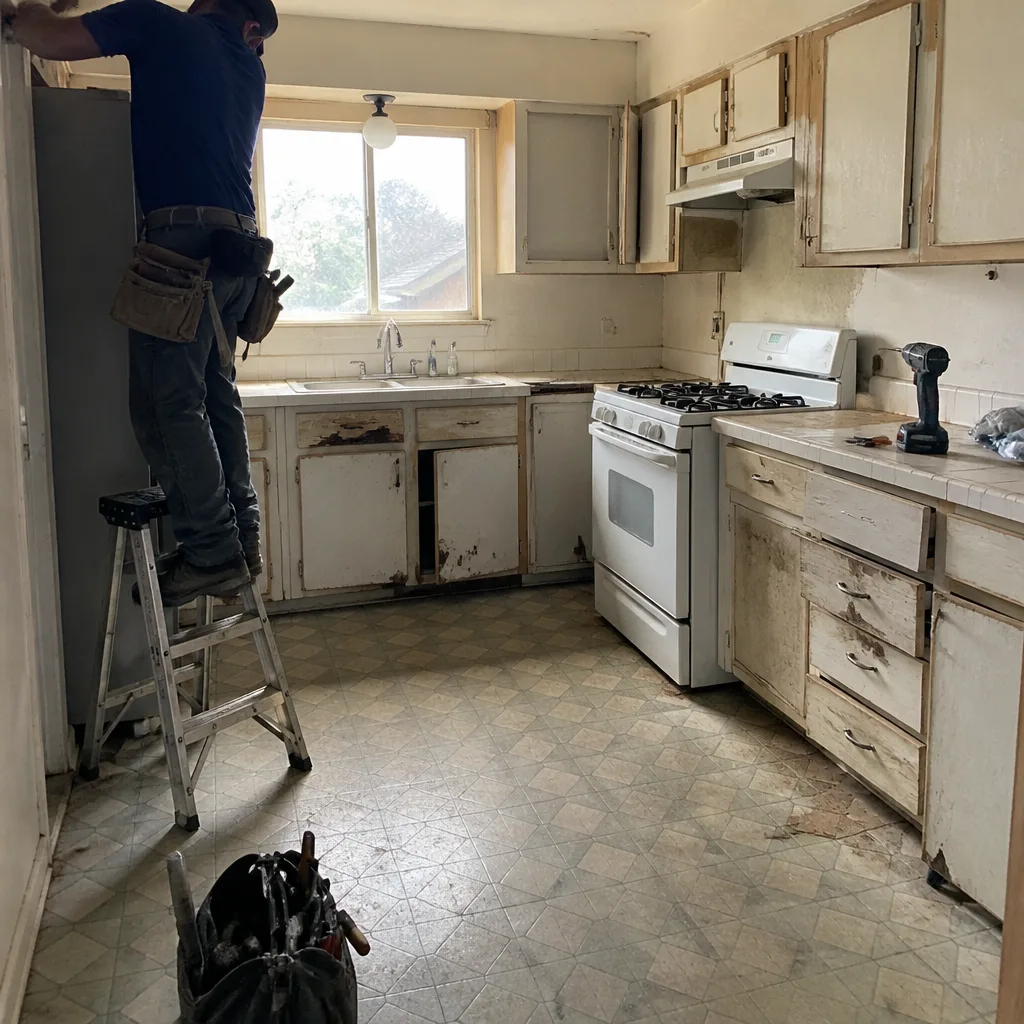
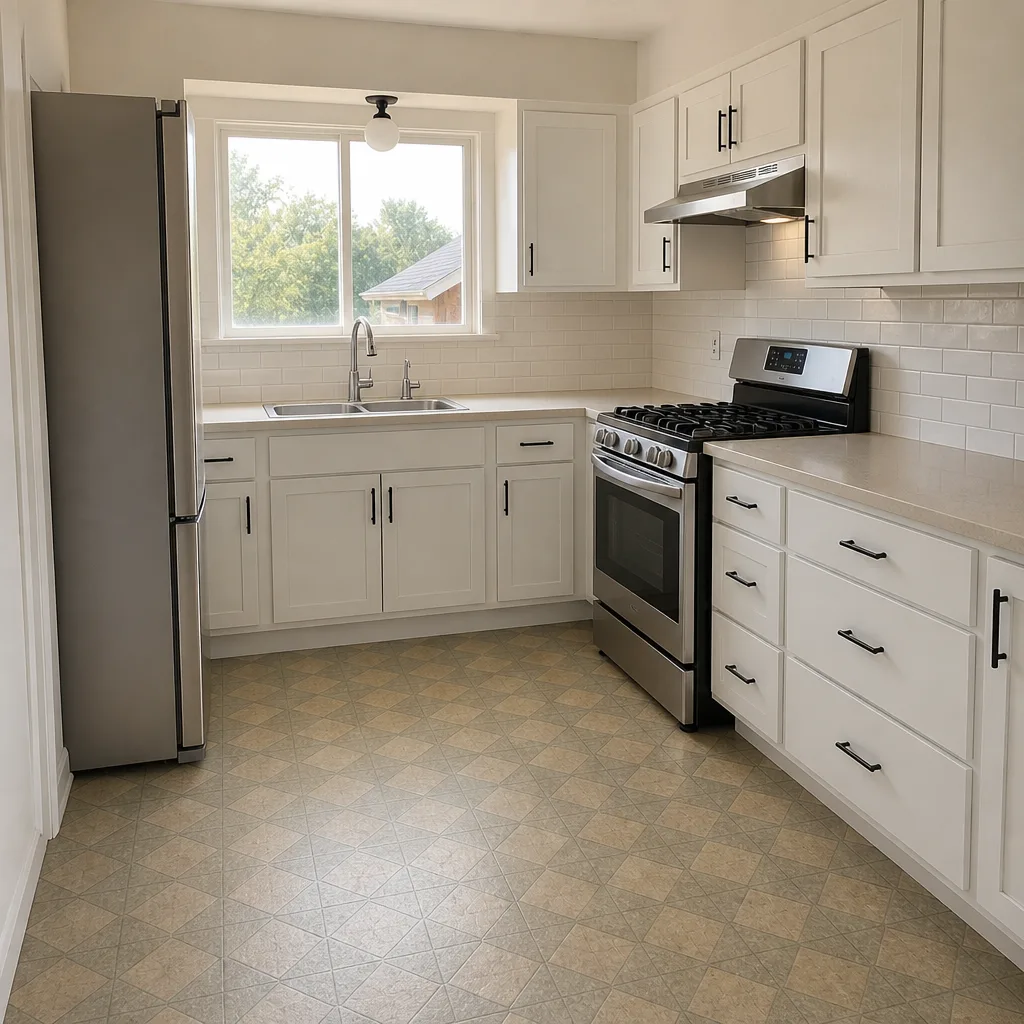
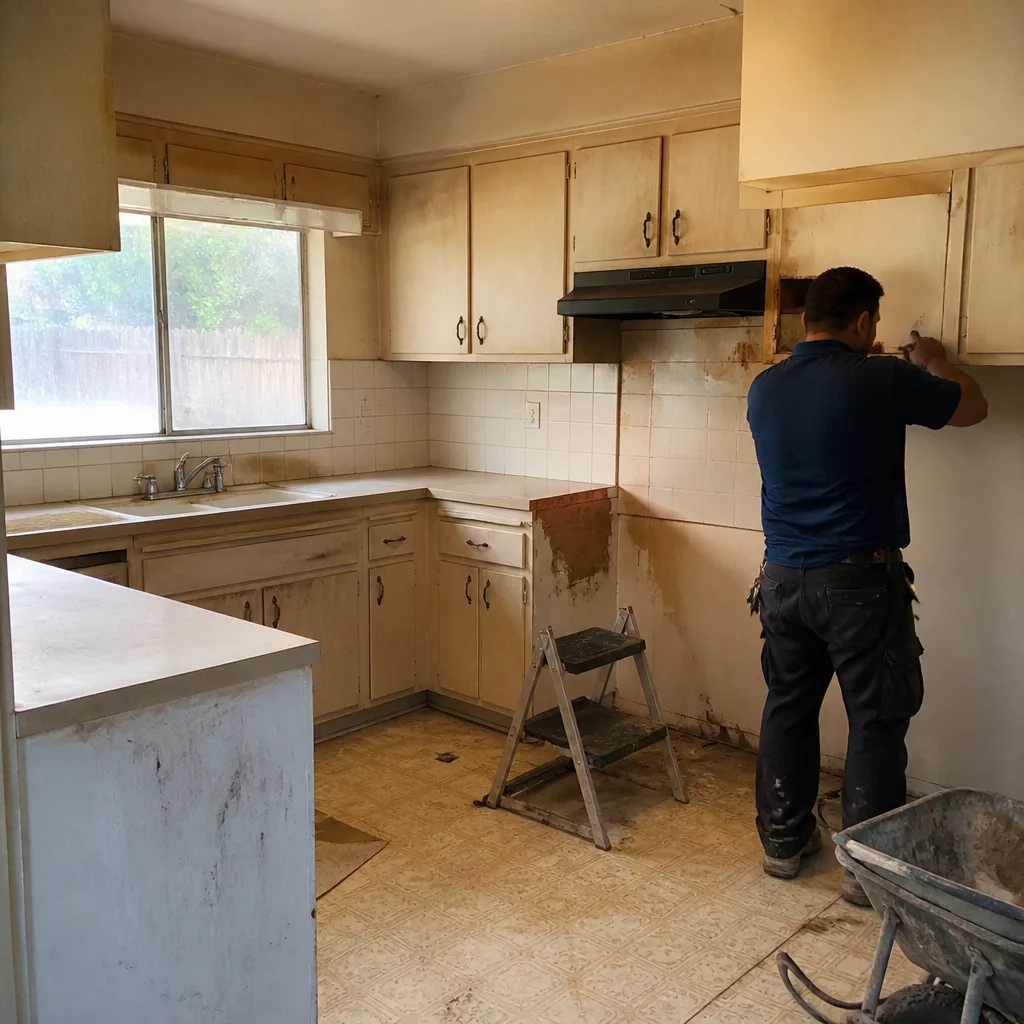
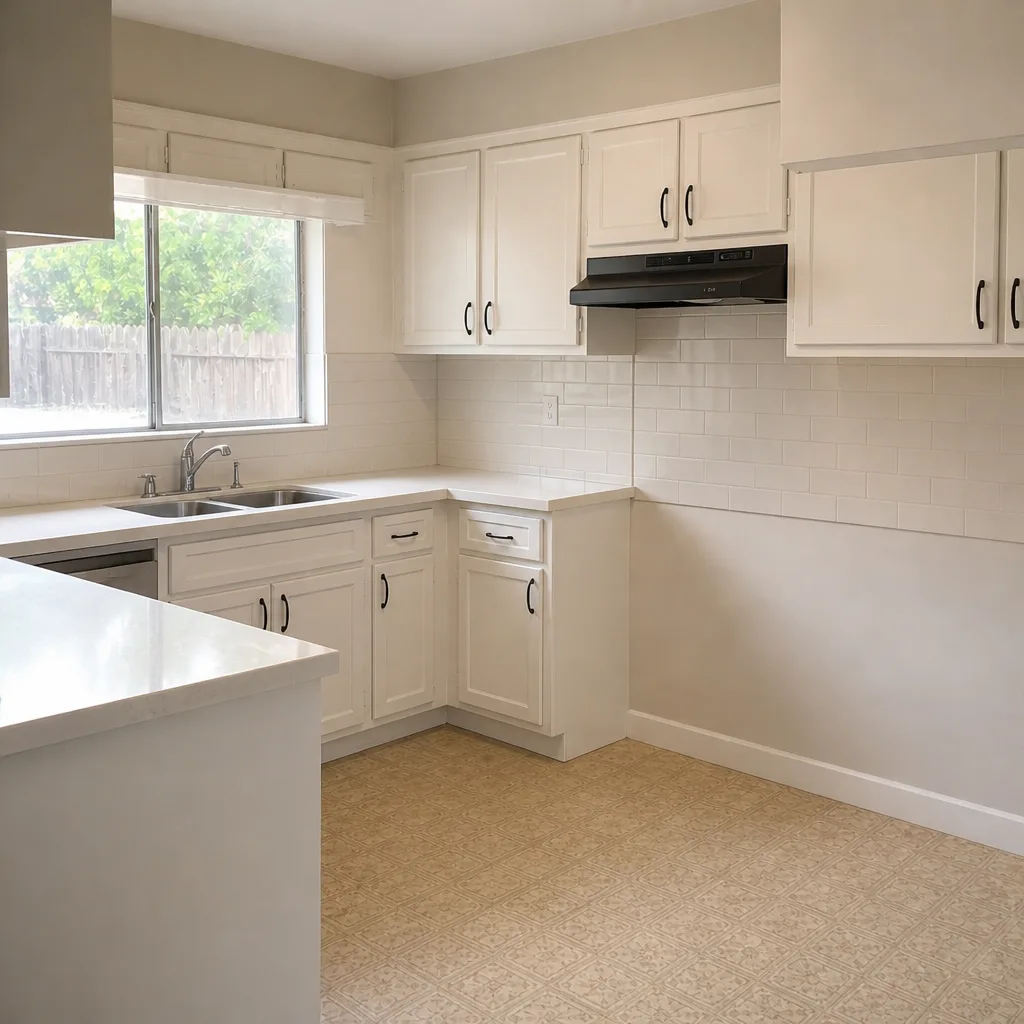
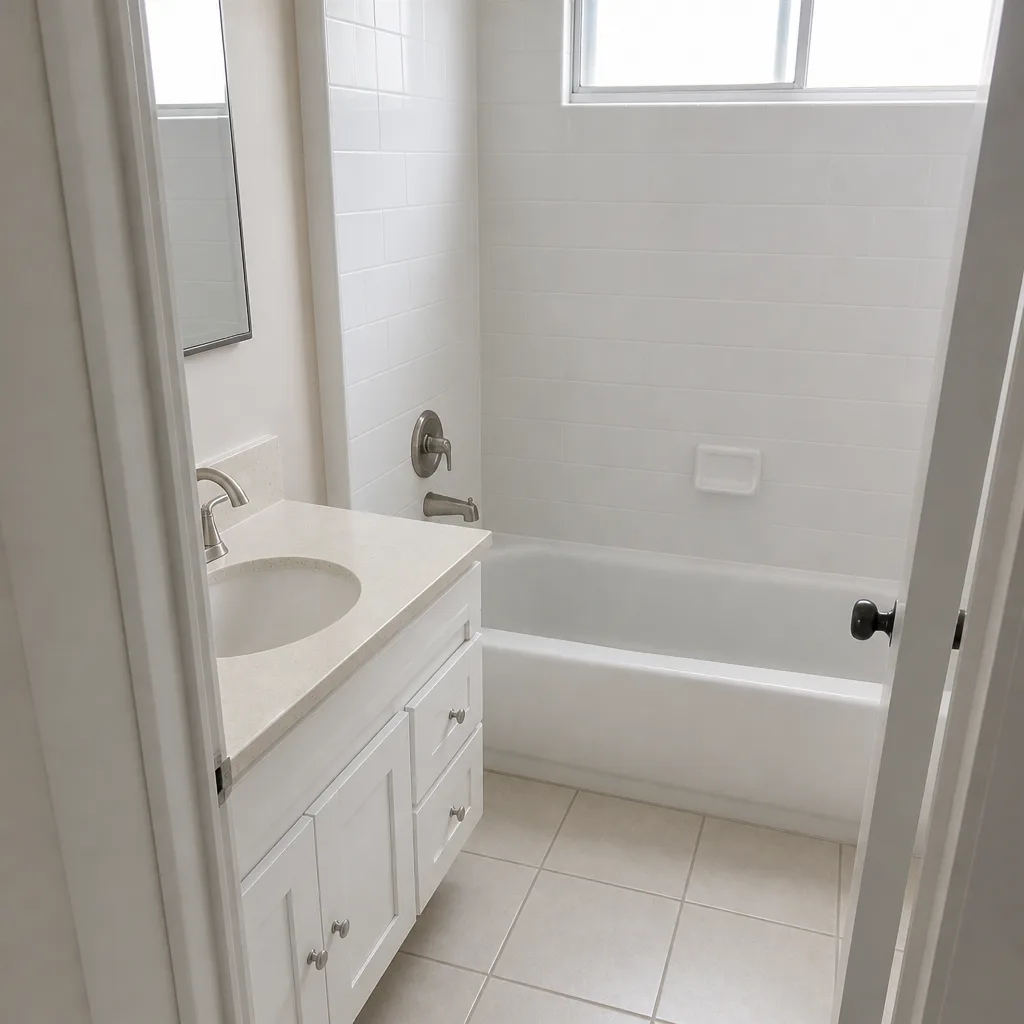
See the difference
 Before
 After
 Before
 After
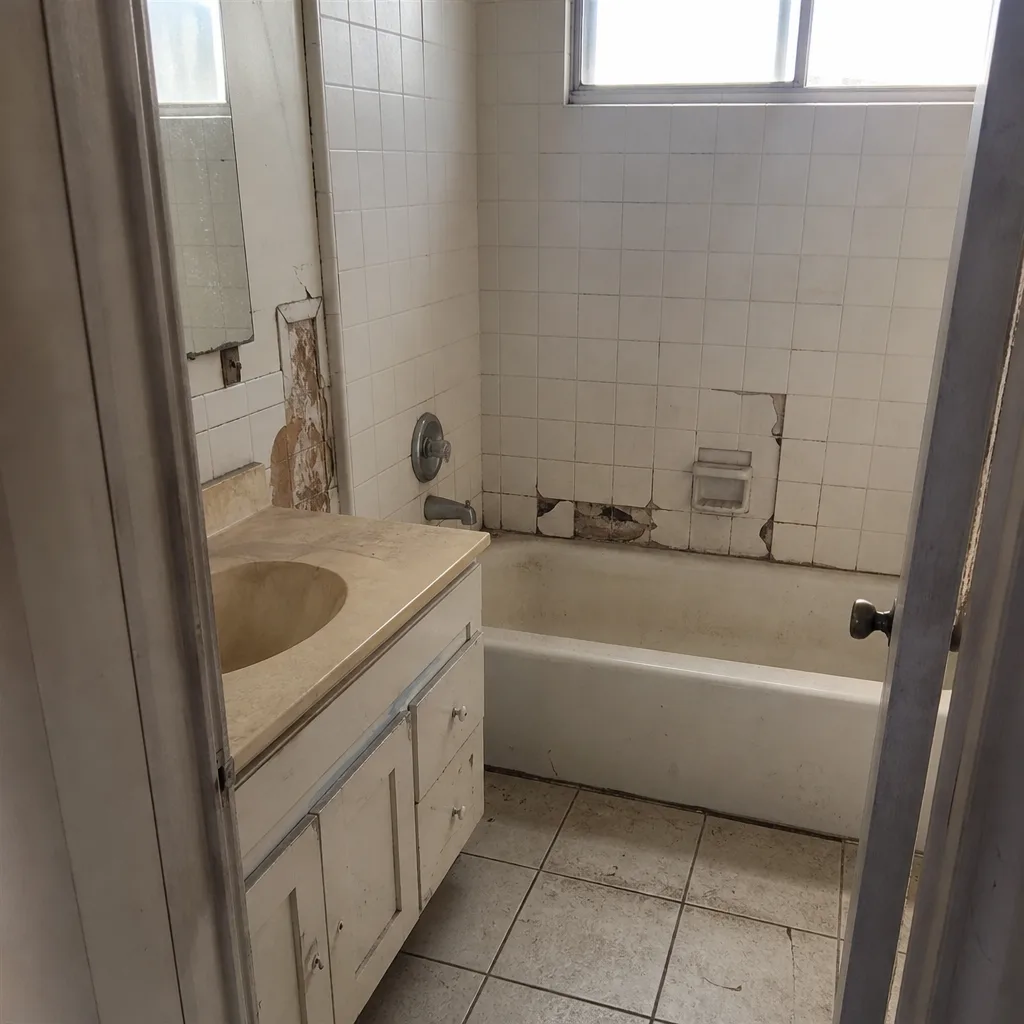 Before
 After
When to Call a Professional

Some projects are DIY-able, and some aren’t. Replacing a faucet or painting a room is fine. Anything involving structural work, permitting, gas lines, electrical panels, roofing, or a project that changes the footprint of the house should go to a licensed contractor. So should anything in a home with known knob-and-tube wiring, galvanized plumbing, or existing water damage. If you’re managing a project that spans multiple trades (kitchen, bath, addition, roofing), a single coordinating contractor is almost always more cost-effective than hiring each trade separately, because scope gaps are where costs escalate.
Rowan Construction Group Orange offers free estimates in Orange, with a written price, a written scope, and a written warranty before any work begins. Technicians are background-checked and uniformed, a live person answers calls 24/7, and every visit includes a documented photo record included as standard. Call (844) 320-7508 to schedule your free estimate.
Frequently Asked Questions
Go to cslb.ca.gov and search by license number or business name. Confirm the license is active, the classification matches the work (B for general, C-39 for roofing, C-27 for landscaping), the bond is active, and the disciplinary actions tab is clear. Call the CSLB at 800-321-CSLB if anything looks inconsistent. Call (844) 320-7508 for an exact quote on your project – estimates are free.
10% of the total contract price or $1,000, whichever is less. This applies to any home improvement contract in California, including work in Orange. A contractor who requests more is in violation of the Business & Professions Code and you should not sign. Call (844) 320-7508 if you want a written quote that follows the cap.
Yes. Permits for kitchen and bath remodels, roofing, additions, ADUs, and structural work are pulled through the City of Orange building division before work begins. The permit number is on the contract and inspection records are part of the documented photo record you receive. Call (844) 320-7508 for a quote.
A full kitchen remodel in Orange typically takes 6 to 10 weeks from demo to final inspection, depending on cabinet lead times and whether structural changes are involved. Older homes in Old Towne and the Plaza Historic District often add 1 to 2 weeks for permit review if the work is visible from the street. Call (844) 320-7508 to schedule your free estimate.
No work proceeds on a change until a written change order is signed by both parties. That’s the discipline behind the Haven Standard, and it’s why Rowan projects finish within a few percent of the agreed price. If a contractor can’t show you their written change order process at the bid meeting, that’s a red flag. Call (844) 320-7508 for a flat written quote with a written scope.
Yes, that’s a standing offer. Bring any written estimate from another contractor and Rowan will review it line by line at no charge. You’ll walk away knowing where the numbers are honest and where they’re placeholders. Call (844) 320-7508 to schedule a free second opinion.
The Bottom Line
The license lookup is the start, not the finish. A contractor who passes the CSLB check can still have a lapsed workers’ comp policy, two civil judgments against the license, a contract missing half the §7159 elements, and a 25% deposit request in the first email. The five document-level checks in this guide catch all of that before you sign. Run them in order. Ask for the paperwork, not the promises. In Orange, where the housing stock is older and the permit rules are specific, the contractor who hands you every document without being asked twice is the one worth hiring. The one who says “don’t worry about it” is the one to walk past. Call (844) 320-7508 to schedule a free estimate for your Orange project.
Written by the team at Rowan Construction Group Orange.