Last updated November 18, 2026
Free written scope consultation - allowances, timeline, and change-order rules on paper before a single trade is scheduled
Windows & Doors Warning Signs Every Homeowner Should Know
A window that’s hard to lock isn’t a hardware problem until proven otherwise. It can mean the frame has racked because the foundation has moved or the wall framing has settled – a structural issue that gets worse every season it goes unaddressed. In our work across Orange, we regularly find a “sticky window” that turned out to be a two-inch corner-to-corner twist in the frame. This guide catalogs the physical signals that separate a cosmetic issue from one already compromising framing, insulation, or air sealing. You’ll learn the measurements to take, the stains to read, and the cost ranges to expect before you call anyone.
Quick Answer
The most reliable early warning signs of window and door failure are: a frame that measures more than 1/8 inch out of square corner-to-corner, water staining that reappears after sealing, fogged insulated glass, and a latch bolt that no longer lines up with its strike plate. Each of these points to a cause beyond the hardware – usually thermal cycling, water intrusion, or framing movement – and each has a specific repair cost range and urgency level covered below.
Styles & brands we work with
- Kitchen remodeling
- Bathroom remodeling
- Home additions & ADU
- Roofing
- Windows & doors
- Driveway & pavers
- Fence
Table of Contents
- The Diagonal Measurement Test: Is Your Frame Square?
- Cosmetic Sealant Failure vs. Active Water Intrusion
- Warning Signs Specific to Orange County’s Thermal Cycling
- The Energy Bill Signal: Using a $30 Thermometer to Isolate Windows
- Door Warning Signs That Point to Foundation Movement
- Fogged Glass and Seal Failure: What IGU Failure Looks Like
- Repair Cost Ranges and Urgency Ratings
- Common Mistakes to Avoid
The Diagonal Measurement Test: Is Your Frame Square?
Before you assume a window needs new hardware, measure the frame. A square window has diagonal measurements (top-left corner to bottom-right, and top-right to bottom-left) that match within 1/8 inch. If the difference exceeds that tolerance, the frame has racked – twisted out of true by movement in the wall, the header, or the foundation beneath it.
Here’s how to run the test:
- Hook a tape measure on the inside top-left corner of the frame and pull to the inside bottom-right corner. Write the number down to the nearest 1/16 inch.
- Repeat from the top-right corner to the bottom-left corner.
- Subtract the smaller number from the larger one. Under 1/8 inch is normal. Between 1/8 and 1/4 inch is a concern worth monitoring. Over 1/4 inch means the frame is actively racked and the cause needs to be found.
- Photograph both measurements against the tape. That record matters when you talk to a contractor or your insurer.
A racked frame is the single most misread signal in Orange homes built between 1955 and 1985, where original aluminum sliders sit in walls that have seen decades of soil movement. Replacing the window without addressing the rack does nothing – the new unit racks the same way within a few seasons. Under Clause 1 of the Haven Standard, the price for any repair is written before a tool comes out, which means the diagnostic step comes first, not after the work is sold.
Cosmetic Sealant Failure vs. Active Water Intrusion
Not every failed bead of caulk is a leak, and not every leak shows up as a puddle. The difference is whether water is getting past the weather barrier or just sitting on top of it. Two tests tell you which.
The probe test
Press a small screwdriver or an awl gently into the wood or drywall around the window’s interior trim. Soft, spongy resistance means moisture has been there long enough to break down the material – active intrusion. Firm resistance with surface discoloration only usually means the sealant failed cosmetically and the water never got past the flashing.
Staining pattern analysis
- Staining at the bottom corners of the interior sill – water tracking down behind the frame. Points to failed flashing at the exterior head or sides, and it’s urgent.
- Staining across the top of the interior head – often condensation, not intrusion. Check the humidity in the room before you spend anything.
- Staining that reappears within two weeks of resealing – the water is coming from above or behind the frame, not through the sealant bead. Resealing again wastes money; the flashing needs to be opened up and inspected.
- Efflorescence (white, chalky deposits) on the exterior masonry around the frame – water is moving through the wall and evaporating at the surface. It usually starts at the sill and works up.
Cosmetic resealing in Orange runs $150 to $350 per window. Opening the flashing and correcting an active leak runs $450 to $1,100 depending on how much trim and substrate has to come out. The probe test is what tells you which one you’re facing.
Warning Signs Specific to Orange County’s Thermal Cycling
Orange sits in a climate that swings hard: cool nights, hot inland afternoons, and south- and west-facing walls that absorb direct sun for six to eight hours a day. That daily expansion and contraction is what breaks frames down, and it shows up in predictable places.
- Aluminum frame corner joint separation. Aluminum expands and contracts more than vinyl or wood, so the mitered corners at the top of a frame open up over time. A gap you can slide a business card into (roughly 1/32 inch) is cosmetic. A gap wider than 1/16 inch lets water and air past the joint, and it’s the first place to check before you assume the glass is the problem.
- Vinyl frame warping on south-facing exposures. Vinyl softens at higher temperatures. On a wall that takes full afternoon sun in Orange, a vinyl frame that’s already been painted a dark color can bow inward by 3/16 to 1/4 inch across its width. Once it bows, the sash won’t seal evenly, and you’ll feel a draft at the center of the frame rather than at the edges.
- Wood-clad paint failure at sill corners. The sill corner is where water collects and where the sun hits last. Peeling and checking (fine cracks in the paint film) concentrated at the two ends of the sill, with the rest of the unit intact, tells you the corner joints have opened and the wood beneath is taking on moisture. Left unaddressed, sill rot runs $300 to $700 per window to repair once the wood softens. Caught at the paint-failure stage, it’s a scrape-and-seal job at roughly half that.
If you’re weighing new units against repair, our Rowan Construction Group Orange home page lays out how the written quote process works before any work is scheduled.
The Energy Bill Signal: Using a $30 Thermometer to Isolate Windows
A jump in your summer cooling bill is a signal, but it’s a noisy one – the pool pump, an aging AC unit, and a refrigerator all move the number. Here’s how to isolate the windows as the cause.
The benchmark: an increase of 20% to 30% in cooling cost over the same months a year earlier, with no change to thermostat settings, is the range where window and door seal failure starts to show up as the primary culprit. Below 20%, look elsewhere first. Above 30%, you’re probably losing conditioned air through more than one opening.
To confirm windows as the source
- Pick a hot afternoon and let the house cool to your normal setpoint.
- Use a handheld infrared thermometer (a $30 unit is accurate enough) and aim it at the center of each window’s glass, then at the interior frame edge, then at the wall beside the window.
- A window whose glass reads 12°F to 18°F warmer than the adjacent wall on a hot day is letting radiant heat through – normal for older single-pane or low-performance glass, but a sign you’re paying for it.
- A window whose frame edge reads warmer than the wall by more than 8°F points to air leakage at the perimeter, not the glass. That’s a sealant and weather-stripping job, not a window replacement.
- Repeat the same test on exterior doors, aiming at the perimeter of the door slab and the threshold. A threshold that reads 10°F or more above the floor next to it has a failed sweep or a gap under the door.
Writing the numbers down, window by window, gives you a real map of where the loss is happening. It’s the difference between replacing eight windows and replacing the three that are actually failing. Owens Corning and IKO both publish performance data on their window and door sealing systems if you want to compare specs on a written quote.
Door Warning Signs That Point to Foundation Movement
A door that sticks is usually blamed on the hinge. Often it isn’t the hinge at all – it’s the frame moving with the foundation or the wall framing above it. Three specific signs separate hardware wear from structural movement.
- Latch bolt misalignment. Look at where the latch bolt meets the strike plate. If the bolt is riding high, low, or hitting the plate entirely, and the door hasn’t been re-hung, the frame has twisted. A bolt that’s off by 1/8 inch or more in a door that once closed cleanly is a red flag. Repair to re-square and re-set the strike runs $150 to $350 per door.
- Corner gap patterns. Close the door gently and look at the gap around the perimeter. An even 1/8-inch gap is normal. A gap that’s tight at the top hinge corner and wide at the bottom latch corner – or the reverse – means the frame is out of plumb. That’s a framing issue, not a door issue.
- Threshold gaps. With the door closed, look for daylight or slide a piece of paper under the threshold across its width. A paper that slides freely all the way across means the door is out of adjustment and sealing nothing. A gap of 1/4 inch or more, or one that’s wider at one end than the other, usually points to a settled threshold or a floor that’s dropped. Threshold replacement runs $200 to $450; if the floor beneath has dropped, the repair moves into a different category and a foundation inspection is the next call.
Doors in Orange homes that have shifted by 1/4 inch or more between opening and closing seasons warrant a foundation check before you spend money on the door itself.
Fogged Glass and Seal Failure: What IGU Failure Looks Like
Fogged glass is the clearest signal in the whole catalog and the easiest to misread. When an insulated glass unit (IGU – two panes sealed with a spacer and an inert gas between them) loses its perimeter seal, moisture gets between the panes and the unit fogs from the inside. You can’t clean it off, and it usually starts at an edge and works inward.
- Haze or fog at the bottom edge that migrates upward over months – early seal failure, cosmetic for now but reducing the unit’s insulating value.
- Etching or a milky film that won’t wipe off – the desiccant in the spacer has been exhausted and the coating on the glass is being damaged. Replacement is the only fix.
- Water droplets between the panes – the seal is fully failed. The unit will fog completely and, on a hot day in Orange, can stress the frame as trapped moisture expands.
A failed IGU on a standard window runs $250 to $550 to replace, glass only, or $450 to $900 if the sash has to be rebuilt with it. Replacing the glass before the frame starts to bow saves the step where you’re paying for a whole unit instead of half of one. Owens Corning and Atlas both spec their glass-to-frame sealing systems for exactly this failure mode, and a written quote should list the IGU spec by name.
Repair Cost Ranges and Urgency Ratings
These are the ranges Orange homeowners are seeing on written quotes, organized by the sign you found. Urgency is rated on four levels: Monitor, Schedule, Fix Now, and Structural – Call a Pro.
- Cosmetic reseal around one window: $150-$350. Urgency: Monitor.
- Active leak with flashing repair: $450-$1,100. Urgency: Fix Now.
- Failed IGU, glass-only replacement: $250-$550. Urgency: Schedule.
- Failed IGU with sash rebuild: $450-$900. Urgency: Schedule.
- Sill rot repair, caught early: $300-$700. Urgency: Fix Now.
- Racked frame, re-square and re-set: $500-$1,200. Urgency: Structural – Call a Pro first.
- Door latch and strike re-alignment: $150-$350. Urgency: Schedule.
- Threshold replacement: $200-$450. Urgency: Schedule.
- Door frame out of plumb (framing correction): $1,200-$3,500. Urgency: Structural – Call a Pro.
- Weather-stripping and door sweep replacement: $80-$200. Urgency: Monitor.
Every one of those numbers should appear as a written line item before the crew arrives, not after. That’s the whole point of a written price. When a crew says “we won’t know until we open it up,” our answer is that the diagnostic gets its own written line, so you’re paying a known number to find out. The 365-Day Done Right Promise backs every repair – if it’s not done right, we make it right – and it’s printed on the quote, not buried in a brochure.
Common Mistakes to Avoid
- Replacing the window without measuring the frame. A new window in a racked frame racks within a season or two. Run the diagonal test first; if it’s out of tolerance, the frame is the job.
- Resealing over an active leak. If a leak reappears within two weeks of a fresh bead of sealant, the water is behind the frame and resealing again just buys you time until the substrate softens. Probe the area first.
- Blaming the hinges for a sticking door. In Orange homes, a door that starts catching at the latch corner is far more often a settling frame than a worn hinge. Check the gap pattern before you swap hardware.
- Assuming fogged glass means a new window. A failed IGU is a glass replacement in most cases – half the cost of a full unit – if the frame is still square. Measure before you assume.
- Ignoring peeling paint at the sill corners. In our climate, paint failure concentrated at the sill corners is the earliest sign of moisture in the wood beneath, and it’s the cheapest stage to fix.
- Replacing every window when three are failing. Use an IR thermometer to map where the actual heat loss is. On an eight-window home, the difference is often several thousand dollars.
- Choosing a contractor who won’t put a number in writing before the first day. “We’ll see what it takes once we’re in there” is the phrase that turns a $400 job into a $1,400 one. A written price before work starts is the baseline, not a bonus.
See the difference
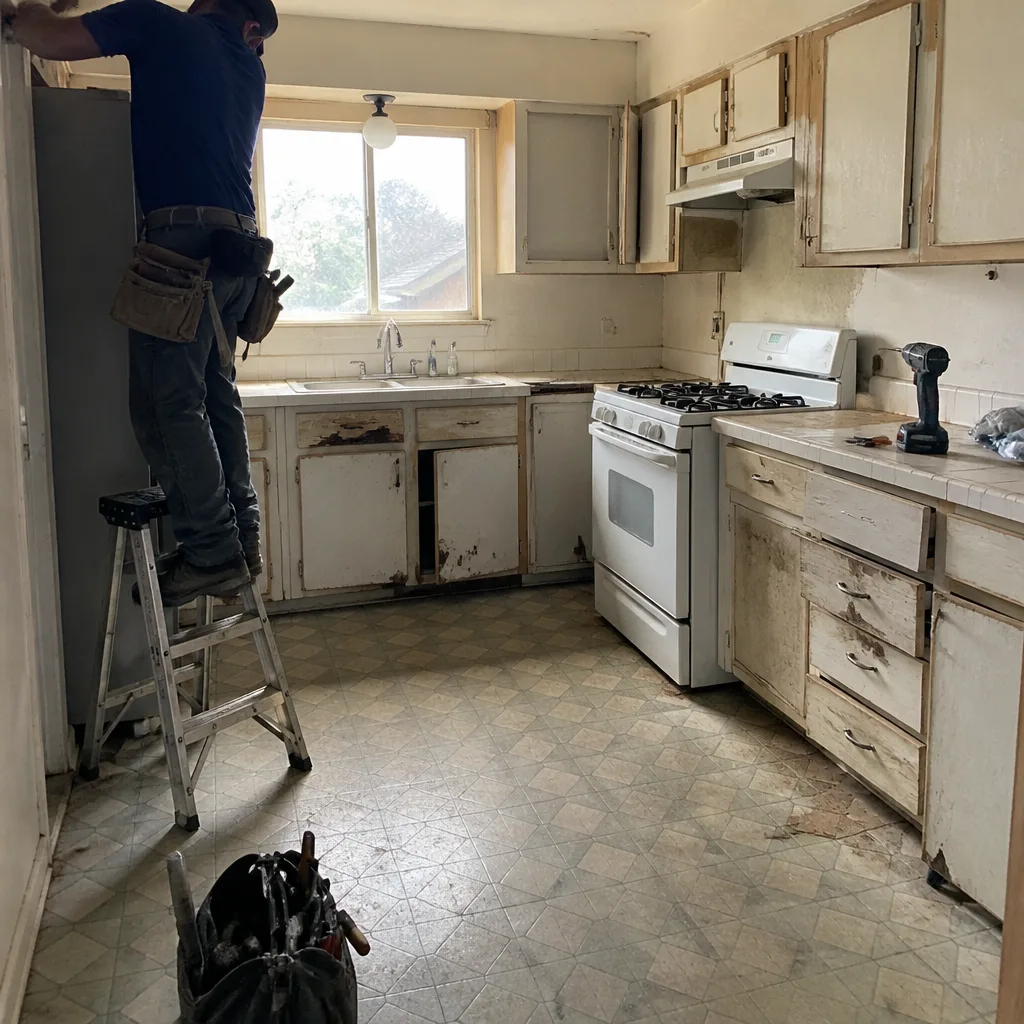 Before
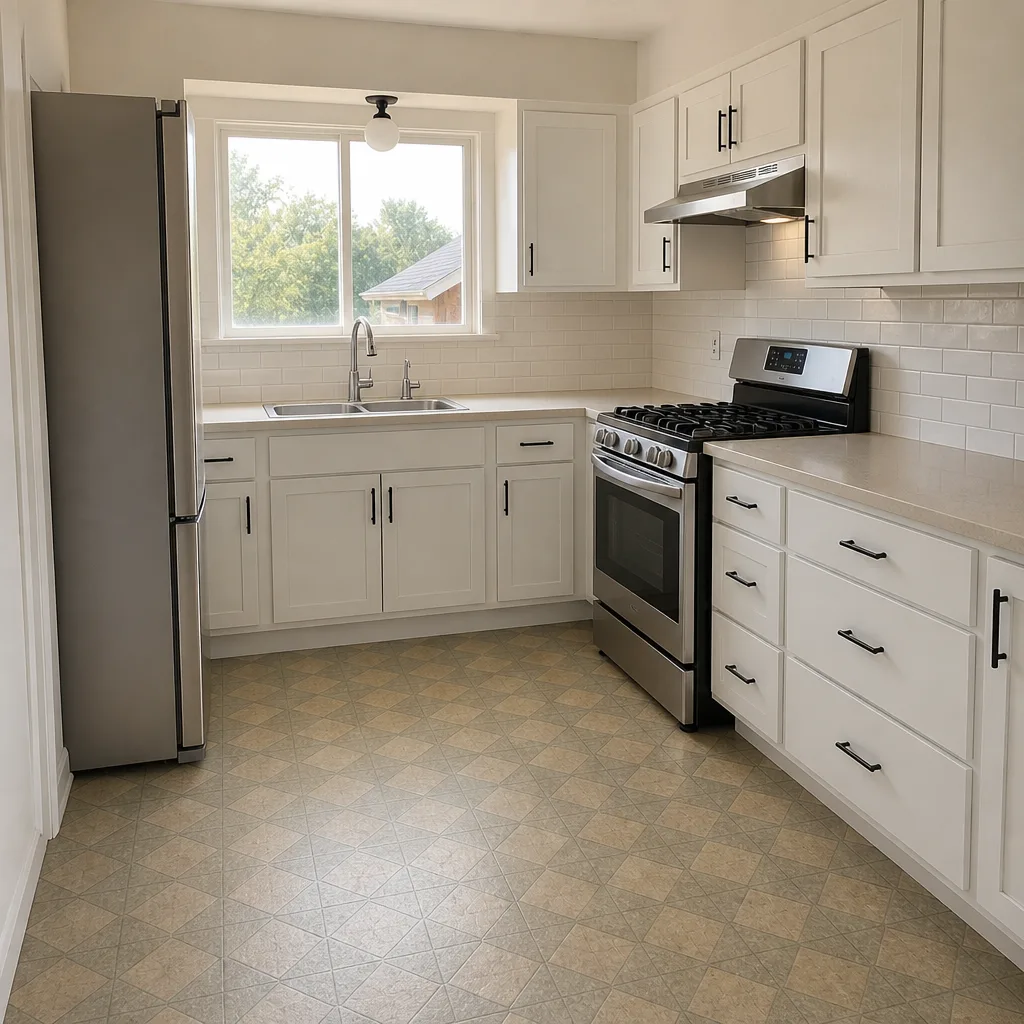 After
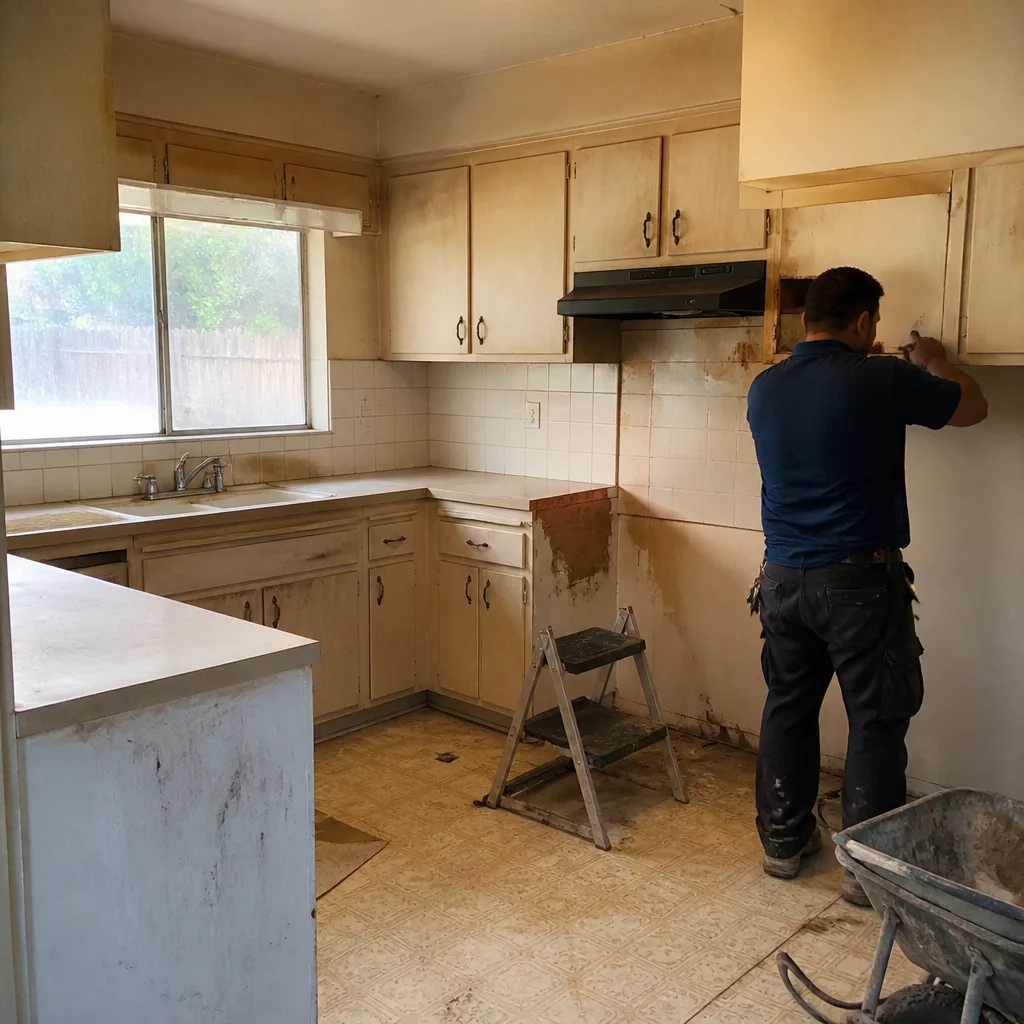 Before
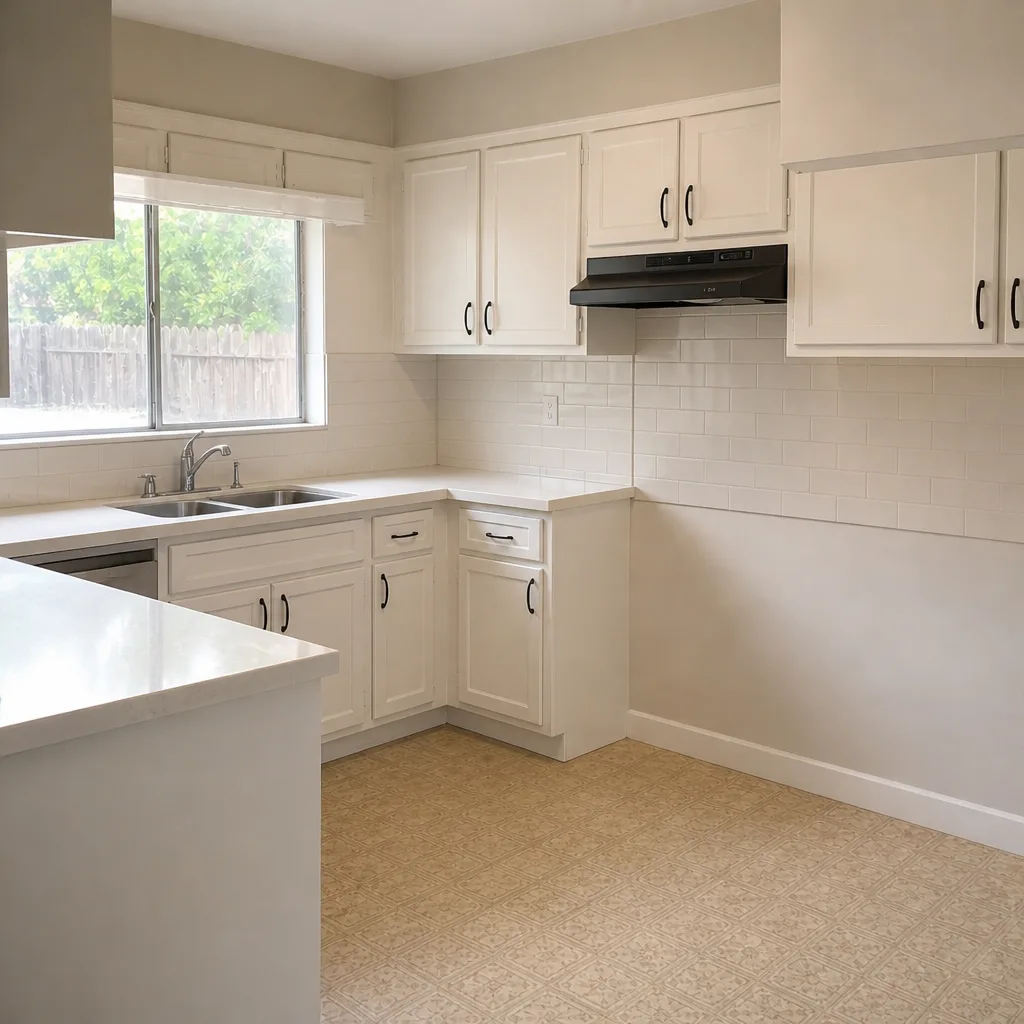 After
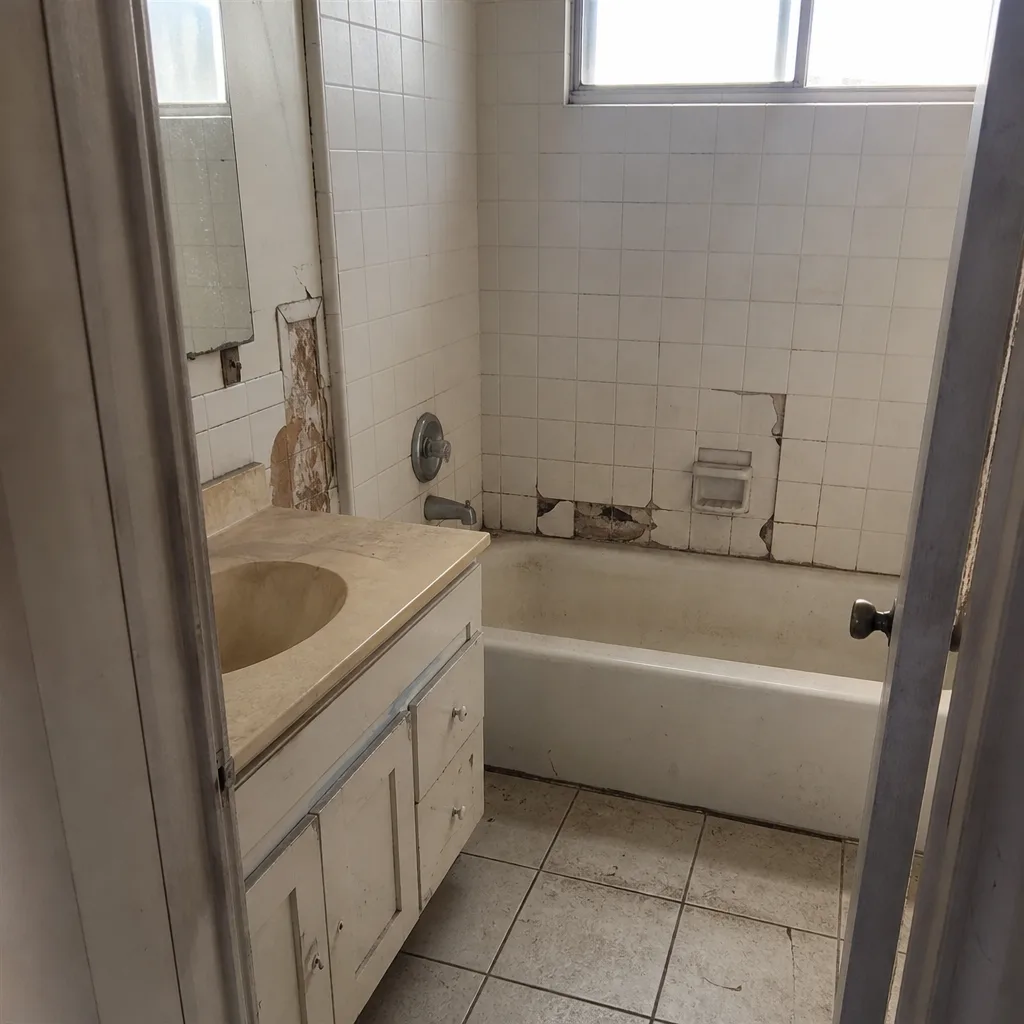 Before
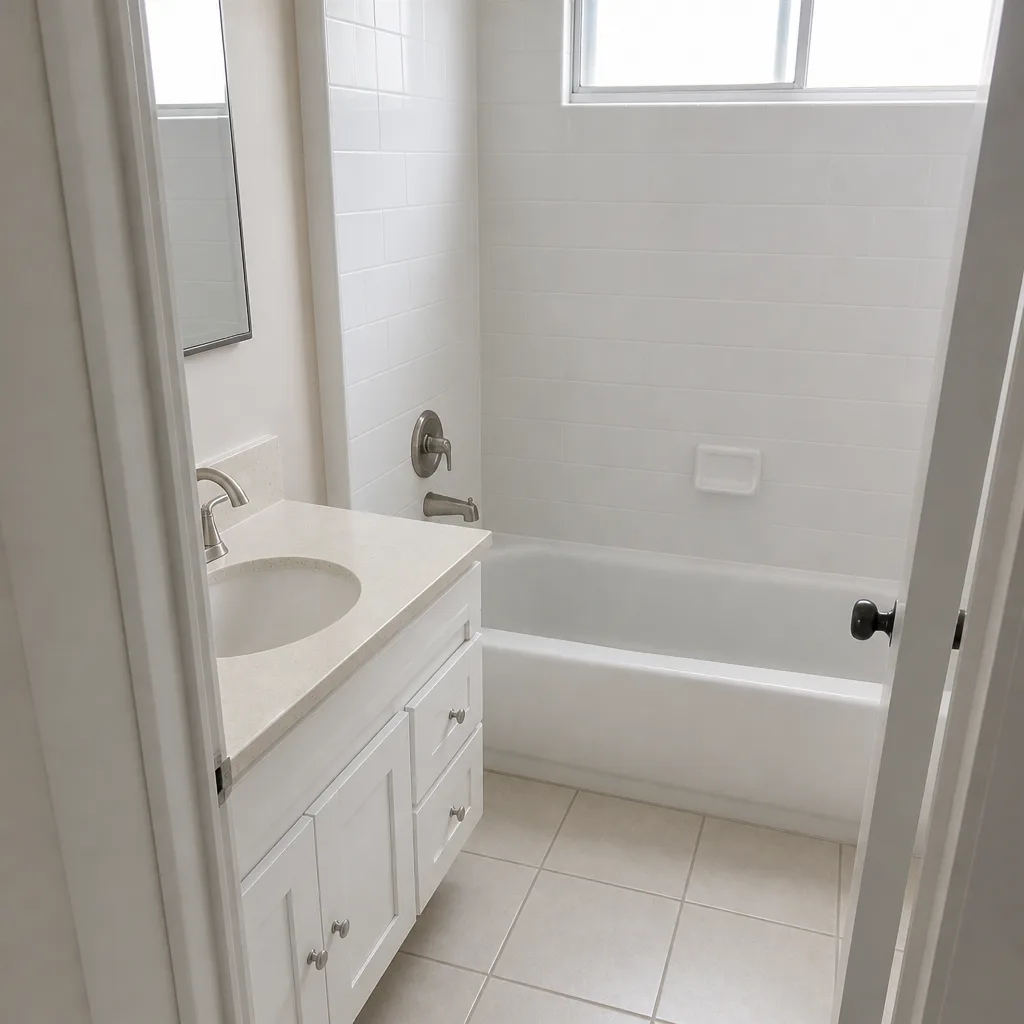 After
When to Call a Professional
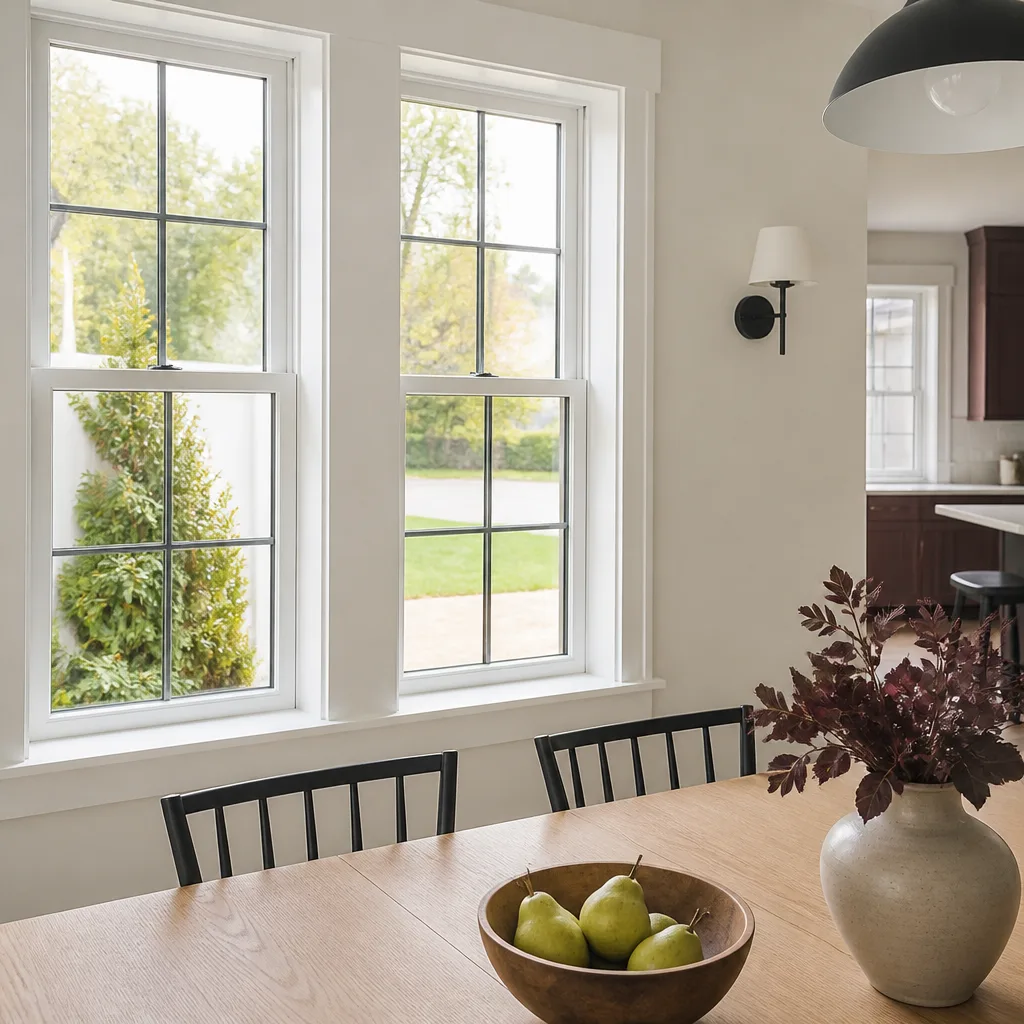
Call a professional when the diagonal measurement is out of tolerance by more than 1/4 inch, when a door latch has shifted by 1/8 inch or more in a door that once closed cleanly, when water staining returns within two weeks of resealing, or when a threshold shows consistent daylight across its width. Structural signals – racked frames, doors out of plumb, floors that have dropped – are cases where trying to fix the window or door without finding the cause wastes money and risks making the problem worse. High-tension hardware, glazing, and framing corrections are not a homeowner task; get a trained eye on them and get the price in writing first.
Rowan Construction Group Orange offers free estimates in Orange – call (844) 320-7508. We’ll run the diagonal test, probe the trim, and hand you a written line-item quote before any work is scheduled. Bring a competitor’s quote and we’ll review it line by line under our Free Second Opinion offer, no charge.
Frequently Asked Questions
Most active window leaks in Orange run $450 to $1,100 to repair, depending on how much trim and substrate has to be opened up to get to the flashing. Cosmetic resealing is much cheaper at $150 to $350. The probe test – pressing an awl gently into the wood around the interior trim – tells you which category you’re in before anyone quotes. Call (844) 320-7508 for an exact number; estimates are free.
Measure the two diagonals of the frame corner to corner. If they differ by more than 1/8 inch, the frame has twisted out of square. Under 1/8 inch is normal; 1/8 to 1/4 inch is worth monitoring; over 1/4 inch means the frame is actively racked and the cause – foundation movement, wall framing settlement – needs a professional to find it. Call (844) 320-7508 to schedule a free diagnostic.
Summer heat causes wood to expand and framing to move, so doors that were fine in winter will catch at the latch or the top corner once the weather warms. Seasonal sticking that clears on its own is normal. Sticking that persists year-round, or a latch that’s off by 1/8 inch or more from where it used to be, points to a frame that has shifted rather than a hinge that needs tightening. Call (844) 320-7508 for a free estimate if the sticking doesn’t clear.
No change proceeds without a signed change order at Rowan. The price you get in writing before work starts is the price you pay unless the scope actually changes and you sign for the change. That’s Clause 1 of the Haven Standard and it’s the discipline behind every project finishing within a few percent of the number the customer agreed to. Call (844) 320-7508 for a written quote.
In most cases, no. A failed insulated glass unit (IGU) can usually be replaced as glass-only – $250 to $550 – as long as the frame is still square and the sash hasn’t bowed. Full unit replacement only becomes necessary if the frame has failed too. Measure the diagonals before you assume you need the whole window. Call (844) 320-7508 and we’ll quote the glass and the frame separately.
Cosmetic resealing takes under an hour per window. A glass-only IGU replacement is typically a half-day job for a few windows. Flashing repair and sill rot work usually run one to two days once the extent is known. Frame re-squaring and door re-alignment depend on the cause – a latch re-set is an hour, a framing correction is a scheduled job. You’ll get a written time estimate with the price before work starts. Call (844) 320-7508 for a free estimate.
The Bottom Line
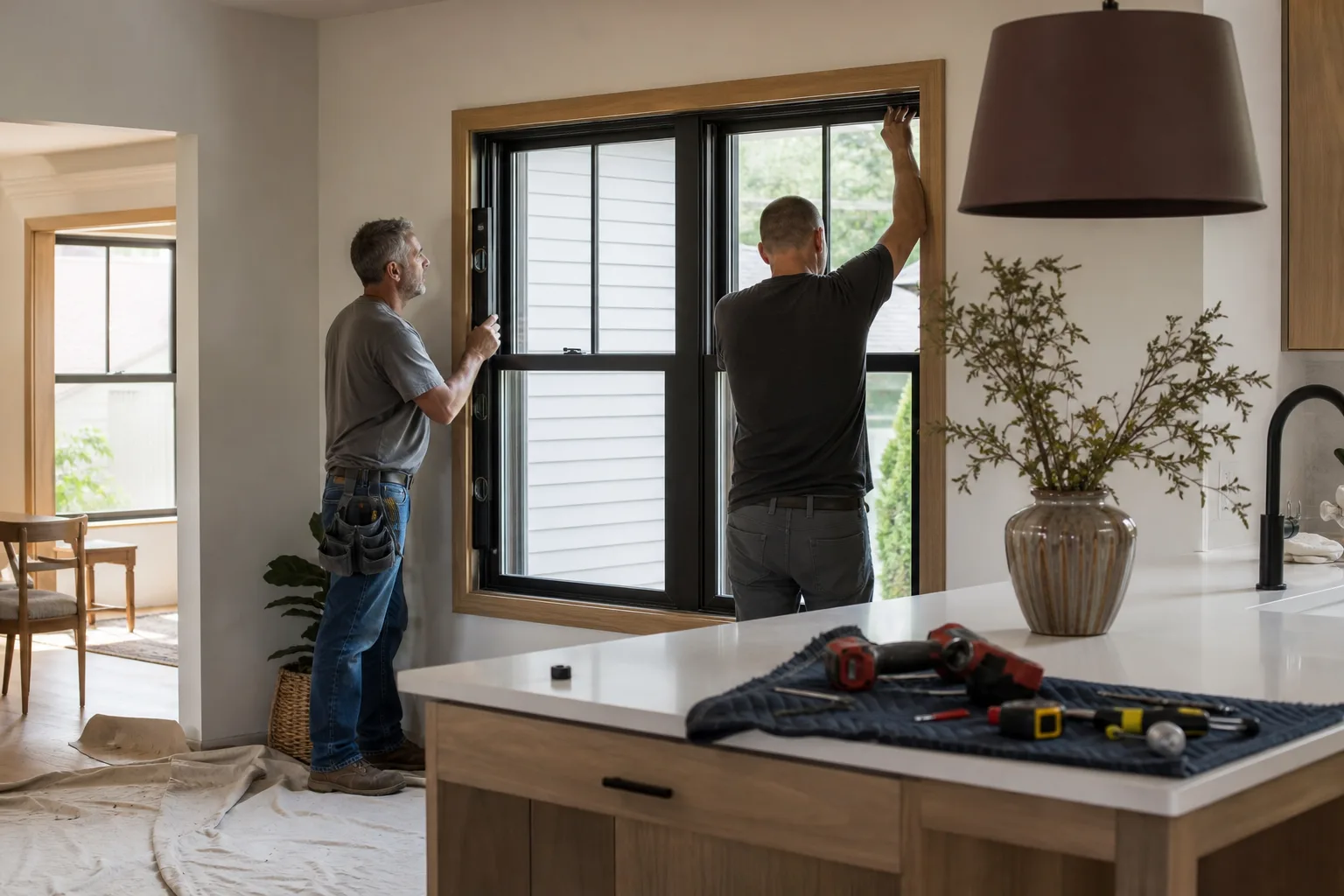
Window and door failures are readable if you know what to measure. Run the diagonal test – 1/8 inch is your tolerance. Probe the trim before you reseal. Check the sill corners for paint failure, which is the earliest sign of moisture in the wood. Use a $30 IR thermometer to isolate where the heat is actually leaking instead of replacing every window on the wall. And treat a shifted door latch or a persistent threshold gap as a framing signal, not a hardware one. When the sign points to structure, get a written line-item quote before anyone starts. Call (844) 320-7508 for your free estimate in Orange. Our technicians have up to 19 years of experience, and every visit includes a documented photo record of what was found and what was done.
Written by the team at Rowan Construction Group Orange.