Last updated November 18, 2026





Free written scope consultation - allowances, timeline, and change-order rules on paper before a single trade is scheduled
Construction Emergency Preparedness Guide for Orange Homes
The most expensive mistake after a roof breach is usually the second one: tarping it wrong and turning the tarp into a funnel that pushes more water into the structure than the breach itself would have. We’ve watched a $600 tarp job turn into a $9,000 drywall and insulation replacement because the plastic was pitched toward the house instead of away from it. Orange homes face a specific set of construction emergencies, and each one has a response protocol that either protects your insurance claim or quietly damages it. This guide walks through the three categories of emergency – acute failure, post-event damage, and latent discovery – and the exact steps for each, from the Santa Ana wind season to the first real rain on clay soil.
Quick Answer
Construction emergencies in Orange homes fall into three categories, and each needs a different response. Acute failure (burst pipe, active roof leak) calls for stopping the water and documenting before you touch anything. Post-event damage (wind, seismic) calls for a documented photo sequence before any repair begins. Latent discovery (mold behind drywall, failed cast-iron drain) calls for containment and a written scope from a licensed contractor rather than a quick patch. In every case, document first, call your insurer second, and only then dispatch a repair.
Styles & brands we work with
- Kitchen remodeling
- Bathroom remodeling
- Home additions & ADU
- Roofing
- Windows & doors
- Driveway & pavers
- Fence
Table of Contents
- The Three Types of Construction Emergency in Orange
- Immediate Response Protocol by Emergency Type
- What to Document Before Any Repair Begins
- Orange’s Specific Risk Profile: Wind, Clay, Cast Iron
- How to Vet an Emergency Contractor in Four Minutes
- Insurance Claim Documentation: What to Submit
- The Pre-Season Inspection Checklist
The Three Types of Construction Emergency in Orange
Not every emergency is the same, and treating them the same wastes money. Here’s how we separate them.
Acute failure is active and ongoing right now. A supply line bursts under the kitchen sink at 6 a.m. A shingle lifts in a gust and rain starts running down the inside of a wall. The clock is running because damage compounds by the hour. The response is to stop the source, contain the spread, and document – in that order.
Post-event damage is the aftermath of a discrete event: a Santa Ana wind event peels back ridge cap on a 1990s tract roof, or a seismic event opens a hairline foundation crack near the garage. The damage has mostly happened. The risk now is a hurried repair that erases the evidence your adjuster needs. Here, documentation comes before repair.
Latent discovery is the one people mishandle most. You pull back baseboard during a bathroom remodel and find black mold on the back of the drywall. Or a plumber snaking a slow drain finds the cast-iron line under the slab has corroded and split. The failure already happened weeks or months ago. The response is containment, a written scope, and a real diagnosis of the cause – not a spray-and-patch.
- Acute failure: stop, contain, document, then repair.
- Post-event damage: document, then repair.
- Latent discovery: contain, diagnose the cause, get a written scope, then repair.
The reason this matters in Orange is that the same property can hit all three in a single wet season. A cast-iron drain fails (latent), water wicks into the subfloor, and a few days later you’ve got active water intrusion into the living room (acute) plus a mold condition that a hurried repair will bury instead of fix. Understanding which category you’re in keeps you from making a recoverable situation worse. For the larger repair that follows, our Rowan Construction Group Orange home page lays out the trade coverage that comes into play.
Immediate Response Protocol by Emergency Type
The first ten minutes determine the size of the insurance claim. Here are the specific first actions for the three emergencies Orange homeowners call us about most.
Water Intrusion
- Shut off the source, not the house. For a fixture or supply line, close the local angle stop first. If you can’t find it, close the main at the meter. Know where that is before you need it.
- Kill the power to wet areas. If water is anywhere near outlets, a panel, or a ceiling fixture, turn off the affected circuits at the breaker before you walk through it. Standing water and energized circuits are a genuine hazard – don’t test it, just cut power.
- Contain with towels and a wet/dry vac, and get air moving. A box fan and open windows beat a covered floor. Water that sits 24 hours starts a mold clock.
- Photograph the source and the spread before you clean anything up. See the documentation section below.
- Call your insurer’s claims line the same day. Most policies require prompt notice; a two-week delay gives the adjuster a reason to question causation.
Roof Breach
- Do not go on the roof if it’s wet, steep, or above a single story. Roof work at height is a fall hazard, and the emergency doesn’t justify it. Most Orange roof breaches can be handled from the attic side with a bucket and a tarp on the ground level.
- Catch the water inside. Buckets, a tarp on the floor, and moving furniture clear is the safe move.
- If a tarp goes on, weight it and pitch it downhill and outward. A tarp that collects water at a low point is worse than none. Tie the low corner away from the house.
- Photograph the ceiling stain and the attic rafters where the water is running, then call a roofer.
GAF and Owens Corning both publish tarp and temporary-repair guidance for their systems; following manufacturer guidance keeps a warranty intact if the roof is later replaced.
Foundation Crack After a Seismic Event
- Photograph the crack with a reference object – a coin, a ruler – against the concrete so the width is measurable later.
- Note whether the crack is new or has widened. A hairline is one thing; a crack that has opened past the width of a nickel, or one that steps diagonally through the foundation, is a structural concern.
- Check the doors and windows. If interior doors suddenly stick or a window won’t latch, that’s a building-movement signal, not a coincidence.
- Do not patch or fill the crack before an engineer or contractor sees it. Patching erases the evidence. Call a licensed contractor or structural engineer for an assessment.
In our experience around Orange, the seismic cracks that matter most are the ones near the garage-to-house transition and the slab perimeter where the original 1960s and 1970s foundations meet later additions. A written assessment before repair is non-negotiable.
What to Document Before Any Repair Begins
Documentation is the difference between a claim that settles and a claim that gets argued down. Do this before a single repair step.
The photo and video sequence. Start wide and work in. Shoot the whole room or the whole roof plane first, then move to mid-range, then close on the damage. Video is faster for a walkthrough – narrate what you’re seeing as you pan. This sequence matters because an adjuster needs context; a close-up of a stain with no wide shot is hard to place.
Written description. On paper or in your phone notes, write what you saw, when, and what you did. “Saturday 7:40 a.m., water running down inside of south wall in upstairs bedroom, shut off supply under bathroom sink, moved furniture.” That’s the kind of plain record that holds up.
Why the timestamp matters. Phone photos carry EXIF metadata – the date, time, and often GPS location baked into the file. Insurers and adjusters increasingly rely on it, because a timestamped photo proves the damage existed on a specific date. Don’t edit the image or text it through an app that strips metadata; original files are the record. And you can’t win a “this was already like that” argument if your photos are undated.
- Wide shots of each affected area before cleanup.
- Close-ups of cracks, stains, and failed joints.
- Photos of any damaged contents you’ll claim.
- A short written timeline with dates and times.
- Keep the original files – don’t screenshot or edit them.
For an addition or major repair that follows a loss, the same discipline shows up in the written scope – our Home Additions & ADU in Orange page describes how a documented scope keeps the rebuild predictable.
Orange’s Specific Risk Profile: Wind, Clay, Cast Iron
Orange isn’t a generic market. The construction emergencies here cluster into three patterns, and each is predictable enough to prepare for.
Post-Santa-Ana roof damage. The fall and winter Santa Ana winds funnel dry, fast air through the canyons and across the flatland, and older Orange roofs take the hit at the ridge and the eave. Ridge cap lifts, shingles crease and lose their seal, and the damage often shows up as a small leak days later after the first rain. A roof that looked fine in October can be failing in December.
Clay soil movement after the first significant rain. Much of Orange sits on expansive clay. Dry season shrinks it; the first real soaking swells it, and the differential movement shows up as hairline cracks at the foundation, sticking doors, and separations at the slab. It’s a seasonal pattern, not a mystery – and it’s why fall foundation checks matter.
Older cast-iron drain failure. Homes built in the mid-20th century often still have cast-iron drain lines under the slab. Cast iron corrodes from the inside, and the failure surfaces as a recurring slow drain or a damp patch at the slab edge that no amount of plunging fixes. It’s a latent discovery that gets worse the longer it’s ignored.
We’ve seen all three in the same block in Orange within one wet season. The prep for each is different: roofs get a pre-wind inspection, foundations get a post-rain check, and drains get scoped before they fail. The materials matter too – Boral roof tile and PGT windows hold up differently than the builder-grade systems they replace, and knowing what a home already has tells you where the weak point is.
How to Vet an Emergency Contractor in Four Minutes
After every weather event, unlicensed storm chasers appear in Orange offering fast roof and water repairs. Three checks, all free and fast, filter most of them out.
- Check the CSLB license. Go to the Contractors State License Board license lookup, type in the license number, and confirm it’s active and the classification matches the work (a C-39 roofing license for roof work, C-36 for plumbing). This takes about 90 seconds and is the single highest-value check.
- Confirm the name and business entity. The license should return the same legal name on the contract and the written estimate. A license that returns a different name than the one on the paperwork is a red flag.
- Verify the bond and workers’ comp status. The CSLB lookup shows both. An active bond and worker’s comp status means the contractor is accountable and insured as the state requires – critical on any roof or structural work where a worker could be injured on your property.
That’s the quick screen. Then ask for the written scope and price before anyone touches anything. A contractor who won’t put the number in writing before work starts is telling you something. Our own process is built on that single discipline: a flat written price and written scope before a tool comes out, and no change proceeds without a signed change order. It’s why projects finish within a few percent of the agreed cost instead of drifting. Free second opinions on any written estimate are standard – bring a competitor’s quote and we’ll go through it line by line.
Insurance Claim Documentation: What to Submit
How a claim settles depends heavily on what you submit and what you leave alone. Here’s the sequence we recommend.
Submit: your photo and video sequence with original timestamps, the written timeline, receipts for any emergency mitigation (a tarp, a wet/dry vac rental, water extraction), and the contractor’s written scope of work with the line-item breakdown. The line-item scope is what lets an adjuster match the loss to a repair cost. A lump-sum “roof repair: $8,000” is harder to settle than a scope that lists tear-off, underlayment, ridge cap, and flashing separately.
Don’t do this before the adjuster visits: don’t replace the roof or the drywall, don’t paint over the water stain, don’t discard damaged materials, and don’t finish a patch that hides the cause. You can and should stop the water and prevent further damage – that’s your duty under most policies – but the repair itself waits.
Why the contractor’s written scope affects settlement. A clear, itemized scope gives the adjuster a basis to approve the full repair rather than a depreciated patch. Vague scopes invite conservative estimates. On a roof replacement, naming the system – say a GAF or Owens Corning assembly with the specific underlayment – helps the adjuster price it accurately instead of guessing. The documentation does the arguing for you.
If a repair turns into a larger rebuild, pavers and site work often come into play too; the Driveway & Pavers in Orange page explains how that scope gets written. And if the loss touches a fence line, Fence Installation in Orange covers the documentation that keeps a replacement claim clean.
The Pre-Season Inspection Checklist
Most of these emergencies are predictable, and a fall walkthrough catches the majority before they cost you.
- Roof: check the ridge cap and eave shingles for lifting or creasing; look for granules in the gutters (a sign of age); confirm flashing at chimneys and skylights is sealed.
- Gutters and downspouts: clear them before the first rain; confirm downspouts discharge at least 4 feet from the foundation.
- Foundation: walk the perimeter and note existing cracks with a dated photo so you can tell new from old after a seismic event.
- Drains: if the home is pre-1980, have the main line scoped to check cast-iron condition before a slow drain becomes a slab repair.
- Water shutoff: find the main valve and test that it closes fully – a valve that won’t close is the difference between a $400 repair and a $9,000 one.
- Windows and doors: check seals and weep holes; a failed seal is a slow water path that shows up as interior damage months later.
Run this checklist in October, before the Santa Ana season and the first soaking rain. In Orange, that October window is the cheapest hour of maintenance you’ll spend all year.
Common Mistakes to Avoid
- Tarping toward the house. A tarp pitched toward the structure collects water and forces it inside. Always slope it downhill and away, and weight it properly.
- Patching a foundation crack before assessment. Filling a seismic crack erases the evidence an engineer needs and can hide movement that’s still active.
- Skipping the timestamp. Photos texted through an app can lose their metadata, and an undated photo is a weaker claim. Keep the originals.
- Repairing before the adjuster visits. Replacing drywall or shingles before the adjuster sees the damage can shrink or void the claim. Stop the damage; don’t finish the repair.
- Hiring the first truck that appears. After every wind event, unlicensed crews canvas Orange. The four-minute CSLB check filters most of them out.
- Ignoring a slow cast-iron drain. Repeated plunging is a symptom, not a fix. A corroded line under the slab gets worse and more expensive the longer it waits.
- Taking a verbal “about” estimate. An emergency is exactly when a written number matters most. No written scope, no start.
See the difference
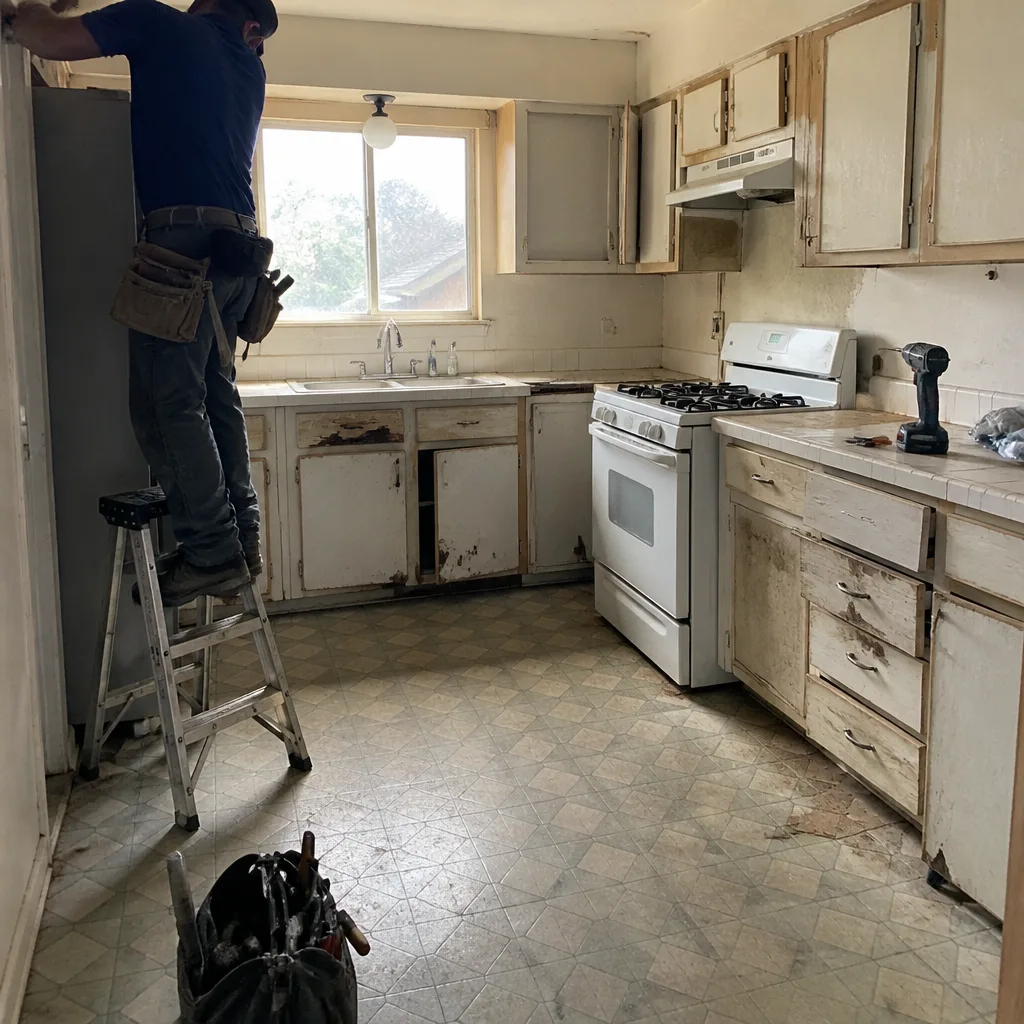 Before
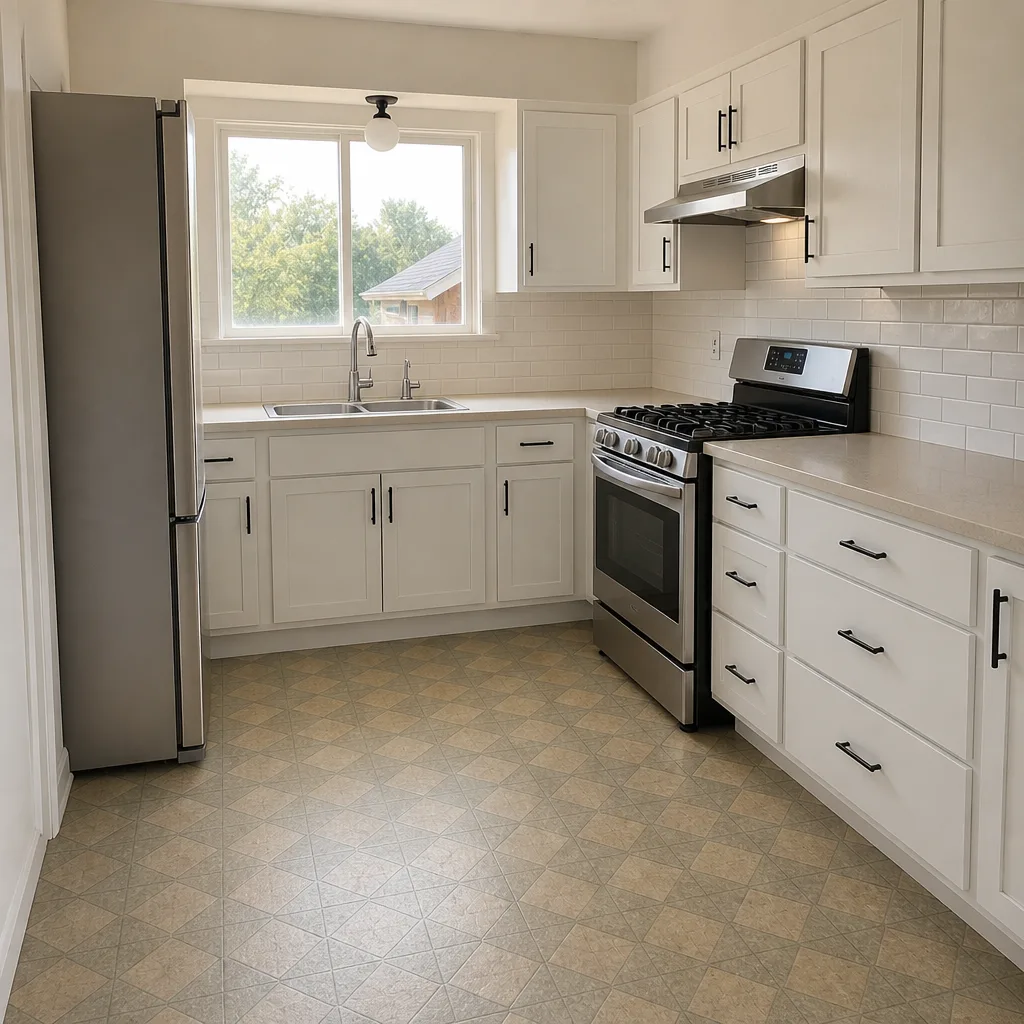 After
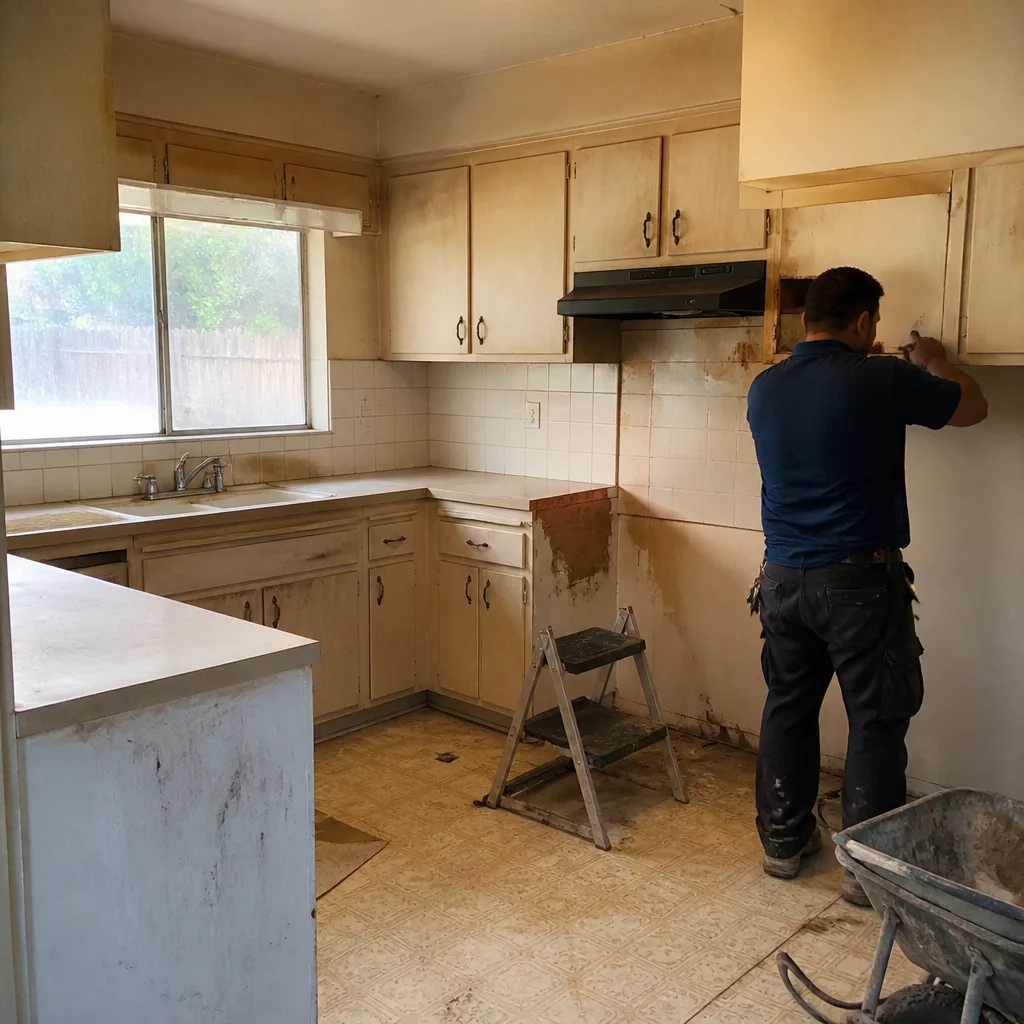 Before
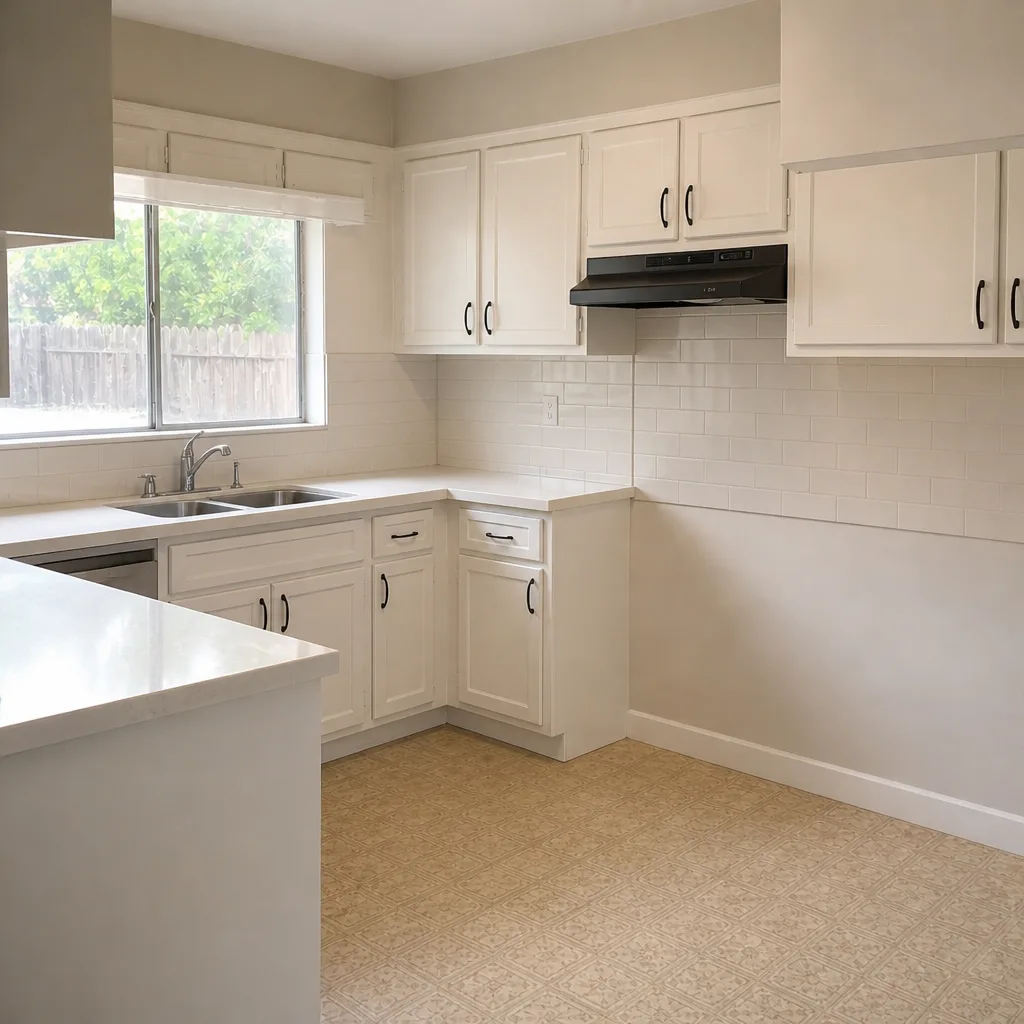 After
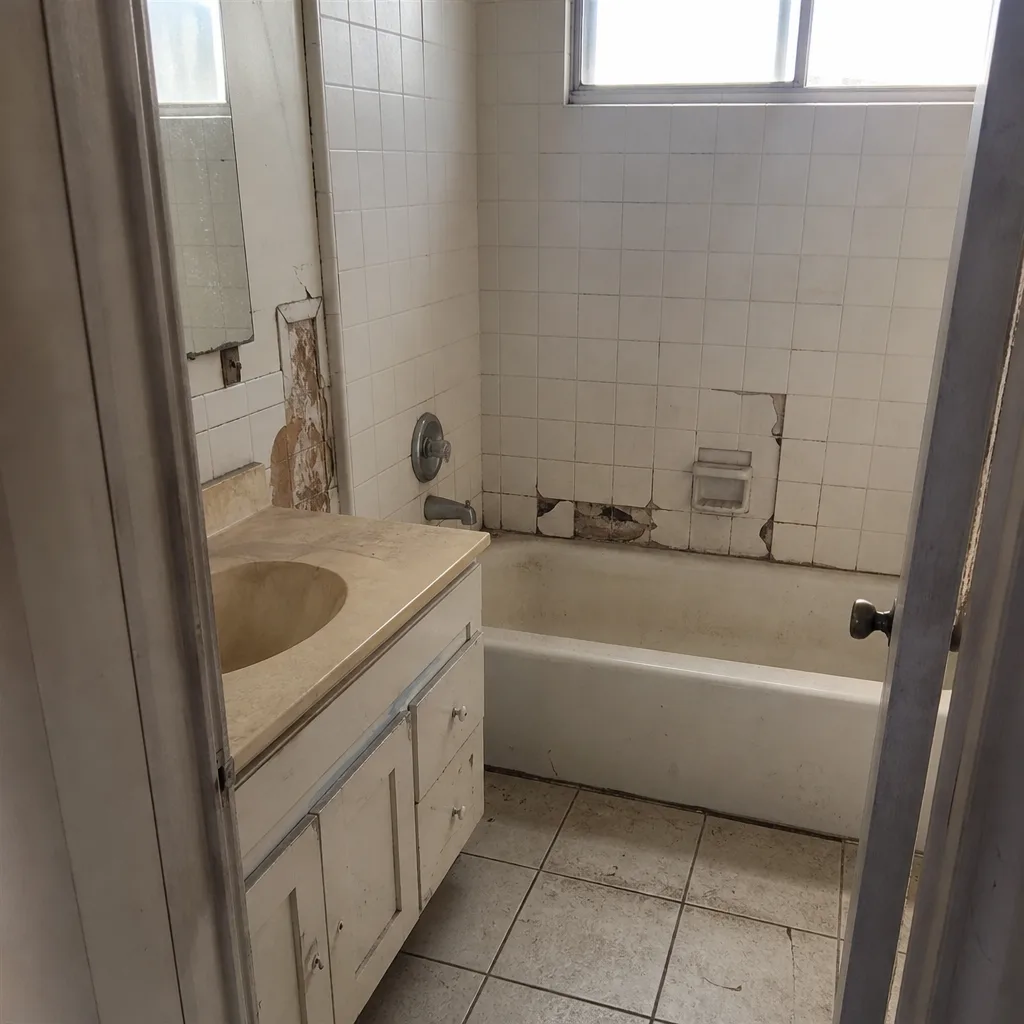 Before
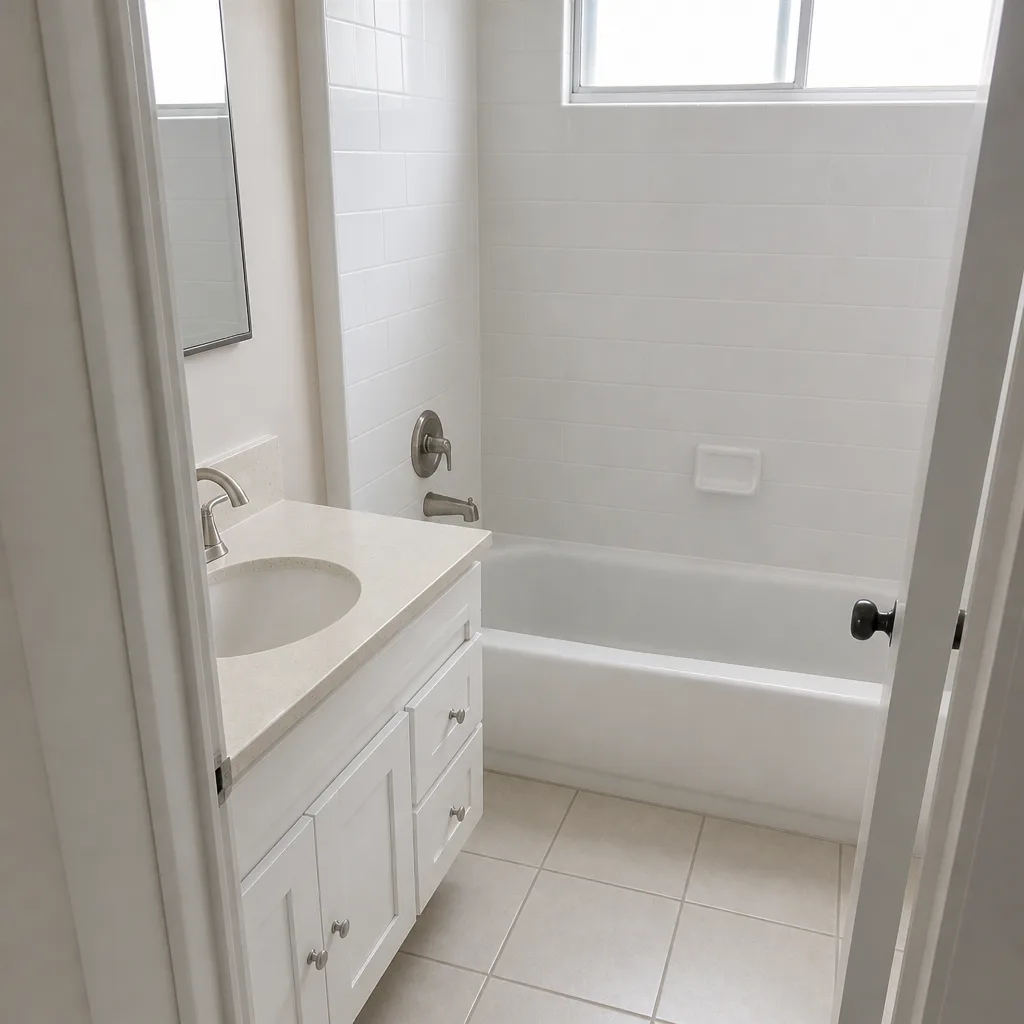 After
When to Call a Professional
Call a licensed contractor when water is actively entering the structure, when a foundation crack has widened or a door has started sticking after a seismic event, when a cast-iron drain keeps backing up, or when the repair will touch structural, electrical, or gas systems. Those are the cases where a hurried DIY fix can make a recoverable situation worse – and where the documentation a contractor produces protects your claim. Skin-deep work you can safely handle; the moments above you shouldn’t. Rowan Construction Group Orange offers free estimates in Orange – call (844) 320-7508. We put the number in writing before any work starts, and every visit includes a documented photo record as a standard deliverable, not an add-on.
Frequently Asked Questions

Stop the water from spreading and document it before you repair anything. Catch the water inside with buckets and a floor tarp, photograph the ceiling stain and the attic rafters where the water is running, then call your insurer and a licensed roofer. Don’t get on a wet or steep roof – the fall hazard is real. If a tarp goes on, pitch it downhill and away from the house.
Emergency mitigation typically runs from a few hundred dollars for extraction and drying to several thousand when drywall and insulation have to come out, depending on how far the water traveled and how long it sat. The repair that follows is separate. Call (844) 320-7508 for an exact quote – estimates are free.
It depends on the policy – standard homeowners policies typically exclude earth movement, and earthquake coverage is usually a separate endorsement or policy. That’s exactly why taking dated, referenced photos of the crack before repair matters, whether you claim it or not. Call (844) 320-7508 to get a written assessment you can hand to your insurer.
Use the Contractors State License Board license lookup, available free online. Type in the license number, confirm it’s active and the classification matches the work, and confirm the legal name matches the contract. Then check the bond and workers’ comp status on the same page. It takes about four minutes and screens out most unlicensed storm chasers.
You can and should stop further damage – shut off the source, extract standing water, tarp a breach – but don’t finish the repair. Replacing drywall, painting over a stain, or discarding damaged materials before the adjuster visits can reduce or void the claim. Stop it, document it, then wait.
A post-event repair fixes damage from a discrete event like a wind gust or seismic shake; a latent failure is a problem that’s been developing for months, like a corroded cast-iron drain or mold behind drywall. Latent failures need a diagnosis of the cause before repair, or the fix buries the problem. Call (844) 320-7508 if you’re not sure which one you’re looking at.
The Bottom Line
Orange construction emergencies sort into three categories, and the response protocol is different for each. Acute failure means stop, contain, and document before repair. Post-event damage means documented photos with original timestamps before anyone touches a tool, and no finished repair before the adjuster sees it. Latent discovery means contain, diagnose the cause, and get a written scope – don’t spray and patch. Run the October pre-season checklist, know where your main shutoff is, and make the four-minute CSLB check a habit after every weather event. The rule that holds across all three: document first, call your insurer second, dispatch a repair third. That sequence is what protects the claim and the house.
Rowan Construction Group Orange brings the same discipline to an emergency that we bring to a planned remodel: a written price and written scope before work starts, a signed change order for any change, and a documented photo record on every visit. Our technicians have up to 19 years of experience, crews are background-checked, and calls are answered by a live person. Free second opinions on any written estimate are standard – bring a competitor’s quote and we’ll review it line by line. Call (844) 320-7508 to schedule your free estimate.
Written by the team at Rowan Construction Group Orange.